Car Sales Leads: First Hour Scripts for Irish Dealers
Learn how Irish dealership teams can answer car enquiries within an hour, follow up without nagging, use ready to copy scripts, and respect local rules.

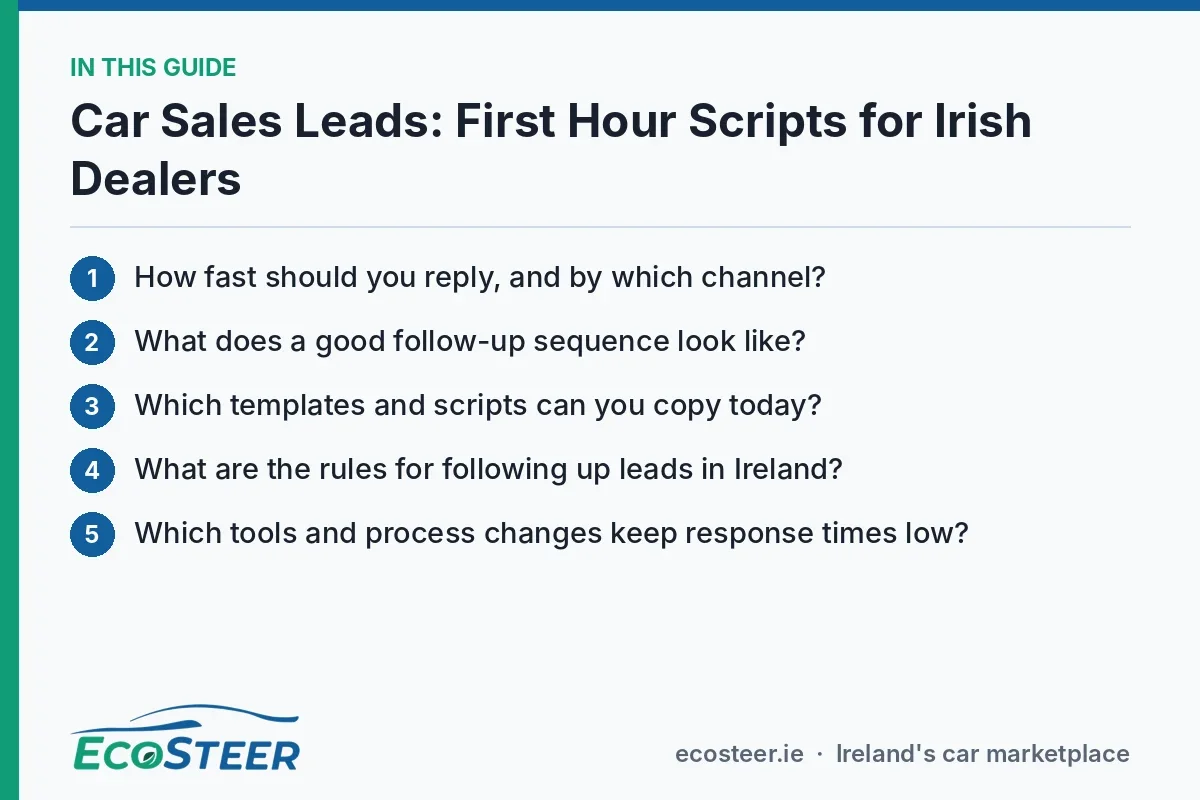
Reply to every car enquiry within the first hour, and acknowledge it promptly. Ring high-intent leads straight away, send a personalised text or email to web form leads, and let an automated message cover you out of hours. Your first contact has one job: secure a low-friction next step, such as a test drive slot or one concrete question.
TL;DR:
- Use a Day 1, 3, 7, and 14 sequence, with five to eight useful touches over two to four weeks; stop when the buyer replies.
- Give hot leads extra early calls and appointment texts, while cold leads receive fewer high value messages and move to long term nurturing sooner.
- Later promotional texts and emails require explicit consent; record preferences, provide an opt out, and check the Do Not Call register before calling non enquirers.
- Review median first response time, contact rate, appointment booking rate, and lead to sale conversion weekly, then investigate unassigned leads or failed alerts.
Table of Contents
- How fast should you reply, and by which channel?
- What does a good follow-up sequence look like?
- Which templates and scripts can you copy today?
- What are the rules for following up leads in Ireland?
- Which tools and process changes keep response times low?
- Which metrics should you review every week?
- Why can you trust this guidance?
- What small teams get wrong about lead response
- How can we help you respond faster?
- FAQ
- Sources
How fast should you reply, and by which channel?
Speed matters because a buyer who has just sent an enquiry is still in the buying mindset. Later, they may have opened other tabs, spoken to another dealer or simply moved on. Salesforce guidance says that reaching out within the first hour dramatically increases the chance of a response, which is why we aim to acknowledge promptly and treat one hour as the ceiling for a personal reply. Our own write-up on replying within one hour covers the same principle for dealers.
Match the channel to the way the lead arrived:
- Inbound phone call: answer, or call back immediately. If it goes to voicemail, leave a short message and follow with an email.
- Web form enquiry: send an SMS acknowledgement promptly, then a personalised email within the hour.
- On-site chat: reply in the chat itself, then ask for a phone number or email to confirm a time.
- Unanswered call attempts: use a voicemail and email combination so the buyer has two ways to reply.
Next, turn this into a service level for each lead type. Write down who owns the lead, how quickly they must acknowledge it, and what the fallback message says. A good fallback sets expectations plainly: it names the person who will contact the buyer and roughly when. Buyers forgive a short wait. They do not forgive silence.
Pro Tip: Name the salesperson in your automated acknowledgement. “Aoife will call you before 11am” gets a better reaction than “a member of our team will be in touch”.
What does a good follow-up sequence look like?
Most leads do not buy on the first reply, so you need a sequence that stays useful rather than repetitive. Salesforce suggests a typical effective pattern of Day 1 first outreach, Day 3 value email, Day 7 check-in and Day 14 soft close, with five to eight touches over two to four weeks. Each touch should add something new, not repeat the same ask in different words.
Here is the cadence we recommend for dealership teams:
- Day 0: Acknowledge the enquiry straight away and make one clear ask: a calendar link, or two short time options for a visit or call.
- Day 1 to 3: Send a personalised value message. Mention the exact car they asked about, add one useful detail such as service history or finance options, and offer scheduling choices again.
- Day 7: Send a concise check-in. Ask whether the car is still of interest or whether you can suggest a similar one.
- Day 14: Make a soft close. Say you will keep the car in mind and invite a reply if timing has changed.
- Later: Move the lead into long-term nurture, or send a polite “breakup” email that says you will stop chasing unless they tell you otherwise.
Vary the format across the sequence. A call on Day 0, an email on Day 1, a text on Day 3 and a short photo or video of the car on Day 7 feels more like service than pressure.
Adjust the intensity to the lead:
- Hot leads (booked a viewing, asked about finance, called twice): add extra phone attempts early in the follow-up and confirm any appointment by text in advance.
- Warm leads (specific car, no urgency): follow the full cadence with a mix of email and text.
- Cold leads (generic enquiry, vague timing): send fewer, higher-value touches, such as a similar vehicle or a price update, and move them to nurture sooner.
If the buyer replies at any point, drop the sequence and respond as a person. Automation should hand over the moment a human answer arrives.
Which templates and scripts can you copy today?
Short, specific messages with a single call to action outperform long ones. These examples are ready to paste into your CRM. Swap the details in brackets for the real ones.
Same-day showroom follow-up
- Subject lines: “Thanks for visiting today, [Name]” or “The [model] you looked at: a quick next step”.
- Body: “Thanks for coming in today. Would Thursday at 5pm or Saturday at 11am suit for a test drive of the [model]? You can also pick a time here: [calendar link].”
Form enquiry
- SMS promptly: “Hi [Name], it’s [Salesperson] at [Dealership]. Got your enquiry on the [model]. I’ll ring you as soon as I can. Is there a better number?”
- Email promptly: “Hi [Name], thanks for asking about the [model]. It’s still available, with [one specific detail]. Would a quick call today or a viewing this week work better for you?”
Missed call
- Voicemail: “Hi [Name], it’s [Salesperson] from [Dealership], returning your call about the [model]. I’ll send you an email now with a few times that suit me.”
- Follow-up email: “Sorry I missed you. I’m free at [time one] or [time two]. Which works, or what time would suit you better?”
Trade-in and finance interest
- “Happy to give you an indicative figure for your [current car]. If you send the registration and approximate mileage, I’ll come back to you today.”
- “I can talk you through finance options on the [model]. Would a brief call tomorrow morning be convenient?”
Keep to the single call to action rule: one message, one ask. Offering a viewing, a finance quote and a brochure in the same email splits the buyer’s attention and usually produces no reply at all.
On subject lines, do mention the car or the buyer’s name, keep them short and sound like a person. Do not use all capitals, vague promises or pressure phrases like “last chance”.
Pro Tip: Save each template in your CRM with a hotkey, and refresh the wording regularly. Stale templates are easy for buyers to spot.
What are the rules for following up leads in Ireland?
Replying to a specific enquiry is one thing. Marketing to that person afterwards is another. Irish guidance on electronic direct marketing says later promotional texts or emails usually need explicit consent, and that your CRM should record channel preferences and opt-outs. A buyer’s enquiry can justify answering that enquiry, but it does not give you permission for unlimited promotional messages.

Citizens Information explains that unsolicited marketing by email or text requires explicit consent, and that the National Do Not Call register blocks cold calls to numbers listed on it. For dealers, that makes a quick register check sensible before any outbound call to someone who did not enquire.
Accuracy is a compliance matter as well as a sales one. The CCPC explains that clear, accurate pre-contract information and avoiding unsupported claims is part of your legal obligations, and a car must match its description. If you are unsure about mileage, history or availability, “I’ll verify and come back to you” is safer than guessing.
Build these checks into the first contact:
- Record the lead’s consent status and preferred channel in the CRM.
- Check the Do Not Call register before any call to a non-enquirer.
- Identify yourself and the dealership in every message.
- Add a clear, working opt-out to every SMS and email.
- Keep descriptions of the car factual and verifiable.
- Log when and how the buyer opted out, so nobody contacts them again by mistake.
Which tools and process changes keep response times low?
Small dealer teams do not need heavy software to respond quickly. They need a few reliable triggers and clear ownership. Our guide on responding to car leads in five minutes walks through a practical set-up for teams of this size.
- Instant alerts: configure the CRM to notify a named salesperson the moment a lead arrives and to create a follow-up task automatically.
- Automated acknowledgement: send an email or SMS immediately, especially out of hours, stating when a person will reply and asking for preferred contact method.
- Embedded templates: store the messages from this guide in the CRM so any team member can pick up a lead without rewriting.
- Standard handover: use one note format covering the car of interest, what has been said, consent status and the next step, so a colleague can cover holidays and sick days.
- After-hours triage: a chatbot or an outsourced business development centre can capture details overnight, provided a human follows up when you open.
Listing quality feeds into response quality too. Accurate, complete adverts reduce the number of vague questions you receive, and our post on scaling listings and attracting qualified buyers covers that side. Tools such as Carvia can help with vehicle photos and listing workflow, which frees time for the follow-up itself.
Which metrics should you review every week?
A few key metrics tell you whether the process is working:
- Median first-response time: the middle value across all leads, which is more honest than an average distorted by a few very slow replies.
- Contact rate: the share of leads you actually spoke to or exchanged messages with.
- Appointment booked rate: the share of contacted leads that agreed to a viewing, call or test drive.
- Lead-to-sale conversion: the share of all leads that end in a sale.
Check a short weekly summary and a monthly trend report. Tie each metric to one action: slow response times point to alerts and ownership, a low contact rate points to channel mix and timing, and a low booking rate points to the wording of your ask.
When replies are slow, run a short root-cause check. Look for unassigned leads, failed notifications and days when too few staff were on the floor. Most delays come from one of those three, not from lazy follow-up.
Why can you trust this guidance?
The cadence here reflects practical experience with dealer marketing and lead response. At EcoSteer, our platform is built around dealer listings and lead management. We use those benchmarks to refine the timings and templates you have just read.
What small teams get wrong about lead response
Most dealerships do not fail at follow-up because they do not care. They fail because the floor is busy, a customer is standing in front of you, and the new enquiry waits. Accepting that is the first step to fixing it. Pretending that someone will always be free to reply in five minutes just guarantees a process that collapses on a Saturday.
The trick I rely on is a saved reply plus a calendar link, sent before I do anything else with a new lead. It can be sent quickly, removing the back-and-forth of “when suits you?”, and it turns more enquiries into booked visits than any clever wording does. Perfect personalisation can come on the call. The first message just has to be prompt and easy to answer.
How can we help you respond faster?
If you want fewer enquiries slipping through, we built EcoSteer with dealers in mind:
- Dealer listings that put your stock in front of active buyers across Irish counties.
- Lead-management features that capture enquiries in one place so replies go out quickly.
- A dealer profile that shows buyers who you are before they get in touch.
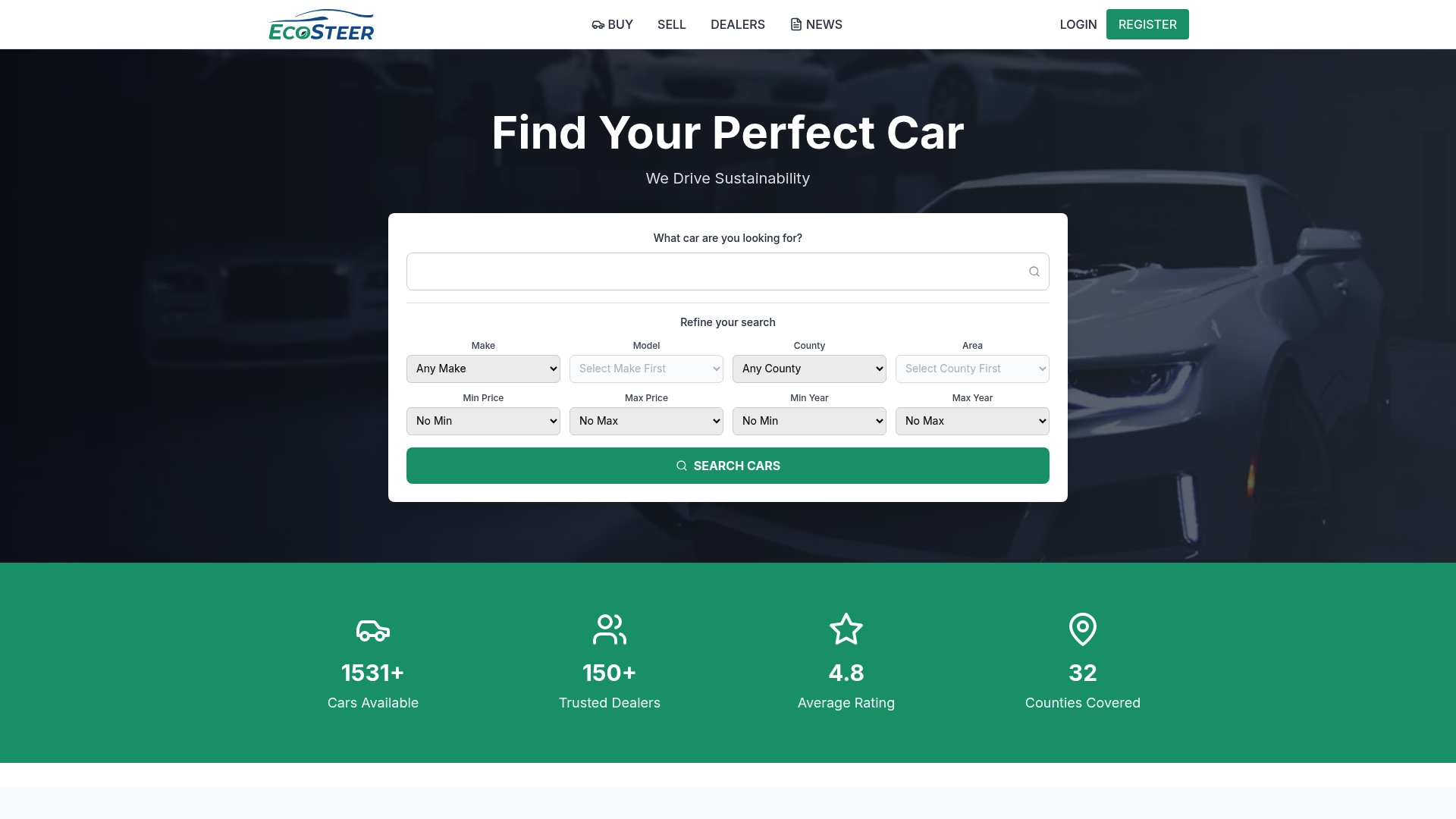
See how it works on our dealer pages or browse the platform at Ecosteer.
FAQ
How quickly should a dealer respond to a car lead?
Aim to acknowledge promptly and give a personal reply within the first hour. Salesforce notes that reaching out in the first hour dramatically improves the chance of a response. Out of hours, send an automated message that says when a person will follow up.
How do you find new car leads?
Start with accurate, well-photographed listings, since they attract enquiries from buyers who are already searching. Add a prompt follow-up routine for walk-ins and returning customers, and ask satisfied buyers for referrals. Each of these produces warmer leads than cold outreach.
What should dealers avoid saying to a buyer?
Avoid unsupported claims about mileage, history, condition or availability. The CCPC explains that accurate pre-contract information is a legal obligation, so “I’ll check and come back to you” is safer than a guess. Pressure phrases like “someone else is coming this afternoon” also damage trust quickly.
Can you text or email a buyer after their enquiry?
You can respond to the enquiry itself. Later promotional texts or emails usually need explicit consent, according to the Data Protection Commission. Always record the buyer’s preferences and include a simple opt-out.
Sources
- FAQ on Consent for Electronic Direct Marketing | Data Protection Commission
- Selling products to consumers, your legal obligations | CCPC
- What’s the Best Way To Follow Up With a Sales Lead?
- Junk mail, spam and unwanted texts and calls
Recommended
Ecosteer Editorial
Author