30 Day Dealer Plan to Generate Car Sales Leads With 5 Minute Follow Up
30 day dealer plan to generate car sales leads with vehicle ads, Meta events, better VDPs and a 5 minute follow up. Includes Ecosteer for local listings.

The fastest way to generate car sales leads is a two-part system: high-intent paid channels (Google vehicle ads, search, and Meta sales events) that surface buyers actively shopping, paired with a strict operational rule of contacting every lead within 5 minutes through automated SMS and human BDC follow-up. Marketplaces and your own vehicle detail pages fill the gaps. Below is the 30-day checklist, plus how a channel-friendly marketplace like Ecosteer fits into that mix.
TL;DR:
- syncing your inventory feed daily helps reduce costs and improve conversions by ensuring vehicle availability and accurate details in ads.
- response times within 5 minutes are critical, with automated SMS plus human follow-up significantly increasing contact and appointment rates.
- structured short sales campaigns combined with audience layering drive rapid lead volume and measurable results, especially from Meta and paid search.
- optimizing vehicle detail pages with high-quality photos, clear specs, frictionless inquiry forms, and micro-offers boosts lead conversion rates.
- listing on Ecosteer adds local visibility at low cost, with inquiries directly routed into your CRM, supporting hyper-local targeting and quicker follow-up.
Table of Contents
- Paid search & vehicle ads: capture active buyers
- Meta sales events and inventory ads that move fast
- Turning your vehicle pages into a conversion engine
- Why speed to lead decides who wins the sale
- Service-to-sales: the pipeline sitting in your own workshop
- Referral programmes, test-drive events and local partnerships
- Marketplaces and inventory feeds done right
- Automating the first conversation with AI qualification
- Measurement, budgets and what to expect from each channel
- How Ecosteer supports dealer lead generation
- Using content and guides to attract buyers before they’re ready to enquire
- Building email campaigns that keep leads warm
- Winning the “near me” search with local SEO
- Video content that builds trust before the test drive
- Hosting live Q&A sessions to answer buying questions directly
- Author checklist: a 30-day playbook to implement this
- List your inventory and start capturing leads with Ecosteer
- Sources
Paid search & vehicle ads: capture active buyers
Generic display advertising shows your inventory to people who might one day want a car. Search and vehicle ads show it to people typing “2020 Volkswagen Golf Kildare” into Google right now. That difference in intent is why inventory-fed vehicle ads typically produce lower cost-per-click and higher conversion rates than generic display once your feed is configured correctly. You’re not paying to educate a browser.
Vehicle ads pull directly from your stock feed, showing real photos, prices, and mileage rather than a static banner. That format alone tends to outperform standard search ads for used-car shoppers, because it mirrors the marketplace-browsing behaviour buyers already use.
Getting the setup right matters more than the budget you throw at it. A feed that’s out of sync with your actual stock, missing VINs, or updated only weekly, will quietly inflate your cost per lead without you noticing why.
- Sync your inventory feed daily, ideally in real time, so sold vehicles drop out immediately and new arrivals show within hours.
- Track conversion events properly, distinguishing a phone call, a form submission, and a “get directions” click, since each signals different intent.
- Prioritise keyword groups by commercial intent: model plus trim (transactional), finance and monthly payment terms, and trade-in valuation searches.
- Use ad extensions for call buttons, location, and price, since used-car shoppers on mobile often skip the click-through entirely and call straight from the ad.
- Watch quality score and search term reports weekly; a single mismatched keyword group can quietly drain a third of your budget.
Feed hygiene issues are one of the most common technical failures dealers overlook, and fixing feed problems often lowers cost per lead materially while raising conversion. If your CPL has crept up over the last quarter with no obvious cause, check the feed before you touch the bids.
Meta sales events and inventory ads that move fast
Meta doesn’t work like search. Nobody opens Instagram looking for a diesel estate with under 60,000 kilometres. You have to interrupt them with an offer good enough to make them stop scrolling, and that’s what a structured sales event does.
- Run a 3 to 5 day hard-offer campaign. Pick a real incentive (a trade-in bonus, a finance rate, a limited stock clearance) and give it a hard deadline. Urgency is what turns a passive scroll into a lead form submission.
- Layer in Automotive Inventory Ads alongside the event. These pull live stock into dynamic creative, so a shopper who’s browsed SUVs on your site sees SUVs in their feed, not whatever vehicle a static ad happened to feature.
- Build audiences in tiers. Start with CRM custom audiences from your existing database, expand to lookalikes built from your best converters, then layer behavioural targeting (in-market for vehicles, recent movers, lease-end timing) on top.
- Cut form friction to almost nothing. On-platform lead forms with pre-filled name, email, and phone (Meta auto-populates these from the user’s profile) convert at a noticeably higher rate than sending traffic to an external landing page.
- Keep an always-on layer running underneath the events. Sales events create spikes; a smaller, continuous budget on inventory ads and retargeting keeps the pipeline from going quiet between campaigns.
Structured short sales events combined with CRM custom audiences and lookalikes tend to generate rapid, measurable lead volume because they compress a long consideration cycle into a tight window with a clear reason to act now rather than next month.
Turning your vehicle pages into a conversion engine
Your vehicle detail pages (VDPs) do more work than any single ad campaign, because every paid click eventually lands there. If the page fumbles the moment someone arrives, you’ve paid for a visit that goes nowhere.
The essentials aren’t complicated, but dealers skip them constantly under time pressure:
- At least 20 high-resolution photos covering exterior angles, interior, boot space, and any damage or wear, since buyers who feel misled by photos rarely call.
- Full specs visible without a click: engine, transmission, mileage, NCT status, and service history.
- A finance calculator embedded on the page, not linked off to a separate tool, so a shopper can see a monthly figure in seconds.
- Clear, repeated calls to action (“Book a test drive,” “Check availability”) placed above the fold and again after the specs.
- A single-step enquiry form asking for name, phone, and preferred contact time. Every extra field you add drops completion rate.
Optimised VDPs with friction-free forms and micro-offers convert meaningfully better than generic listing pages. A micro-offer, something low-commitment like a downloadable brochure or a refundable reservation deposit, works particularly well for shoppers who aren’t ready to call but don’t want to lose the vehicle to someone else.
Every enquiry should carry UTM parameters and page-interaction data (time on page, photos viewed, calculator used) straight into your CRM. That metadata is what lets your lead-scoring rules actually work, rather than treating every enquiry as equally warm.
Pro Tip: Run a simple A/B test on your top 10 VDPs by traffic: swap the headline from the vehicle’s trim name to its key benefit (“Low mileage, one owner, full service history”) and measure the change in enquiry rate over two weeks before rolling it out site-wide.
Why speed to lead decides who wins the sale
Here’s the benchmark that should shape every process decision your dealership makes: responding to a lead within 5 minutes substantially increases contact and appointment rates compared with slower response times. A shopper who fills in a form is usually looking at two or three other listings simultaneously. Whoever calls first tends to get the appointment, regardless of price or spec.
The 5-minute rule: Every lead that arrives should trigger an automated SMS within seconds and a human BDC call within 5 minutes. Beyond that window, contact rates and appointment rates both drop sharply.
Not every lead deserves the same urgency, though. Lead scoring lets your BDC work the hottest enquiries first instead of working the list top to bottom.
Score up for:
- Repeat visits to the same vehicle across multiple sessions.
- Deep VDP engagement (finance calculator used, photo gallery fully viewed, spec sheet expanded).
- Finance or trade-in valuation form submissions, which signal a shopper actively budgeting rather than window-shopping.
- Return visits after an initial enquiry with no response, since this often means they’re still interested but got no follow-up elsewhere.
The automation sequence that consistently works is straightforward: instant SMS confirmation, a calendar link for booking a call or test drive, then a human BDC call within the 5-minute window for anything scored as high-intent. Design lead-scoring tiers so repeat visitors with finance intent escalate to immediate “contact now” routing, with automated SMS firing first and the BDC call following straight after.
Track this operationally, not just as a vanity metric. Average response time, percentage of leads contacted within 5 minutes, and appointment show rate should appear on a daily dashboard, not a monthly report. If your BDC is understaffed for evening and weekend volume, that gap is usually where the best leads go cold. Speed of human follow-up amplifies the return on every paid channel you run, which often means a second BDC hire pays for itself faster than an extra chunk of ad spend.
Service-to-sales: the pipeline sitting in your own workshop
Every car already on your ramp belongs to someone who’s proven they’ll do business with your dealership. That’s a warmer lead than anything you’ll buy from an ad platform, and most dealers barely touch it.
Certain service events reliably open a trade-in conversation:
- A big-ticket repair quote (clutch, timing belt, major suspension work) on a vehicle over five years old, where the repair cost starts to rival a chunk of the car’s value.
- An NCT failure or looming NCT date on an older vehicle.
- High mileage service intervals (100,000km, 150,000km) where owners start weighing “fix it again or trade it.”
CRM automation should flag these triggers the moment a service ticket is logged, prompting an outreach sequence: a trade-in valuation offer, sent by SMS or email, within a day of the service visit. Train your service advisors to ask one simple, low-pressure question at drop-off or collection: “Have you thought about what’s next for this car?” It’s not a sales pitch, it’s a genuine opening, and it works far better coming from the advisor the customer already trusts than from a cold call later.
Measure this pipeline by lead quality and show rate rather than raw volume; service-to-sales leads should close at a noticeably higher rate than cold paid leads, given the existing relationship.
Referral programmes, test-drive events and local partnerships
Referrals and events cost less per lead than almost anything else, because the person doing the referring has already done your credibility work for you.
- Design a referral incentive that pays out automatically. A fixed cash reward or service voucher for both parties, triggered automatically once the referred sale completes, removes the manual chasing that kills most referral programmes within a month.
- Run a booked test-drive day rather than a walk-in event. Pre-book every slot, confirm by SMS the day before, and qualify each attendee with one question at booking (“What’s your rough budget and timeline?”) so your team isn’t guessing on arrival.
- Partner with businesses your buyers already trust. Local insurance brokers, driving instructors, and mechanics’ garages tend to feed dealer funnels reliably because their customers are already car-focused. Track referral source in your CRM so you know which partnership is actually converting versus which one just feels good.
Marketplaces and inventory feeds done right
Third-party marketplaces still bring in real buyers, but the trade-off is competition. Third-party listings drive inquiries, though they often produce shared leads sent to several dealers at once, which means first-response speed becomes even more decisive than usual.
Use marketplaces to widen your reach and fill gaps your owned channels can’t cover, but don’t treat them as a replacement for your website and CRM. The dealers who protect their advantage on shared-lead platforms are the ones with the tightest feed hygiene:
- Keep descriptions accurate and current; a listing showing a sold price or outdated spec damages trust the moment a buyer cross-checks it against your own site.
- Maintain price parity across every channel, since a shopper who spots a discrepancy will assume the higher price is the real one and walk.
- Route every marketplace enquiry into the same CRM pipeline as your owned-channel leads, tagged by source, so the 5-minute response rule applies uniformly regardless of where the lead came from.
An exclusive-offer angle, a small discount or add-on available only through direct contact, can pull a shared-lead buyer toward calling you first rather than waiting to hear from three dealers at once.
Automating the first conversation with AI qualification
A shopper browsing at 11pm won’t wait until your BDC opens at 9am. AI chat tools close that gap, and they do more than answer basic questions.
AI assistants can qualify leads around the clock and automatically book appointments into calendars, asking the same questions a good salesperson would ask on a first call: budget range, timeline to purchase, and whether they have a trade-in.
Structure the qualification flow around three questions that actually predict purchase intent:
- “Are you looking to buy in the next two weeks, this month, or just researching?”
- “Do you have a trade-in, and roughly what’s it worth to you?”
- “Have you already arranged finance, or would you like an estimate?”
Once those answers come back, the automation should fire an SMS confirmation immediately, offer a calendar link for a call or test drive, and push a pre-appointment form (licence, finance pre-approval documents) so the BDC walks into the human handover already prepared rather than starting from zero.
Pro Tip: Set your AI chat to hand off to a human the moment a shopper mentions a specific timeline (“this weekend,” “before month end”). Urgency signals like that are exactly where automation should step aside for a real conversation.
Measurement, budgets and what to expect from each channel
Split your budget by how quickly each channel pays back. Paid search, vehicle ads, and Meta sales events deliver leads within days, so they should carry most of your short-term spend. SEO, content, and local landing pages compound slowly but keep producing long after you stop actively paying for them.
Top-performing dealers connect paid channels into CRM automation while letting organic content build owned traffic in parallel, so neither side of the budget is fighting the other for attention.
What the numbers tell you: Cost per lead varies enormously by channel and market, but the direction is consistent: a live, accurate inventory feed and fast follow-up move CPL down more reliably than raising bids does. Treat feed quality and response time as your first two levers, not your last two.
Run a structured 30/60/90 day test rather than committing budget on gut feel:
- Days 1 to 30: Launch vehicle ads and one Meta sales event; fix any feed issues; set up automated SMS and lead scoring.
- Days 31 to 60: Measure CPL and appointment show rate by channel; kill anything underperforming by more than 30% against your average; double down on the strongest performer.
- Days 61 to 90: Scale the winning channels, add a second sales event, and start layering in local SEO and content, since these need a longer runway to show results.
Track cost per lead and response time daily. Track appointment show rate and close rate weekly, since these numbers need a larger sample before they mean anything.
How Ecosteer supports dealer lead generation
Alongside paid channels and your own website, Ecosteer gives Irish dealers a direct marketplace presence built specifically for the local market. It’s a practical complement to the tactics above rather than a competitor to your own site.
- Free listings for vehicles under a set price point, useful for clearing entry-level stock without adding to your ad spend.
- A dealer lead inbox that centralises enquiries from marketplace listings, which you can then route straight into your existing CRM pipeline.
- EV-specific listing tools, relevant as electric and hybrid stock becomes a larger share of Irish dealer forecourts.
- Location-based visibility through county pages, so a search for cars for sale in Dublin or Kildare surfaces your listings to local, high-intent buyers.
Dealers typically run Ecosteer as one layer within the wider system covered above: paid search and Meta drive volume, the marketplace fills local search gaps, and every lead, regardless of source, gets the same 5-minute response treatment through the CRM. Setting up a listing takes minutes; the EcoSteer marketplace overview covers the specific tools available to dealers who want to test it against their current channel mix.
Using content and guides to attract buyers before they’re ready to enquire
Not every buyer arrives ready to fill in a form. Someone three months out from a purchase is still researching, and the dealer who answers their questions early is the one they remember when they’re finally ready to buy.
A short, practical buying guide, “What to check before buying a used diesel,” “How NCT history affects resale value,” “Petrol vs hybrid running costs compared”, does two things at once. It ranks in search for informational queries you’d otherwise miss entirely, and it positions your dealership as the one that explained things clearly rather than the one that just tried to sell.
Content doesn’t need to be extensive to work. A page comparing finance options, a short explainer on trade-in valuations, or a model comparison guide answers the exact questions a shopper is typing into Google before they’ve picked a dealer. Link each guide back to relevant VDPs or your stock page, so the reader who arrived for information has an obvious next step once their question is answered.
The return on this channel is slower than paid search, often taking months rather than days to show up in lead volume, but it keeps producing without ongoing spend once a guide is ranking. Treat it as the long half of the budget split covered earlier: a handful of well-written guides published consistently over a year will outperform a burst of content published once and abandoned.
Building email campaigns that keep leads warm
Most leads don’t buy on their first enquiry. They browse, they compare, they go quiet for a fortnight, and then something (a bonus, a price drop, a reminder) brings them back. Email is the cheapest way to stay in front of them during that gap.

Segment your list by where the lead sits: new enquiry, test-drive booked but not converted, previous customer due for a trade-in, and service customer who’s shown trade-in signals. Each segment gets a different message. A new enquiry might get a follow-up on the specific vehicle they viewed. A lapsed test-drive lead might respond better to a limited-time finance offer than another product email.
Keep the cadence realistic. A weekly newsletter blasted to your entire database regardless of where they sit in the funnel trains people to ignore you. A shorter, triggered sequence, three or four emails spaced over two weeks after an enquiry, tends to hold attention better than an ongoing generic broadcast.
Measure open rate and click rate by segment, not as one blended number, since a service-triggered trade-in email should convert very differently from a cold newsletter send. If a segment consistently underperforms, that’s usually a signal the message doesn’t match where that lead actually sits in their decision, not that email as a channel has stopped working.
Winning the “near me” search with local SEO
A huge share of car shopping starts with a location in the query, “used cars Cork,” “car dealer near me,” “SUVs for sale Kerry”, and dealers who haven’t built for that intent are handing those searches straight to whoever has.
Google Business Profile is the foundation. Keep hours, photos, and stock categories current, and respond to reviews consistently, since review recency and response rate both factor into local ranking. From there, dedicated location pages on your own site, structured around the county or town you serve, give you a page built specifically to rank for “cars for sale in Cork” or “cars for sale in Carlow” style queries rather than relying on your homepage to do that work.
Consistency matters more than most dealers expect: your business name, address, and phone number need to match exactly across your website, Google Business Profile, and any directory listing, since mismatches quietly erode local ranking over time. If you’re listed across multiple marketplaces, make sure your location and contact details match everywhere, not just on your primary site.
Video content that builds trust before the test drive
A written spec sheet tells a buyer what a car has. A 90-second walkaround video shows them what it’s actually like, and that gap matters more with every passing year as buyers grow more sceptical of static listing photos.

Three video formats consistently perform well for dealers. A full walkaround, exterior, interior, boot, engine bay, gives a shopper the closest thing to an in-person viewing without leaving their sofa. A short “first start” clip, engine running, dashboard visible, reassures buyers worried about hidden mechanical issues. And a simple staff-led explainer, someone from your team talking through what makes a specific model worth considering, builds a level of trust a text description never quite manages.
You don’t need production values. A steady phone camera, good natural light, and clear audio outperform a polished but generic stock video every time, because buyers can tell the difference between a real walkaround of the actual car they’re considering and a manufacturer’s promotional clip. Post the same video across your VDP, your Meta inventory ads, and your Google Business Profile; the reuse costs nothing extra and each platform benefits from the same content differently.
Hosting live Q&A sessions to answer buying questions directly
A live session, whether a short Instagram Live or a scheduled webinar, lets you answer the questions that usually stall a sale in private DMs or unanswered emails, but in front of everyone considering the same purchase at once.
Topics that consistently draw an audience: “What to check before buying a used car,” “Petrol, diesel, or EV: what’s actually cheaper to run in Ireland,” or a straightforward walkthrough of your current finance offers with a chance for viewers to ask questions live. The format works because it’s genuinely useful even to someone who never buys from you, and that goodwill is what turns a passive follower into an enquiry weeks later.
Keep it short and promote it a few days ahead through email and social so people can actually plan to attend rather than stumbling across it by chance. Record every session and repurpose the clips as short-form content afterwards; a single 20-minute live Q&A can produce a month of smaller video and social posts, which stretches the value of the time invested well beyond the live audience itself.
Author checklist: a 30-day playbook to implement this
Week one: fix your inventory feed, launch vehicle ads, and set up automated SMS confirmation on every lead form. Week two: launch your first Meta sales event and build your CRM custom audience for lookalikes. Week three: tighten VDPs (photos, finance calculator, single-step forms) and put lead-scoring rules live so your BDC works hottest leads first. Week four: add the AI qualification layer and start the service-to-sales outreach sequence.
Minimum viable stack: a CRM that supports automated SMS and scoring, a live inventory feed connected to Google and Meta, and at least one dedicated BDC resource covering evenings and weekends.
In week one, watch response time above everything else. By week four, you should see appointment show rate and cost per lead moving in the right direction together, not one improving at the other’s expense.
— ibrahim
List your inventory and start capturing leads with Ecosteer
Ecosteer gives you a route to local buyers that costs less to test than a paid ad campaign and comes with a dealer lead inbox built in from day one. Rather than competing for shared leads across generic marketplaces, listing with Ecosteer puts your stock in front of Irish buyers searching by county, price, and fuel type, with free listings available for vehicles under a set price threshold.
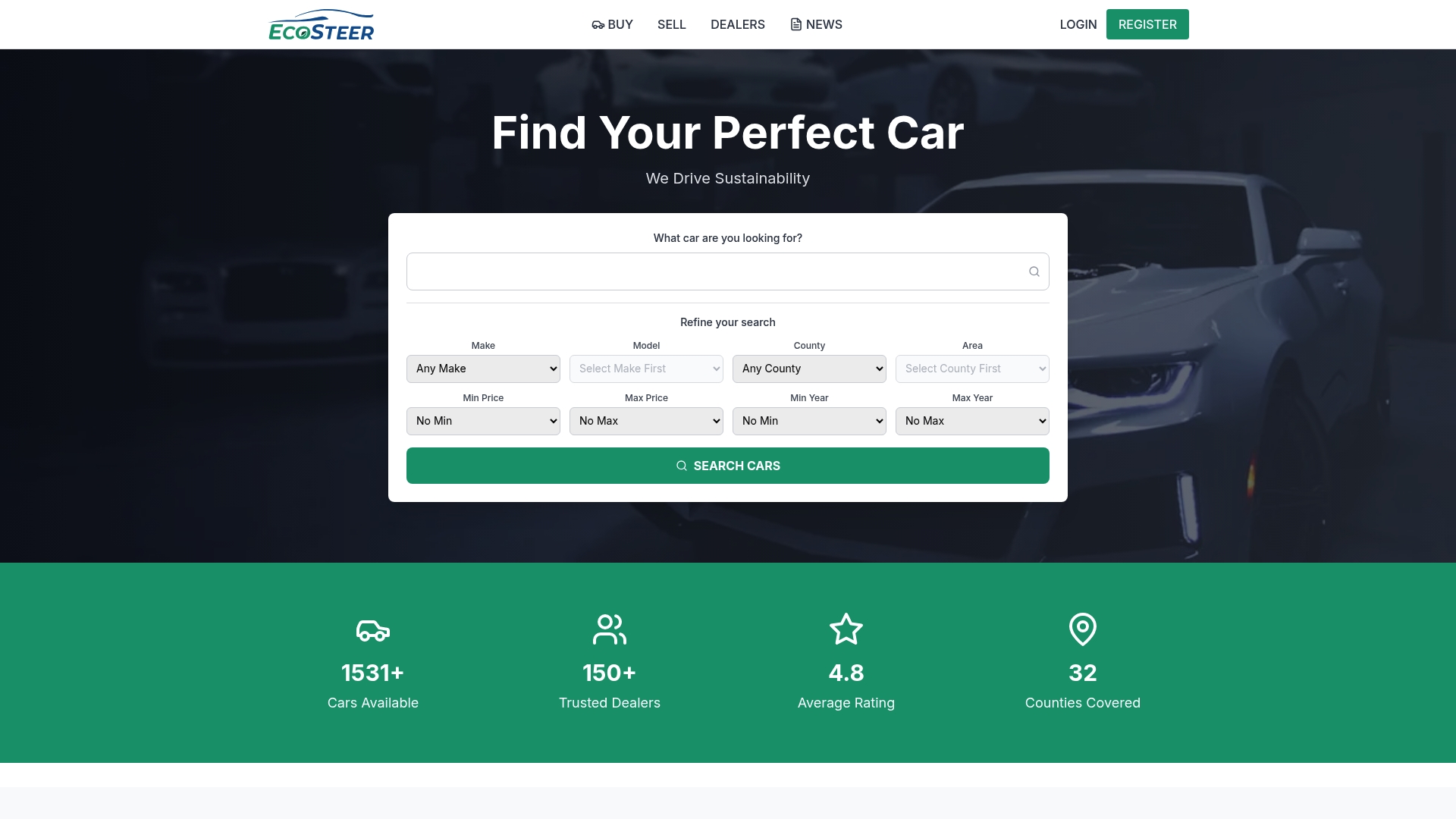
Setting up takes a few minutes: create a dealer account, upload your inventory with full specs and photos, and enquiries land directly in your lead inbox ready to route into your CRM using the same 5-minute response rule covered above. EV listing tools are built in for dealers expanding electric stock, and county pages give you visibility in local search without building separate landing pages yourself.
Start by listing your current stock at Ecosteer and see how quickly a properly categorised inventory feed starts generating enquiries in your own market.
Sources
A few resources are worth bookmarking as you build out the system covered above:
- 8 Automotive Lead Generation Strategies for 2026 Dealers
- Car Dealership Lead Generation That Sells
- Lead Generation for Automotive | Untitled AI
Recommended
Ecosteer Editorial
Author