Reply Within One Hour: Dealer Marketing in Ireland That Wins Leads
Actionable dealer marketing for Irish dealers: facts first listings, a one hour reply SLA and GDPR/CCPC checks to convert more enquiries and close sales.

Optimise every listing around facts a buyer can trust, then answer enquiries within one hour during business hours. Those two habits, not ad spend, decide who wins the sale in Ireland’s used and new car market. A dealer platform such as Ecosteer helps you keep every enquiry visible and every listing consistent, so nothing falls through the cracks between the marketplace inbox and the forecourt.
TL;DR:
- Listings should open with clear, factual details such as model, mileage, owner count, and NCT status to meet AI and buyer expectations.
- Respond to all inquiries within one hour during business hours to prevent losing interest to faster competitors.
- Use consistent, fact-based descriptions and photo orders across all platforms to improve trust and AI recognition.
- Price reductions must be shown with the lowest previous advertised price within 30 days to avoid legal issues.
- Segregate marketing messages based on buyer segments and market regions, focusing on reliability for budget buyers and provenance for premium shoppers.
Table of Contents
- The 30-second checklist before you post a car
- Vehicle detail pages that build trust in seconds
- Fix your lead handling before you fix your ads
- Staying on the right side of GDPR and CCPC rules
- Making your listings AI-friendly
- KPIs that actually predict sales
- Segmenting the Irish car market properly
- Benchmarking against local competitors
- Seasonal campaigns that actually match Irish buying patterns
- Blending online listings with your forecourt and local presence
- Getting the most from social platforms and Irish marketplaces
- What to expect on lead timing and closing
- What the data tells us about where dealers actually lose sales
- Put this checklist to work with Ecosteer
- Sources
- FAQ
The 30-second checklist before you post a car
Most listings lose buyers in the first ten seconds because the essentials are buried or missing. Fix that order and conversion follows.
- Photos first, in the same order every time. Front three-quarter, interior, odometer, service book, then engine bay.
- Write a one-sentence use-case lead. Who is this car actually for, in plain terms (family runabout, first car, low-mileage motorway cruiser)?
- Headline with the price band clear. Buyers scan headlines before anything else, so the make, model, year, and rough price sit up front.
- Put essential specs above the fold. Mileage, transmission, fuel type, NCT expiry date, and number of keys, before any marketing copy.
- Show service history and highlights. A recent timing belt change or new tyres sells faster than a paragraph of adjectives.
- List EV grants or incentives where relevant. If the car qualifies for any current scheme, say so plainly.
- Set a one-hour internal reply target during business hours. Agree it as policy, not an aspiration, before the ad goes live.
Get these seven right and you have already outperformed most of the competing listings on the same search page.
Vehicle detail pages that build trust in seconds
A vehicle detail page (VDP) works when a buyer, or an AI assistant summarising the listing for them, can quote the key facts straight back. Irish shoppers increasingly research cars through AI-driven search and shortlisting tools before they ever message a dealer, so listings that read as vague marketing copy get skipped in favour of ones that read as fact sheets, according to Irish Times reporting on AI and car buying.
Structure the page as a short lead sentence, three or four key facts, then proof images. That sequence, according to dealer-facing operational guidance on AI-primed buyers, correlates with higher-quality enquiries and a shorter path to a deal.
What that page needs, in order:
- A one-line brief: “2021 Hyundai Tucson, 42,000km, one owner, full service history, NCT until March 2027.”
- Trim and option names spelled the same way you used them last month. Buyers cross-reference listings, and inconsistency reads as carelessness.
- A clear price rationale rather than a bare number.
- Visual proof: the service book photographed open, the NCT disc visible on the windscreen, and a clean shot of the odometer reading.
- A line on recent mechanical work, particularly the timing belt or chain if the model is known for it.
On pricing language, be precise rather than persuasive. If you are running a reduction, the CCPC’s price reduction rules require you to show the genuine prior price, meaning the lowest price the car was actually advertised at in the previous 30 days. A vague “was more, now less” claim without that anchor is exactly the kind of comparison the CCPC flags as misleading.
Pro Tip: Write your “why this price” line as one sentence a buyer could repeat to a friend: “Priced at €18,500 because it has full Hyundai service history, one owner, and 11 months’ NCT remaining.” That single sentence does more selling than three paragraphs of description.
Fix your lead handling before you fix your ads
Buyers who message five dealers about similar cars almost always buy from whoever replies first with a specific, useful answer. Personal WhatsApp or text threads scattered across three staff phones cannot support that. A dealer misses a handover, a lead sits unread over a weekend, and the buyer has already put down a deposit elsewhere by Monday. A unified inbox that logs every conversation is a low-cost fix with a disproportionately large return, because it removes the single biggest cause of lost sales: silence.
Set the standard formally: reply within one hour during business hours, every time. Beyond that window, interest cools fast and buyers move to the next tab.
Build the operational habits around that target:
- Draft templates for the five questions you get daily: NCT status, tax band, service history, finance options, and trade-in value.
- Reserve phone calls for anything involving finance approval or a firm viewing time. Text can stall a deal that a two-minute call closes.
- Turn on notifications for every channel you list on, not just the one you check most.
- Log every lead’s outcome, sold, no reply, or lost to a competitor, so patterns show up over time rather than anecdote.
Pro Tip: Write your first reply to answer the question the buyer actually asked before inviting them to view the car. “Yes, NCT is valid until June and it’s on a full service history” beats “Thanks for your interest, when suits you to view?” every time.
Ecosteer’s guide on responding to leads within five minutes breaks this down further for teams running multiple listings at once.
Staying on the right side of GDPR and CCPC rules
Marketing a car for sale in Ireland comes with real legal boundaries, and getting them wrong costs more than a missed sale. Electronic direct marketing to a buyer generally needs their consent first. There is a narrower exception: Regulation 13(11) of the ePrivacy framework allows you to email an existing customer about similar products without fresh consent, but only if you offered an opt-out when you first collected their details, the marketing is about a similar product or service, and it happens within 12 months of that first contact.
The Data Protection Commission’s guidance for retailers issuing e-receipts makes the same point from the collection side: tell customers plainly why you are taking their email, and give them a real, easy way to say no to marketing.
A short compliance checklist covers most dealer scenarios:
- Ask for a clear opt-in at the point of sale or enquiry, never a pre-ticked box.
- Include a working unsubscribe link on every marketing email.
- Keep a record of when and how each contact opted in.
- Respect the 12-month window on the existing-customer exception, and stop relying on it once that period lapses.
- Never advertise a price cut without a genuine, checkable prior price.
One hour during business hours is the response benchmark that separates dealers who convert enquiries from dealers who lose them to faster competitors, a standard now treated as the baseline across the trade rather than a bonus.
Making your listings AI-friendly
Roughly one in five Irish car shoppers now use AI tools somewhere in their research, according to trade analysis of AI adoption in car buying, and that number is rising. AI tools summarising listings for buyers favour pages with consistent, structured facts over pages built entirely from adjectives.
Practical steps that make a real difference:
- Open every listing with a one-line factual verdict: model, mileage, owner count, standout feature.
- Add a short “AI FAQ” block on the page answering the questions buyers ask most: timing belt or chain, current NCT status, typical running costs, and whether a trade-in is accepted.
- Use identical trim and option names across every platform you list on, DoneDeal, Ecosteer, or anywhere else, so the same car doesn’t read as three different cars to a scanning tool.
- Keep photo order and even filenames consistent across listings; small inconsistencies compound across a large stock list.
- Price in clear bands (under €15,000, €15,000 to €20,000) since that’s how most buyers, human or AI-assisted, actually filter searches.
KPIs that actually predict sales
Tracking everything tells you nothing. Five numbers matter more than the rest combined:
- Median response time to marketplace enquiries.
- Leads per listing, which flags whether your photos and headline are working.
- Test-drive rate, the share of leads that convert to a booked viewing.
- Lead-to-sale conversion, your real bottom line.
- Cost-per-lead, once you’re running any paid promotion.
Run two-week experiments rather than guessing: swap photo order on one batch of listings, change the “why this price” sentence on another, test two headline formats against each other. Once you’re tracking more than a handful of listings, move this into a CRM dashboard and capture lead source, first response time, and outcome for every enquiry, so patterns show up in weeks rather than months.
Segmenting the Irish car market properly
Treating every buyer the same is the fastest way to waste a marketing budget. The Irish market splits cleanly along a few lines that change what you should say and where you should say it.
First-time buyers and young families searching under €15,000 respond to reliability and running-cost messaging, insurance groups, fuel economy, NCT history, more than to styling or spec. Buyers in the €20,000 to €35,000 band researching family SUVs and estates care more about space, safety ratings, and finance terms, and they take longer to decide, often visiting several dealers over two to three weeks. At the top end, buyers of near-new or low-mileage premium cars want provenance: full manufacturer service history, single ownership, and verifiable condition evidence.
Geography matters too. Dublin and commuter-belt buyers lean towards fuel efficiency and EV suitability given daily motorway mileage, while rural buyers weight ground clearance, four-wheel drive, and local garage access for servicing more heavily. Segment your listing language and even your promoted budget by these groups rather than running one generic campaign across your whole stock. A first car buyer and a trade-in family upgrader are not reading your ads for the same reasons.
Benchmarking against local competitors
You don’t need expensive tools to know how you compare with the dealer three towns over. Search your own stock’s make, model, and year combinations on the same marketplaces you list on, and note where you sit on price, photo count, and listing detail against similar cars within a reasonable radius.
Track three things monthly: how many comparable listings exist in your county band, what price range they cluster around, and how quickly they seem to sell (a listing disappearing from search is a rough but useful signal). If three dealers within twenty kilometres are all underpricing a model you’re carrying, either your price needs to move or your listing needs to work harder to justify the gap through service history, condition, or warranty terms.
Watch response speed too, where you can observe it. Message a competitor’s listing occasionally as a genuine buyer would, and note how long they take to reply and what their first message contains. If they’re answering in minutes with a specific, useful reply and you’re taking half a day, that gap is costing you sales regardless of how good your stock is.
Seasonal campaigns that actually match Irish buying patterns
Irish car buying follows a rhythm shaped by the NCT calendar, the January and July registration changes, and household budgeting cycles, and campaigns that ignore that rhythm waste money.
The two registration change periods, January and July, are the obvious peaks for new and nearly-new stock, but the weeks immediately before each change are prime time to move ageing used stock to buyers who want to avoid paying the coming plate premium. Late summer, ahead of the September school term and before winter tyre and battery concerns kick in, is a strong window for family-focused used stock. Post-Christmas, cash-strapped but resolution-minded buyers respond well to clear, honest budget messaging rather than aggressive discounting language, which the CCPC’s price rules constrain anyway.
Tie promotions to something concrete rather than a vague seasonal discount: a free NCT top-up service, a fixed number of months’ road tax included, or a straightforward trade-in valuation event timed around registration changes. Buyers respond better to a specific, time-bound offer with a real reason behind it than to generic “sale now on” banners, which read as filler on a market where most listings already look similar.
Blending online listings with your forecourt and local presence
Online marketplaces do the heavy lifting on discovery, but the sale still often closes in person, and treating the two as separate efforts wastes the strongest part of each. Buyers frequently research extensively online across multiple sessions before ever visiting a forecourt, moving between phone and desktop as they narrow choices, a pattern well documented in Irish car-shopper research.
Make sure what a buyer sees online matches exactly what they find on the forecourt: same price, same described condition, same photos as the actual car in the yard. Mismatches there cost trust instantly and buyers mention it to others.
Local events still generate genuine leads that convert well, particularly for niche or classic stock; dealer experience with collector car shows shows that in-person browsing at a show or open forecourt day can produce enquiries that outperform cold online traffic, because attendees are already self-selected and engaged. Use your online listings to promote these offline events, and use the events to capture contact details you can follow up with online afterwards. For stock that simply isn’t shifting through retail listings, a wholesale or trade channel such as a dealer trade programme can clear ageing inventory without dragging down your forecourt pricing on similar cars.

Getting the most from social platforms and Irish marketplaces
DoneDeal remains the highest-traffic destination for used car buyers in Ireland, and any dealer marketing plan has to account for where the volume actually is, even while running listings on other platforms like Ecosteer to widen reach and manage leads centrally.
Facebook Marketplace and Instagram work best for visual storytelling rather than hard specs, short video walk-arounds of a car’s interior, a quick clip of a genuinely unusual feature, or a before-and-after of a recent valet. These platforms reward personality and consistency far more than classified sites do, so posting sporadically rarely builds momentum. A local Facebook group post about a specific car, tagged with the price band and county, often outperforms a paid boost aimed at a broad, untargeted audience.
Whichever platforms you use, keep the core facts, mileage, NCT, price, service history, identical across every channel. A buyer who spots a discrepancy between your Instagram caption and your DoneDeal listing will assume the worst, not the best.
What to expect on lead timing and closing
Not every enquiry turns into a same-day sale, and treating a slow lead as a dead one is a common, costly mistake. Many buyers, particularly in the €20,000 plus range, take one to three weeks from first enquiry to purchase, comparing several dealers and often revisiting listings multiple times before committing.
The pattern to expect: a strong first reply within the hour gets you into the buyer’s shortlist. A test drive booked within 48 to 72 hours of that first contact keeps momentum. After the test drive, most decisions land within a week, either the buyer commits, negotiates, or goes quiet. A lead that goes quiet isn’t necessarily lost. A polite, specific follow-up after five to seven days, referencing the actual car and any update (a small price adjustment, new stock, financing option), often revives interest that a generic “still interested?” message would not.

Build your CRM notes around this rhythm rather than chasing every lead identically. A buyer who test-drove and asked detailed finance questions deserves a follow-up call within two days. A buyer who sent one message and never replied to your response is better served by a single, well-timed nudge a week later than by daily messages that read as desperate.
What the data tells us about where dealers actually lose sales
Most Irish dealers lose sales to slow replies and inconsistent listings, not to bad stock or bad pricing. The fix rarely needs a marketing overhaul; it needs discipline: the same facts, in the same order, answered within the hour, every single time.
Ecosteer built its listing tools and unified lead inbox around exactly that discipline, including free listings for lower-value vehicles and dedicated EV tools for dealers moving into that segment. The platform doesn’t replace good habits, but it removes the excuses for skipping them.
— ibrahim
Put this checklist to work with Ecosteer
Ecosteer is the direct alternative to juggling separate marketplace inboxes and spreadsheets for dealer marketing in Ireland: one platform to list vehicles, manage every enquiry in a single view, and apply the exact facts-first listing structure covered above without switching tabs all day.
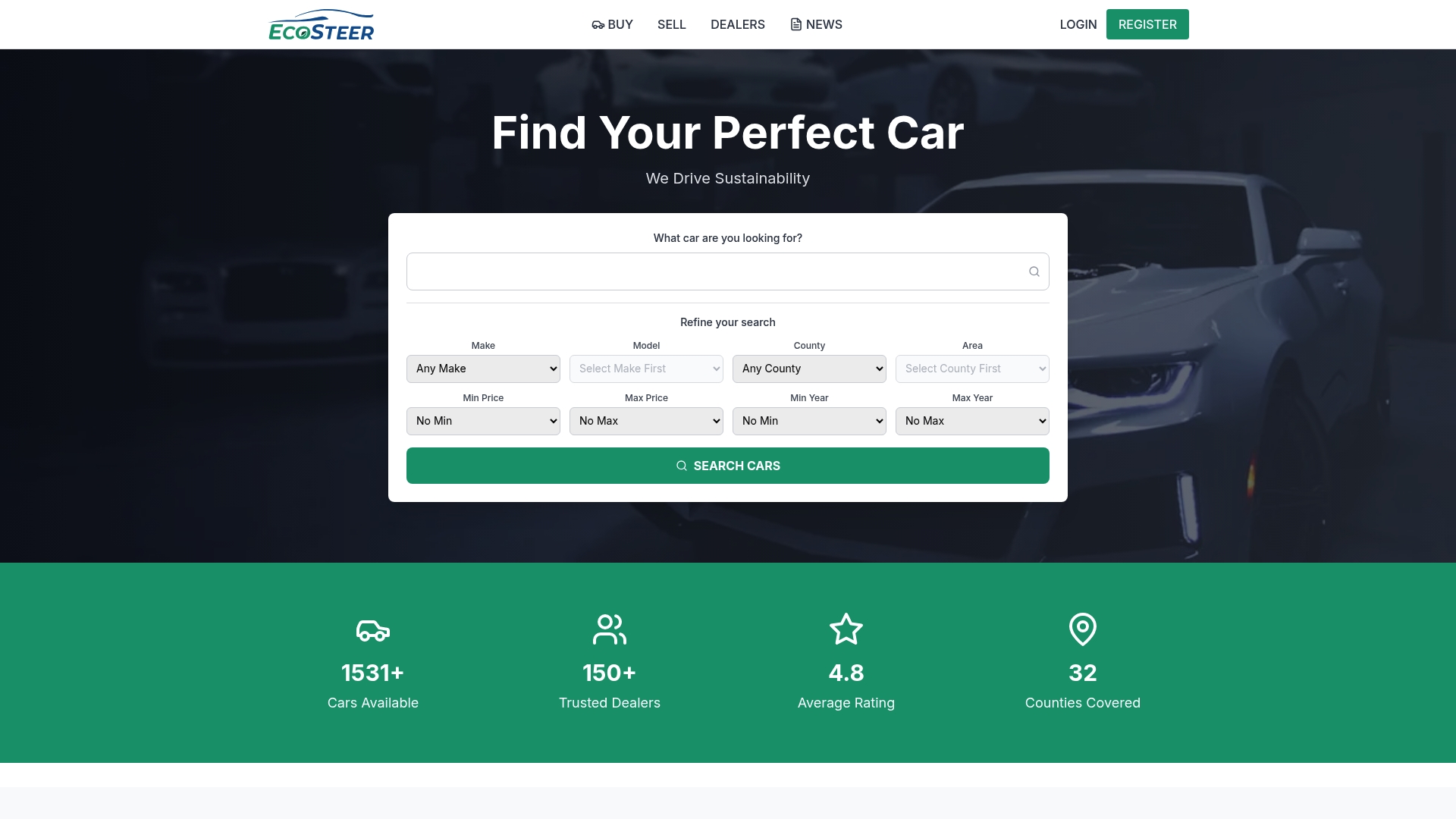
Listing on this platform means your car details, county, price band, trim, mileage, and NCT status sit in a consistent structure from the start, which is the format buyers and AI-driven search tools respond to best. There are options for lower-value vehicle listings, and tools to help dealers presenting electric and hybrid stock highlight grants and running costs. Buyers can also find dealers by county, which widens your visibility beyond a single search result.
If you’re ready to apply the one-hour response habit and the trust-building VDP structure from this guide without rebuilding your workflow from scratch, list your next car on Ecosteer and see your enquiries land in one place from day one.
Sources
- Can AI make buying a second-hand car easier? – The Irish Times
- FAQ on consent for electronic direct marketing (Data Protection Commission / UCD host)
- Price reductions guidance (Competition and Consumer Protection Commission)
FAQ
What is the ideal response time for a car listing enquiry in Ireland?
Aim to reply within one hour during business hours, which has become the standard buyers expect on Irish marketplaces. Beyond that window, interest cools quickly and buyers typically move to the next dealer’s listing.
Do I need consent to email past car buyers about new stock?
Generally yes, but Ireland’s ePrivacy rules include a limited exception for existing customers if you offered an opt-out when you first collected their details, the marketing concerns a similar product, and it’s sent within 12 months of that initial contact. Outside those conditions, get fresh consent first.
How should I advertise a price reduction legally?
You must display the genuine prior price, meaning the lowest price the car was advertised at within the previous 30 days. Avoid vague “was more” claims that can’t be backed by an actual advertised price history.
What should go at the top of a car listing?
Lead with a one-sentence use-case summary followed immediately by mileage, NCT expiry, transmission, and price band. This structure helps both human buyers and AI-driven search tools quote the listing back accurately.
Does Ecosteer charge for listing a car?
Ecosteer offers free listings for vehicles under a certain price, with paid options for additional exposure and higher-value stock. Current pricing details are available directly on the Ecosteer site.
Recommended
Ecosteer Editorial
Author