Private Sellers: 3 Car Ad Templates That Bring Serious Buyers
Car ad checklist for private sellers: front load year, model, mileage and price. Use three platform templates, a 10 photo set and a logistics line to...

Front-load the essentials: year, make, model, trim, mileage and price, in that order, in your very first line. Add one standout feature and a trust signal, either a full service history or confirmation the VIN is available. Finish with clear photos and a short logistics note on payment and viewings. Do that and you filter out time-wasters before they even message you.
TL;DR:
- A clear, detailed head-line including year, make, model, trim, and price is crucial for visibility and attracting serious buyers.
- High-quality photos should follow a specific sequence, showcasing exterior, interior, engine, and wear details to build credibility.
- Listing shorter for social platforms requires a concise lede plus three key facts, while longer ads need detailed specifications and history.
- Always state a precise asking price backed by market references and be transparent about faults with supporting photos to build trust.
- Uploading during peak times, in good light, with honest details and a filter phrase about collection logistics, reduces time-wasters and improves responses.
Table of Contents
- How to write a car ad: the essential facts every listing needs
- What photos actually sell a car?
- What should the first two lines of your car ad say?
- How long should a car ad be for each platform?
- How should you word your asking price?
- How honest should you be about faults and history?
- Car ad templates you can copy and adapt
- A few practical notes before you post
- Two quick wins to do before you post today
- List your car on Ecosteer in minutes
- Sources
How to write a car ad: the essential facts every listing needs
A car ad works like a job application. Miss a required field and the buyer scrolls past without a second thought. Front-loading the year, make, model, trim, mileage and asking price is what gets your listing surfaced in search previews in the first place, so these fields aren’t optional extras, they’re the backbone of the ad.
Once the headline facts are in place, build out the supporting details buyers actually screen for:
- Headline fields: year, make, model, trim, and one standout feature (low mileage, single owner, recent service)
- Mechanical basics: exact mileage with the date it was recorded, engine size, transmission type, fuel type and body style
- History: number of previous owners, any major repairs, and whether the VIN is available for a history check
- Title status: clean, rebuilt or subject to a lien, plus any transferable warranty or EV battery health report
- Contact details: how you want to be reached and when you’re free for viewings
Skip the VIN and serious buyers assume you’re hiding something. Transparency about vehicle history builds buyer trust and it’s often the single detail that justifies your asking price over a cheaper, less documented car nearby.
What photos actually sell a car?
Buyers decide whether to click “message seller” within seconds, and the photos do most of that work. A strong gallery drives message volume and show rates more reliably than clever copy ever will.
- Front three-quarter shot as your cover image, taken in soft daylight against a plain background
- Both full sides of the car, straight on
- Rear three-quarter and straight rear shot
- Interior front seats and dashboard
- Interior rear seats
- Boot or load area, empty
- Odometer reading, sharp and legible
- Engine bay
- All four tyres, showing tread depth
- Close-up shots of any scratches, dents or wear you’re disclosing
Wash the car first, shoot early morning or late afternoon, and keep the camera steady. Number your photos mentally as you upload them, then reference specific shots in your description, “see photo 4 for the small kerb scuff on the front bumper.” That single habit does more for credibility than any adjective you could write.
What should the first two lines of your car ad say?
Your headline and lede get read before anything else, sometimes before the buyer even opens the listing. Get this wrong and nobody sees the rest.
Use a simple headline formula: YEAR MAKE MODEL TRIM, standout detail, price if space allows. Something like “2019 Toyota Corolla Sport, one owner, full service history, €16,500” tells a buyer everything they need in a single glance.
Your lede is the one or two sentences that follow, and on mobile this is often all that shows before “see more.” Keep it to 150 to 200 characters, state the price plainly, and lead with a trust signal such as VIN availability, service history or single ownership.
- Skip vague adjectives like “lovely” or “must see”, they say nothing a buyer can act on
- Avoid ALL CAPS, it reads as desperate rather than confident
- Lead with one concrete benefit, not three weak ones stacked together
How long should a car ad be for each platform?
The same car needs three different write ups depending on where it’s listed, because preview behaviour and buyer expectations vary by platform. A social marketplace buyer skims. A specialist listing reader wants documentation.
- Short, for social marketplaces: your lede plus three bullet points covering price, mileage and one standout feature, nothing more
- Medium, for general classifieds: lede plus six to ten bullets covering key specs, and one sentence describing overall condition
- Long, for specialist listing sites: lede, full ownership history, a maintenance summary, complete specifications and a logistics paragraph
Because most mobile previews cut off after 150 to 200 characters, a social lede that tries to say everything just gets truncated mid-sentence, which looks unfinished and costs you clicks. Keep your canonical facts, mileage, price, VIN status, identical across every version, only the length and framing should change.
Post at times when your target buyers are most active, such as evenings or weekends, and refresh your listing periodically to maintain its visibility.
How should you word your asking price?
Price wording shapes both how many messages you get and how serious they are. Say too little and you invite lowball offers all day; say too much without backing it up and buyers assume you’re not negotiable.
- Always state a clear and specific price.
- Back it up briefly if useful, for example noting if the price is supported by value guides or recent service costs.
- Use concise negotiation phrasing such as “small negotiation for serious buyers” rather than vague or overly common terms.
- Reference an external valuation guide when your price sits above the obvious market range to pre-empt pricing questions.
Clear pricing language invites people ready to view and buy, unlike vague pricing which invites vague enquiries.
How honest should you be about faults and history?
Naming a fault feels risky, but it isn’t. Listings that disclose problems and link them to supporting photos sell faster than listings that hide issues, because buyers who show up already expecting a flaw don’t walk away disappointed, and they don’t waste your evening haggling over something they could see in the photos anyway.
- Name the fault precisely: location, size, and a reference to the relevant photo (“small dent, driver door, see photo 9”)
- Give real service dates and mileage at service, with amounts where it helps (“timing belt replaced at 98,000km, March 2025, €480”)
- State the VIN in the ad, or note it’s available to serious buyers, so they can run their own history check
- Use short, factual disclosure phrases; they read as confidence, not confession
Concrete numbers provide clear information. For example, instead of saying “Serviced regularly,” specify “four services logged, last one at 62,000km, receipts available.”
Pro Tip: Write your disclosures before you write your selling points. Getting the honest details down first stops you from accidentally burying a fault under enthusiastic adjectives later.
Car ad templates you can copy and adapt
Three templates cover almost every platform you’ll use, and the structure behind them, lede, selling points, specs, condition, maintenance, logistics, stays consistent even as the length changes.
- Social short: “2018 Ford Focus 1.5 TDCi Titanium, 89,000km, one owner, full service history, €10,750.” Then three bullets: mileage and fuel, service history, contact and viewing times.
- Classified medium: the same lede, followed by six to ten bullets covering engine, transmission, tyres, recent repairs, VIN availability, and one sentence on condition (“light wear on driver seat, see photo 6, otherwise excellent”).
- Long listing: lede, full ownership and service timeline with dates and amounts, complete specification list, honest condition notes tied to numbered photos, and a logistics paragraph covering payment, test drives and VIN sharing.
Before: “Great little runner, well looked after, won’t last long.” After: “2017 Skoda Fabia, 76,500km, two owners, four dealer services logged, timing belt done at 70,000km.” The second version answers every question the first one raises.
A few practical notes before you post
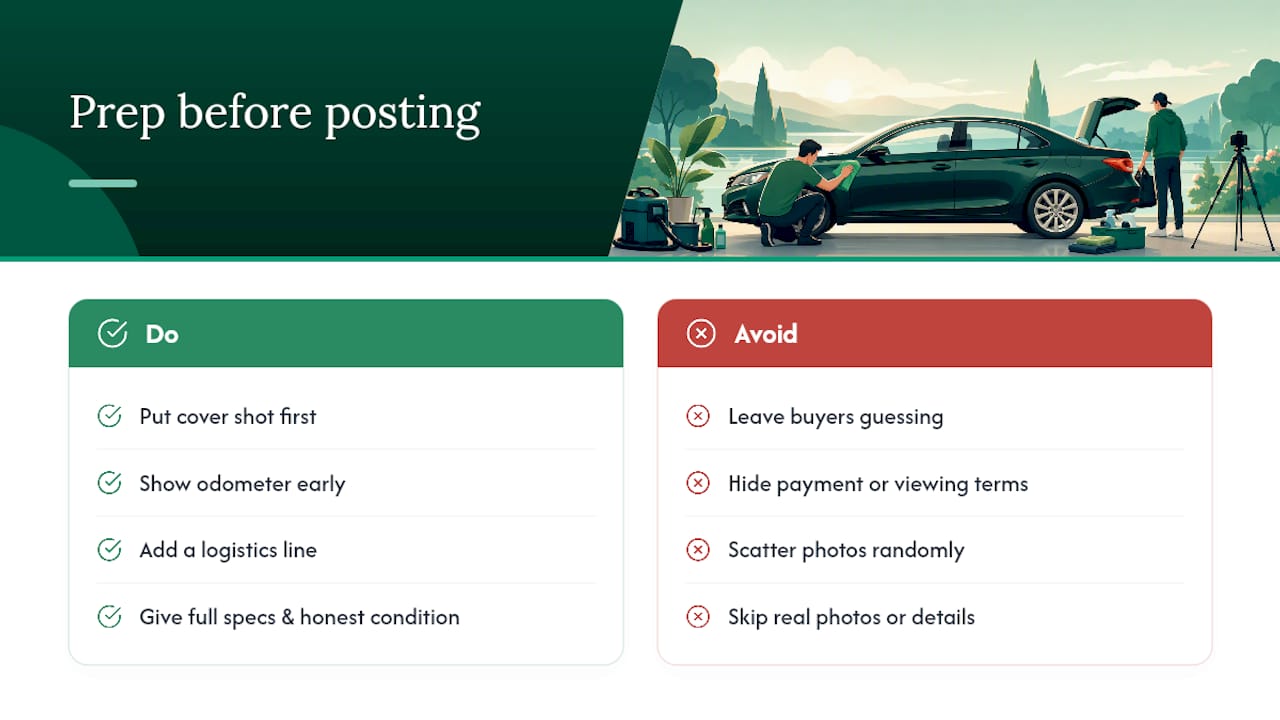
Order your photos with the cover shot first and the odometer early, buyers judge in seconds. Add a logistics line to every ad, cash or bank transfer on collection, viewings by appointment, VIN shared with serious enquirers only. That single sentence filters out most timewasters before they message you.
Listing behaviour on a structured marketplace tends to reward exactly this kind of upfront detail, complete specs, real photos, honest condition notes, over listings that leave buyers guessing.
Two quick wins to do before you post today
Clean the car properly and shoot your cover photo in good light, that’s thirty minutes well spent. Then write your lede with the price and one trust signal front and centre, and post it during an evening or weekend peak. Ecosteer’s guides can help with the rest.
— ibrahim
List your car on Ecosteer in minutes
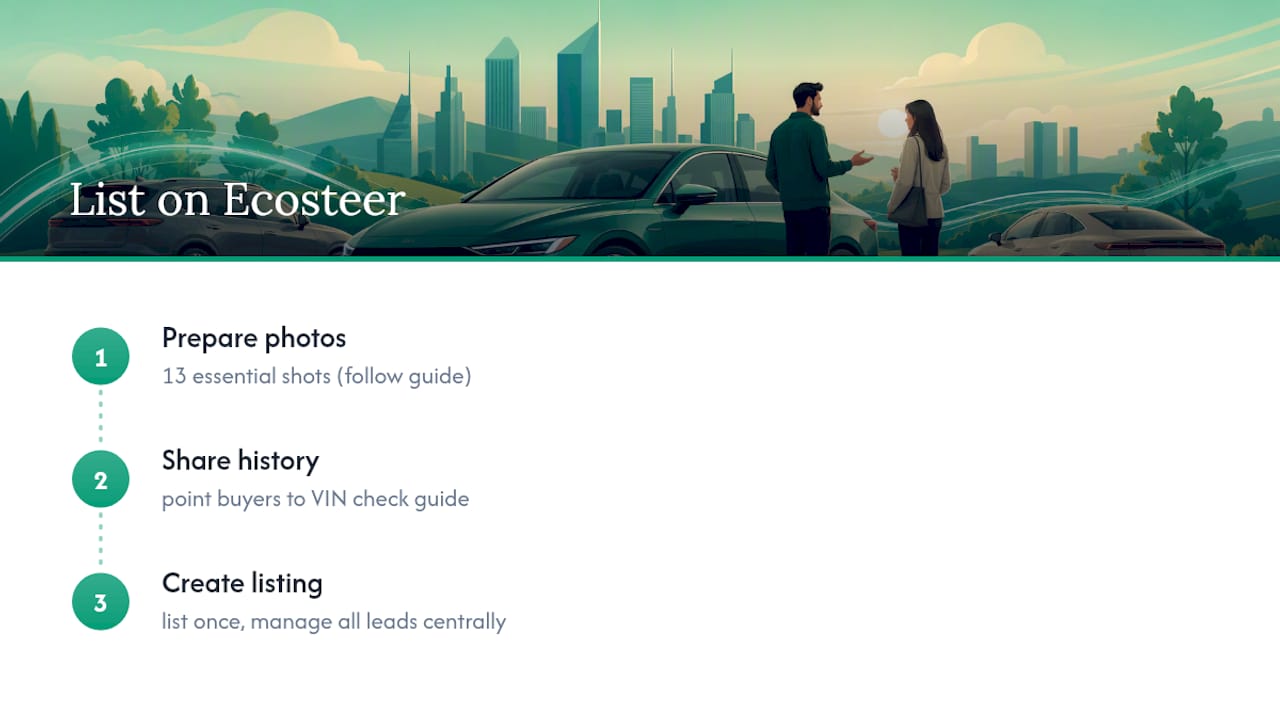
This platform is a practical shortcut for private sellers who don’t want enquiries scattered across multiple apps and a phone full of missed calls. Instead of juggling messages on multiple sites, you list once, manage every lead from one place, and get seen by buyers actively searching by various criteria.
Getting your photos right matters more than most sellers realise, and our guide to car sale photography walks through the same 13 shots covered above, step by step. If a buyer asks about vehicle history before committing, point them to our breakdown on how to check car history in Ireland so they can verify the VIN themselves.
When you’re ready to put the checklist into practice, start your listing on Ecosteer and get your car in front of buyers who are already searching for exactly your make and model.
Sources
The checklists and templates above draw on a handful of trusted how-to resources worth bookmarking:
- How to Create a Good Classified Car Ad
- How to write effective car descriptions for dealer listings
- How to write a used car ad description? (That sells)
Before you meet any buyer in person, run a vehicle history check on your own car so you can answer questions confidently, and never share full payment details until a viewing is confirmed.
Recommended
Ecosteer Editorial
Author