Sell Smart in Ireland: 3 Signals to Know When to Sell Your Car
Use three clear signals to decide when to sell your car in Ireland: season, upcoming mileage cliffs, and repair or loan cost triggers.
Sell when three signals line up: seasonal demand favours your vehicle type, you’re still ahead of the next big mileage or service cliff, and the repair or loan maths tips in favour of walking away. If a repair bill is closing in on half the car’s value, you’re facing negative equity, or life circumstances force your hand, don’t wait for the “perfect” month. Sell now.
TL;DR:
- Selling should be prioritized if repair costs approach half the car’s current market value or if negative equity is looming due to loan forgiveness limits.
- Timing for peak demand varies by vehicle type, with convertibles and sports cars best sold in late spring or early summer, and SUVs in autumn, but local market conditions can alter these patterns.
- Buyers tend to be most sensitive to mileage milestones, especially near warranty end or major service points, so selling just before these thresholds can maximize value.
- Urgency factors such as a need for quick cash, relocation, or loan repayment often override seasonal or mileage considerations, making immediate sale the best choice.
- Private sales usually yield higher prices but involve more effort, while dealer trade-ins and instant offers provide quicker options with generally lower returns, depending on how much time and hassle you want to invest.
Table of Contents
- Quick checklist: should I sell my car now?
- How the calendar and season affect car value
- Mileage and milestone rules of thumb
- Financial triggers: repairs, the 50% rule and your loan
- Private sale, dealer trade-in or instant offer: which route wins?
- Prepare your car to maximise its sale value
- How to price your car and check valuations
- A simple decision framework: sell now or wait?
- Ecosteer market insight and how we can help
- Why speed and price rarely align, and why that’s fine
- List your car on Ecosteer and reach real buyers faster
- Sources
Quick checklist: should I sell my car now?
Run through these signals before you decide. If most point the same way, you have your answer.
Sell now if:
- A repair quote is approaching half the car’s current value.
- You need cash quickly or you’re relocating.
- The car is outside warranty and mileage is climbing toward a value cliff.
- Local demand for your model has visibly picked up.
Hold if:
- The car is still under manufacturer warranty.
- You’re a few thousand kilometres short of a mileage milestone that will hurt resale.
- Seasonal demand for your vehicle type is months away and you can wait.
Score it simply: two vehicle-condition signals plus one market signal pointing to “sell” usually outweighs a single reason to hold.
How the calendar and season affect car value

Spring through early summer is the broadest peak for used car demand in Ireland, partly because tax-refund season puts more buyers in a position to spend. But timing isn’t identical across every vehicle type.
Convertibles and sports cars fetch their best prices from late spring into early summer, when buyers are picturing the year ahead. 4x4s and SUVs tend to see stronger interest in autumn, as buyers start thinking about winter roads and school runs. Certain models follow predictable seasonal demand cycles that a patient seller can use to their advantage.
That said, seasonal swings aren’t fixed law. In a tight supply market, seasonal price gaps compress and off-season penalties shrink, which means selling in what’s normally considered the “wrong” month may cost you far less than the old rules of thumb suggest. Check recent local listings before assuming you must wait for a seasonal window.
- Convertibles and sports cars tend to sell best from late spring to early summer.
- SUVs and 4x4 vehicles often see higher demand in early autumn.
- Family hatchbacks and saloons show less seasonal demand and are influenced more by mileage and condition.
Mileage and milestone rules of thumb
Buyers think in round numbers, and that shapes what they’ll pay. Odometers crossing certain thresholds trigger a visible drop in offers, even when the mechanical difference between 59,000km and 61,000km is negligible.
Three common mileage milestones affect buyer perception: around the end of bumper-to-bumper warranty coverage on newer cars, the point where major service items typically arise, and a significant psychological mileage threshold. Selling before these points tends to retain more value. Selling before a car crosses one of these lines, even by a small margin, tends to hold value better than selling just after. Sellers who list before major warranty or service milestones typically retain more value than those who wait until the car has visibly aged past them.
Highway-heavy mileage is generally viewed more favourably than the same distance racked up in stop-start city driving, since city miles wear brakes, clutches, and suspension components faster.
- Near the end of basic warranty coverage: buyer appeal may decrease.
- When major service costs approach: some buyers may be deterred.
- At high mileage milestones: buyers may perceive the vehicle as less valuable.
Pro Tip: If your car is within a few thousand kilometres of one of these thresholds and you’re on the fence, list it now rather than after your next long motorway trip pushes it over the line.
Financial triggers: repairs, the 50% rule and your loan
Money problems are usually the clearest signal to sell, and there’s a simple test to apply before you commit to a repair bill.
- Apply the 50% rule. When a single repair quote approaches half the car’s current market value, it’s worth seriously weighing replacement instead of repair.
- Convert everything to a common cost. Estimate the car’s remaining useful life after the repair, then compare that against the monthly cost of replacing it, including loan repayments, insurance, and expected maintenance. Whichever option is cheaper per month wins.
- Check your loan position early. If you’re still paying off finance, get a clear payoff figure from your lender before listing the car. A car worth less than what you owe puts you in negative equity, and selling sooner, before further depreciation deepens that gap, usually limits the damage.
Private sale, dealer trade-in or instant offer: which route wins?
Each route trades price against speed, and the right choice depends on how much time and hassle you’re willing to absorb.
- Private sale typically nets the highest price, but it takes longer and demands more legwork: photos, viewings, negotiation, and paperwork all fall to you.
- Dealer trade-in is the easiest route, especially if you’re buying your next car from the same dealer, but the offer will usually sit below what a private buyer would pay.
- Instant or online offers sit in the middle: faster than a private sale, and typically better than a bare trade-in, making them a practical compromise when convenience matters more than squeezing out every last euro.
If you’re weighing a trade-in against buying elsewhere, our guide on getting the best car trade-in value walks through how to negotiate that offer up.
Prepare your car to maximise its sale value
A little preparation goes a long way toward what a buyer is willing to offer, and most of it costs far less than the value it adds.
- Gather your paperwork first. Your NCT certificate, full service history, receipts, and tax documents reassure buyers faster than any sales pitch.
- Fix only what pays for itself. A cracked light or worn tyre is worth replacing before sale; a full respray rarely recoups its cost.
- Invest in presentation. A professional valet and decent photos, similar to services like GarageMap’s detailing, can lift buyer interest disproportionately to the cost.
- Run a history check and be upfront about faults. Buyers pay more when they trust the seller, and documented maintenance backs that trust up. Our tips for selling fast in Ireland cover this in more depth.
How to price your car and check valuations
Setting the right asking price is part research, part instinct, and it’s worth doing properly before you list.
- Pull figures from two or three valuation tools rather than relying on one, since combining valuation guides with recent local listings gives a far more realistic price than either alone.
- Adjust for your car’s actual condition and any recent movement in the local market, not just its age and mileage.
- Price with a small negotiation buffer built in, typically a few hundred euro above your true walk-away figure.
- Take a dealer’s convenience offer when speed matters more than maximising price; hold out for a private buyer when you have time and the difference is significant.
A simple decision framework: sell now or wait?
Combine three signals: is the season working for your vehicle type, is your car ahead of its next mileage cliff, and does your personal timeline demand cash now?
- All three favour selling (right season, under the mileage threshold, no urgent need) → list now for the best combination of price and ease.
- Personal need is urgent (repair bill, relocation, negative equity) → sell immediately regardless of season; speed outweighs a few percentage points of seasonal premium.
- Vehicle and market signals are weak, no urgency → hold, but recheck monthly, since tracking short-term offer trends tells you when conditions shift.
Ecosteer market insight and how we can help
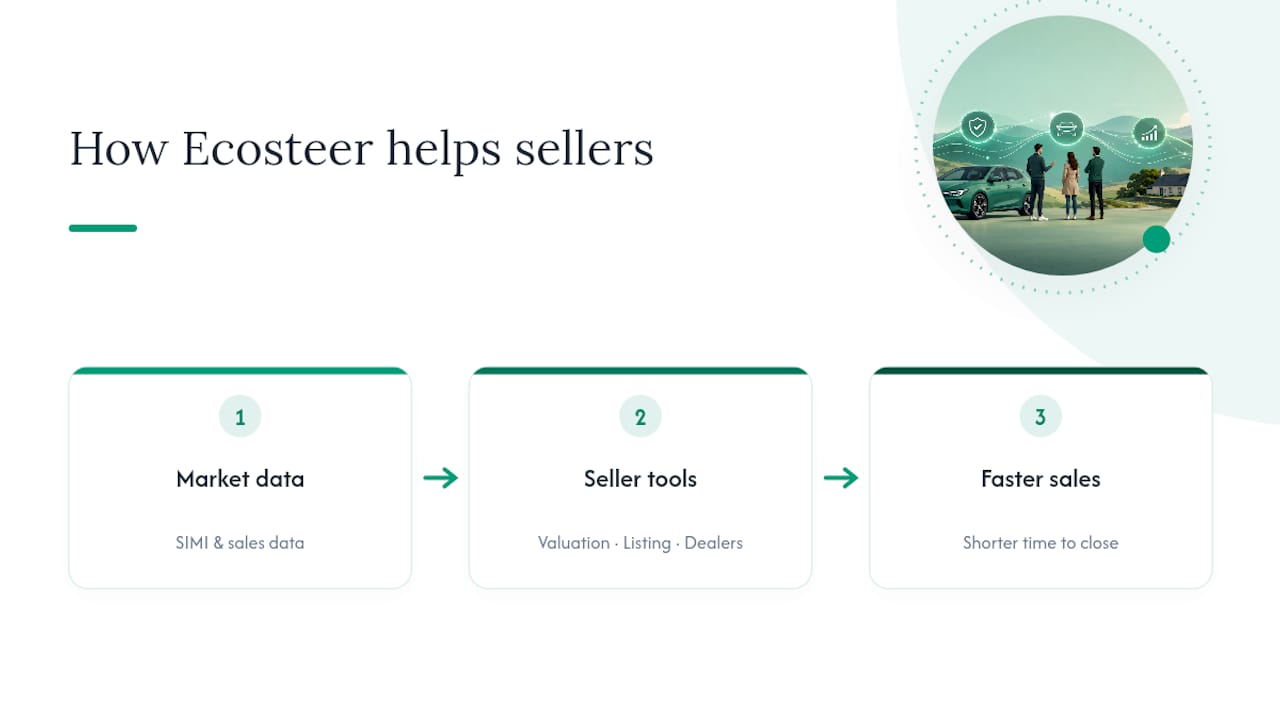
Ecosteer draw on SIMI-informed sales data, including our own analysis of Ireland’s best-selling cars, to track which models are gaining buyer interest month to month. That data feeds directly into how we help sellers time their listings.
Our valuation tools, listing flow, and dealer-discovery features are built to shorten the gap between deciding to sell and closing a sale, cutting out the guesswork that usually stretches a private sale out for weeks.
Why speed and price rarely align, and why that’s fine
Every seller wants top price and a quick sale, but the two usually pull against each other. A car listed the week a repair estimate arrives will sell faster than one held back for a seasonal peak three months away, and that trade-off is often the right one to make. I keep coming back to the same three-signal test: season, mileage cliff, personal timeline. It’s not clever, but it’s repeatable, and repeatable beats clever when you’re trying to make a decision under pressure.
— ibrahim
List your car on Ecosteer and reach real buyers faster
Ecosteer connects your listing directly with dealers and private buyers across Ireland, cutting out the weeks of unanswered calls that private selling often involves. Instead of juggling classifieds and cold enquiries, you get transparent leads, straightforward valuation guidance, and visibility to a network of dealers who are actively looking to buy.
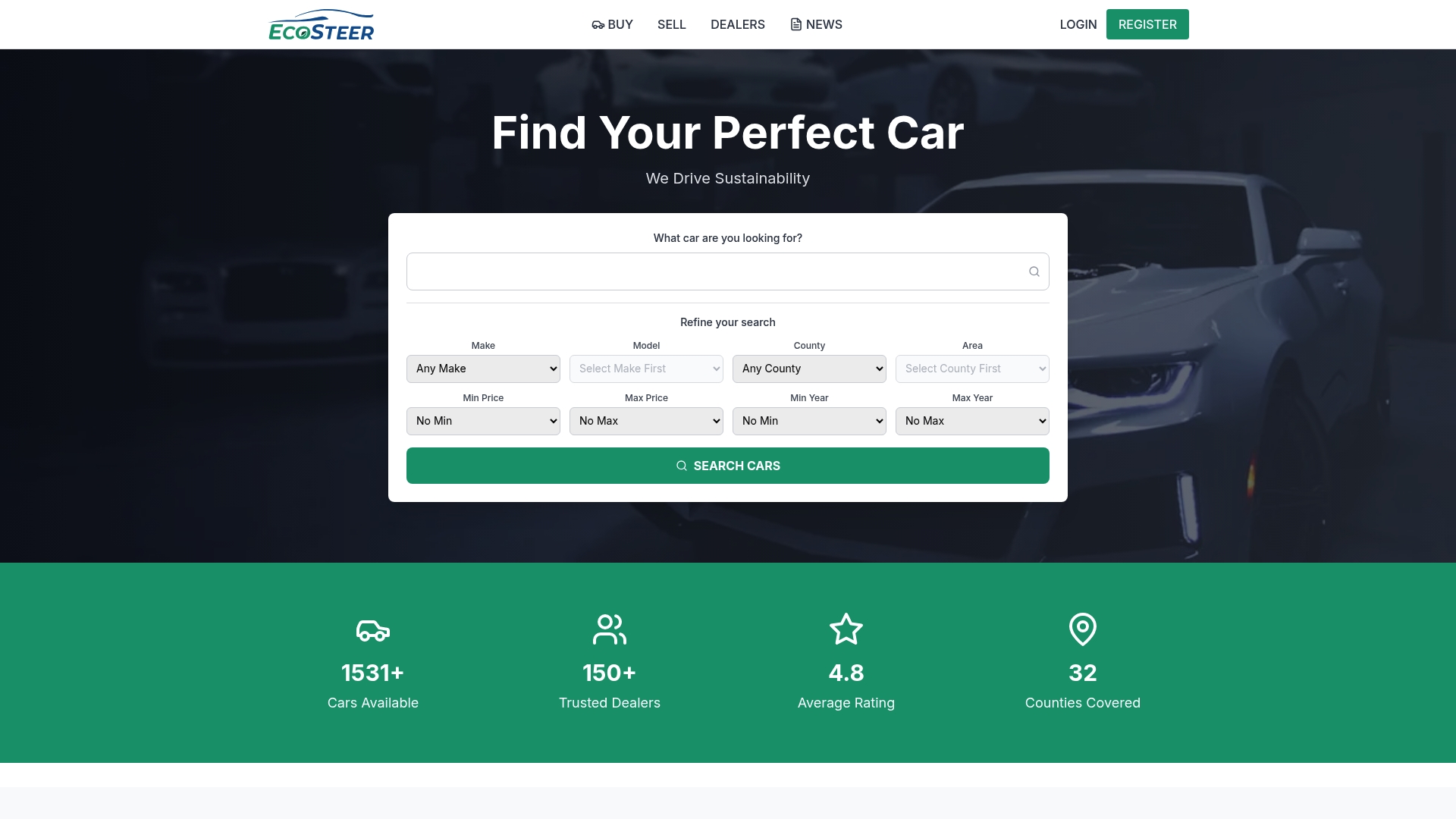
If your car ticks the boxes from the checklist above—whether that’s an approaching mileage cliff, a repair quote that’s tipping the 50% rule, or simply strong seasonal demand for your model—now is the moment to act. Head to Ecosteer to list your vehicle, or check current listings in Cork to see what similar cars are fetching in your area before you set your price.
Sources
- How to know when it’s time to replace your car — start with this rule | CNBC
- When is the best time to sell a car? | Progressive
- What’s the best time of year to sell my car? | Motorcheck
Recommended
Ecosteer Editorial
Author