Safe Car Payments: Irish Sellers Must Check Funds Before the Keys
Verify cleared funds before handing over keys in an Irish private car sale. Learn how to check bank transfers, cash, drafts, and suspicious escrow offers.

The safest payment for a car sale in Ireland is a same bank or SEPA Instant transfer that lands, cleared, in your own account before you hand over the keys. Open your banking app and confirm the amount, the sender’s name and IBAN, and the settled status yourself. Never release the car on a screenshot, an uncertified bank draft, or an unfamiliar escrow link.
TL;DR:
- SEPA Instant payments can settle within seconds, while standard transfers usually take one business day and may wait through weekends or bank holidays.
- For cash, count notes together and deposit them with a teller immediately; use feel, look, and tilt checks or request machine screening.
- Forged drafts have been used in courier pickup scams; call the issuing branch during banking hours to verify authenticity and funding before accepting one.
- Treat Revolut or PayPal payments as deposits rather than full settlement unless you confirm they are irreversible; require the remaining balance by bank transfer.
- After payment clears, complete the VRC ownership transfer through the National Vehicle and Driver File, then retain the signed section, receipt, and payment record.
Table of Contents
- How private car sales in Ireland typically get paid now
- Bank transfers: SEPA Instant vs standard SEPA and how to verify funds
- Accepting cash: when it makes sense and how to check euro notes
- Bankers’ drafts, cheques and escrow offers: the scams Gardaí warn about
- Other electronic payments and P2P apps: what to watch for
- Safe handover sequence: an ordered checklist for the sale meeting
- Paperwork and next steps after payment: VRC transfer and records to keep
- What we see go wrong, and three rules worth following
- How EcoSteer supports a safer private sale
- FAQ
- Sources
How private car sales in Ireland typically get paid now
Bank transfers have become the default way to pay for a used car bought privately in Ireland. SEPA Instant Credit Transfer is now available through most major banks and fintechs, so buyers can send funds that settle in your account within seconds rather than days.
Cash and bank drafts haven’t disappeared, but they’re increasingly rare for higher value deals, mostly because sellers have grown wary of forged drafts and counterfeit notes. Electronic transfer gives both sides a clear, time stamped record, which matters when there’s no shop front or paper contract to fall back on.
That shift towards digital payments comes with its own risks. The Central Bank of Ireland’s payment fraud statistics show the value of fraudulent credit transfers rose in 2025, even as Strong Customer Authentication is now widely applied across electronic payments. Credit transfers remain one of the higher value fraud categories tracked by the Central Bank, which is exactly why checking your own account matters more than trusting what a buyer shows you.
What buyers commonly offer when sealing a private sale:
- A SEPA Instant or standard bank transfer to your Irish IBAN.
- Cash, usually for lower value cars or quick local sales.
- A bank draft or cheque, less common now but still presented occasionally.
- Peer to peer apps such as Revolut, usually for small deposits rather than the full balance.
Bank transfers: SEPA Instant vs standard SEPA and how to verify funds
SEPA Instant Credit Transfer (SCT Inst) moves money between Irish IBANs in seconds, around the clock, every day of the year. If your bank and the buyer’s bank both support it, the payment should appear in your account almost immediately, which makes it the method we’d point most sellers towards.
Standard SEPA transfers work differently. They typically clear within one business day, but cut off times, weekends and bank holidays can delay a payment that was sent on a Friday evening until the following Monday. That gap is exactly when scammers push sellers to hand over a car based on a “sent” confirmation rather than a “received” one.
Before you release the vehicle, work through this checklist:
- Open your own banking app, not an email or text the buyer sent you.
- Confirm the credited amount matches the agreed price exactly.
- Check the originating IBAN and account name match the buyer’s ID.
- Confirm the transaction shows as cleared or settled, not pending.
- If you’re at all unsure, ask your bank for a lodgement receipt before leaving the branch.
If the transfer isn’t visible in your account, don’t accept assurances that it’s “on its way.” Either insist on meeting at the buyer’s own bank branch so staff can confirm the transfer in person, or postpone the handover entirely.
Pro Tip: Ask the buyer to make the transfer while you’re both still standing in a bank branch. Staff can usually confirm a SEPA Instant payment landing within minutes.
Accepting cash: when it makes sense and how to check euro notes
Cash still suits smaller, lower value private sales, particularly for older cars sold locally where both parties prefer a quick, in person exchange. The key safeguard is timing: walk to a bank branch and lodge the cash with a teller straight away rather than carrying it home or counting it in a car park.
Before you accept any notes, the Central Bank of Ireland’s counterfeit guidance sets out simple Feel-Look-Tilt checks: genuine notes have a raised print you can feel, a watermark and thread visible when held to the light, and a colour shifting image that changes when you tilt the note. A bank teller can run notes through a counting machine with built in detection if you’re not confident checking them yourself.
Practical steps for handling cash safely:
- Meet at or near a bank branch during opening hours wherever possible.
- Count the cash together before signing anything over.
- Deposit the full amount immediately rather than leaving with it.
- Ask the teller to flag any note they’re unsure about.
A noticeable proportion of euro notes checked under suspect counterfeit procedures across the euro area are confirmed fakes, according to the Central Bank’s guidance on handling suspect notes, which is why a bank teller’s check matters more than a quick glance yourself. Suspect notes should be handed to your bank, which forwards them to the Central Bank’s National Analysis Centre, or reported to An Garda Síochána.
Bankers’ drafts, cheques and escrow offers: the scams Gardaí warn about
An Garda Síochána has documented a recurring scam pattern involving forged bank drafts and a courier or “driver” who collects the car on the buyer’s behalf. The Gardaí’s account of an on-line car scam describes sellers accepting what looked like a genuine draft, handing the car to a third party collecting it, and only discovering the draft was forged once it was too late to recover the vehicle.
Red flags worth treating seriously:
- A buyer who insists on evening, weekend or bank holiday handover, when branches are closed and drafts can’t be verified.
- Payment offered by draft or cheque rather than transfer, especially from someone who hasn’t seen the car in person.
- A courier or driver turning up to collect the car instead of the buyer.
- Pressure to complete the sale quickly, before you’ve had time to check anything.
If someone hands you a bank draft, get the issuing branch name and draft number, then call that branch directly during banking hours to confirm it’s genuine and funded, rather than relying on a number the buyer gave you. Better still, lodge the draft at the branch and wait for confirmed clearance before releasing the car. Email screenshots and buyer supplied phone numbers prove nothing on their own.
Other electronic payments and P2P apps: what to watch for
Buyers in Ireland increasingly offer deposits or partial payments through apps like Revolut or PayPal, usually to secure a car while they arrange the balance separately. These apps work fine for small, refundable deposits, but we wouldn’t treat them as the main payment for the full sale price.
Strong Customer Authentication under PSD2 means most electronic payments now require extra verification steps, which reduces fraud without eliminating it. A payment can still be reversed, disputed or sent from a compromised account even when SCA was applied correctly.
Points worth keeping in mind:
- Treat P2P app payments as deposits, not full settlement, unless you’ve confirmed the funds are irreversible.
- Check the sender’s name matches the buyer you’re meeting in person.
- Insist the final balance arrives as a bank transfer visible in your own account before handover.
Pro Tip: If a buyer pushes hard for PayPal “Goods and Services” or an unfamiliar escrow link, treat that as a reason to slow down, not speed up.
Safe handover sequence: an ordered checklist for the sale meeting
Getting the order right matters as much as the payment method itself.
- Agree a meeting time and place in advance, ideally a bank branch during opening hours.
- Bring the car, keys, Vehicle Registration Certificate (VRC) and your ID.
- Let the buyer inspect and test drive the car before any money changes hands.
- Once agreed, have the buyer initiate the transfer while you’re both present.
- Confirm the funds in your own banking app, checking amount, sender and cleared status.
- If paid by cash, lodge it with a teller immediately and get a receipt.
- Only once payment is confirmed, sign the relevant section of the VRC over to the buyer.
- Hand over the keys, service history and any spare parts last, after the VRC is signed.
- Keep your own copy of the lodgement slip, signed VRC section and buyer’s contact details.
If a buyer resists verifying payment in person, or pushes to collect the car before funds clear, postpone the handover. A genuine buyer won’t object to waiting a few minutes for a transfer to settle.
Paperwork and next steps after payment: VRC transfer and records to keep
Once payment clears, complete the change of ownership through the Department of Transport’s National Vehicle and Driver File as soon as possible, using the relevant section of the VRC. Holding onto the car or the VRC until payment is fully confirmed protects you if a dispute arises later.
Citizens Information notes that private car sales carry far fewer consumer protections than buying from a registered trader, which places more weight on the paperwork you keep. Documents worth holding onto:
- The signed VRC change of ownership section.
- Your bank lodgement slip or transfer confirmation.
- A private sale receipt signed by both parties.
- The buyer’s contact details and ID reference, where provided.
What we see go wrong, and three rules worth following
Working across thousands of private listings, the same mistakes keep turning up: sellers accepting a screenshot as proof of payment, handing over keys before a transfer has settled, and trusting a draft because it looked official. Buyers rarely intend harm, but a small number do, and the cost of checking is a few minutes against the cost of losing a car for nothing.
Three rules worth adopting: verify funds in your own account, not theirs. Meet at a bank branch whenever the sale value justifies it. And hold the line: no verified funds, no handover.
How EcoSteer supports a safer private sale
Listing your car properly from the start reduces a lot of this risk before a buyer ever gets in touch. On EcoSteer, you set out clear details, price and condition up front, which attracts buyers who are genuinely ready to purchase rather than chasing a bargain through pressure tactics.
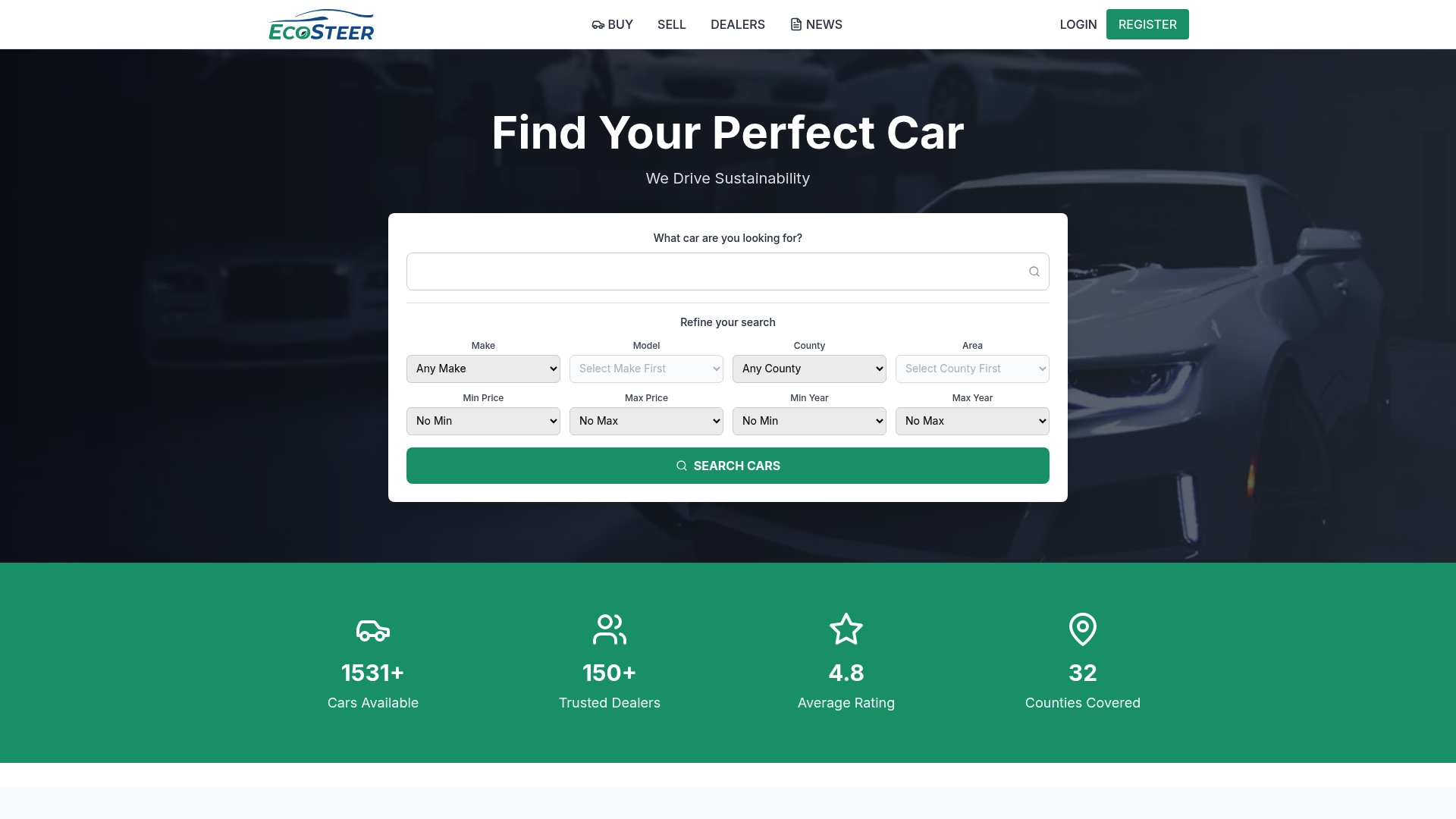
Our listing tools let you manage enquiries in one place, so you can spot a pushy or evasive buyer before agreeing to meet, and our seller guides walk through the payment checks covered here in more detail. Sellers in Louth and every other county can list directly through our local pages, with the same verification advice applying wherever you’re based.
Where a buyer raises escrow as an alternative to a bank transfer, services built specifically for vehicle sales, such as the Supercars for exotic car transactions, show how that route is meant to work: funds held by a vetted third party until both sides confirm the handover. That’s a reasonable option for high value or long distance deals, but for most private sales in Ireland, listing clearly and verifying a bank transfer yourself remains the simpler, lower effort route to the same safe outcome.
Ready to list? Start your listing on EcoSteer and set out the sale on your own terms.

FAQ
What is the safest form of payment when selling a car?
A SEPA Instant or standard bank transfer to your own Irish IBAN, confirmed as cleared in your banking app, is the safest option for most private sales. Avoid relying on screenshots, uncertified drafts or unfamiliar escrow links as proof of payment.
What is the safest way to pay for a private car sale?
Buyers should send a bank transfer directly to the seller’s verified account, ideally using SEPA Instant, which settles within seconds between Irish banks. Paying by cash or draft carries more risk and should only happen with both parties present at a bank branch.
What is the most secure way to accept payment for a car?
Confirm the payment has actually landed in your own account, checking the amount, sender name and IBAN, before handing over the keys or VRC. The Central Bank’s fraud statistics show credit transfer fraud rose in value in 2025, which is why independent verification matters more than buyer provided evidence.
How much commission do car salesmen make in Ireland?
Commission structures for car salesmen vary by dealership and aren’t publicly standardised, so there’s no single published rate to quote. If you’re selling privately through a platform like EcoSteer, you’re not paying a salesman’s commission at all, just a listing fee.
Sources
- Payment fraud statistics 2025 — Central Bank of Ireland
- On‑line car scam — Garda
- Buying a used car — Citizens Information
Recommended
Ecosteer Editorial
Author