Avoid the 30 minute PIN trap: transfer car ownership in Ireland now
Use Ireland's official CVO online steps, avoid the 30 minute PIN problem, and complete a same day transfer with practical seller-ready tips and a quick...
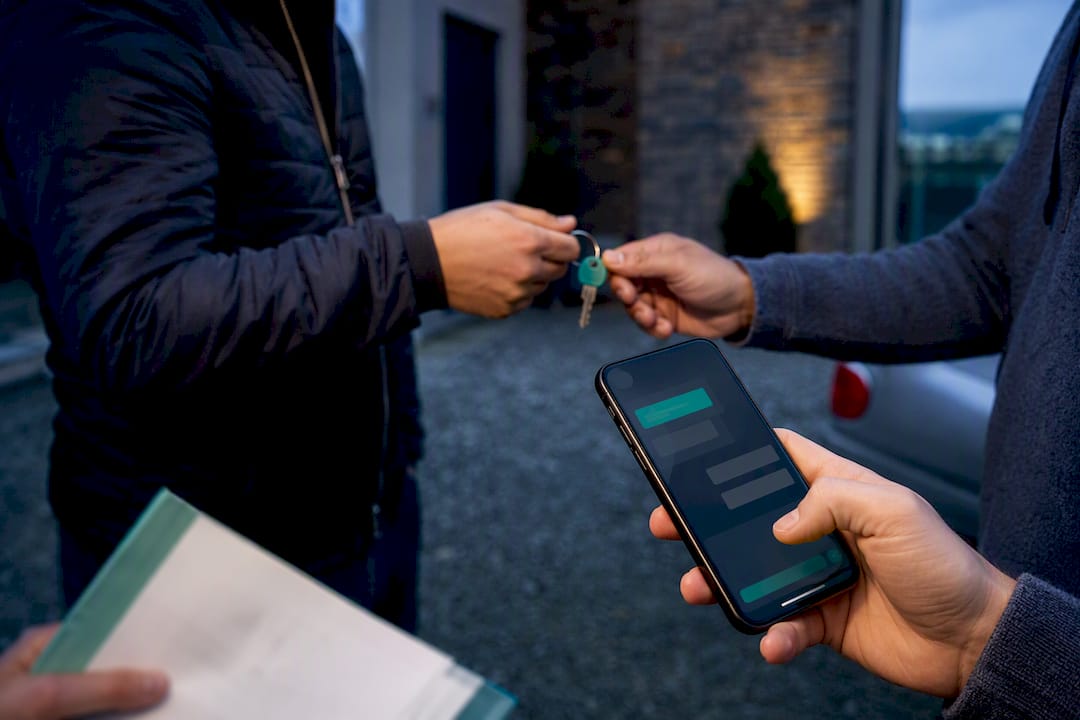
You can usually transfer car ownership in Ireland straight away using the Online Change of Vehicle Ownership (CVO) service — the seller starts the process, and the buyer finishes it with a one-time PIN and a verified MyGovID. Postal transfer using the Vehicle Registration Certificate (VRC) still works but takes longer. Either way, recording the change on the National Vehicle and Driver File (NVDF) fast protects both of you, and the Department of Transport and Ecosteer can each help you get there.
TL;DR:
- Ensure the VRC, registration mark, and buyer’s verified MyGovID are ready before completing the online transfer to prevent delays.
- The PIN used for online transfers is only valid for around 30 minutes, so both parties should be available simultaneously to finalize the process.
- Postal transfers take longer, especially when submitting through the Department of Transport, and the seller remains liable until the NVDF records the change.
- Using Form RF105 with a dealer or Form RF200 for pre-1993 vehicles is necessary when transferring outside the standard online system; statutory declarations are required if documentation is missing.
- Prioritize online transfers at the point of sale to avoid continued liability for fines, recalls, and correspondence, as postal or statutory paths can add weeks of risk.
Table of Contents
- Quick checklist: what you need before you start transferring car ownership in Ireland
- How do you transfer ownership online, step by step?
- Transferring by post, through a dealer, or in special cases
- What happens after the transfer is recorded?
- Which documents and forms do you actually need?
- Fixing the problems that actually trip people up
- Ecosteer’s tips for a same-day transfer that actually sticks
- Why the “just post the VRC” advice is outdated
- List your car or find a dealer through Ecosteer
- Sources
Quick checklist: what you need before you start transferring car ownership in Ireland
Before you touch the CVO portal, get these basics sorted. Missing even one of them is the single biggest reason online transfers stall.
- The VRC and the vehicle’s registration mark (VRM) to hand.
- Confirmation that the seller’s email address on the NVDF is current, since the one-time PIN goes there.
- A verified MyGovID account for the buyer, plus access to the buyer’s own email.
- Form RF105 ready if selling to a dealer, or Form RF200 if the car was registered before 1993.
- A statutory declaration prepared as a backup if the VRC has gone missing.
Pro Tip: Do the whole transfer at the point of handover, both of you standing there with phones in hand. It takes minutes and removes any chance of the seller forgetting later.
How do you transfer ownership online, step by step?
The vehicle change of ownership process in Ireland runs almost entirely through two logins, one from the seller and one from the buyer, and it can genuinely finish in a single sitting.
Seller’s steps:
- Go to the Online Change of Vehicle Ownership service and enter the VRM and the VRC number.
- Confirm your identity as the registered owner.
- Wait for the one-time PIN, which the system emails to whatever address is recorded on the NVDF.
- Pass that PIN to the buyer immediately, in person or by text.
Buyer’s steps:
- Sign in with a verified MyGovID.
- Enter the PIN the seller just gave you.
- Accept the ownership declaration on screen.
- Wait for confirmation that the transaction has been recorded and a new VRC is on its way.
Current guidance puts the PIN’s validity at roughly 30 minutes, so agree beforehand that you’ll both be free to complete this at the same time rather than sending the PIN and hoping the buyer’s free an hour later. The confirmation screen itself is worth reading properly. It flags tax status and NCT details tied to the vehicle, which gives you a second, useful check before money changes hands. Once it’s done, Motor Tax Online’s tracker lets either party check the transfer status by entering the registration number, which is handy proof if a dispute ever comes up later.
Around one million changes of vehicle ownership happen in Ireland each year, and roughly half are private sales rather than dealer transactions. That’s a lot of PINs flying between phones on driveways every week.
Transferring by post, through a dealer, or in special cases
Not every sale fits the tidy online path, so here’s what applies when it doesn’t.
- Private sale by post: both signatures go on the change-of-ownership section on the back of the VRC, then it’s posted to the Department of Transport, which posts a new VRC back to the buyer. Expect this to take noticeably longer than the same-day online route.
- Selling to a dealer: the seller completes Form RF105 and records the dealer’s Garage Identity Code. Approved dealers can often submit this themselves through the dealer online facility rather than posting it.
- Vehicles registered before 1993: these use Form RF200 instead of the standard process.
- No VRC available: a statutory declaration replaces it, signed and witnessed, then sent to the Department.
- Deceased owner: the executor or next of kin generally needs to complete a statutory declaration alongside probate documentation before the vehicle can move to a new owner.
What happens after the transfer is recorded?
The ownership date that matters legally is whichever date the Department actually processes the change, either the moment the online transaction clears or the date recorded after a posted VRC arrives. Not the date cash changed hands in the driveway.
A new VRC then goes out in the post to the new owner. Give it a few working days rather than expecting it instantly. One thing catches buyers out constantly: you cannot tax the vehicle until the NVDF shows you as the registered owner, so trying to tax it the same afternoon before the system has caught up usually just gets rejected.
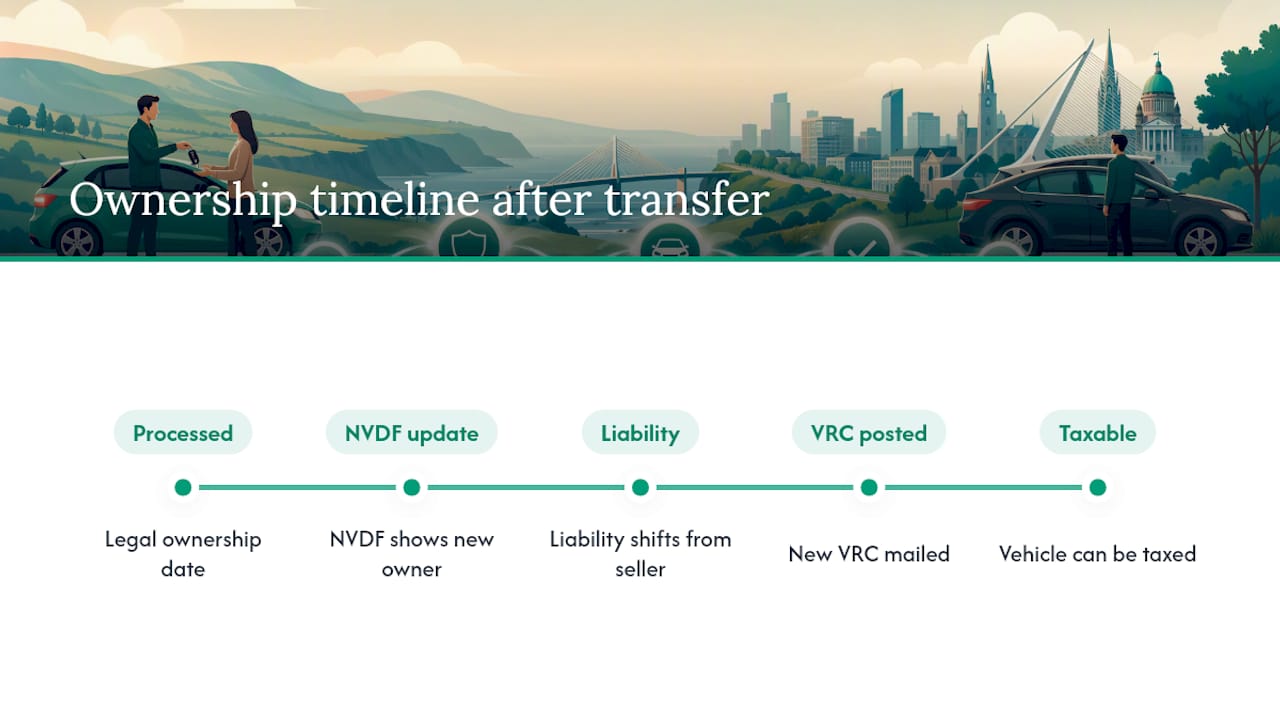
This is also where liability lives. Until the transfer is complete, the NVDF still lists the seller as the registered owner, which means fines, safety recalls, and correspondence keep landing on their doorstep, not the new owner’s. If a transfer seems to be dragging, check the motortax.ie tracker first before ringing anyone.
Which documents and forms do you actually need?
Most of the paperwork confusion around car ownership documents in Ireland comes down to not knowing which form applies to which situation.
- The VRC carries the vehicle’s full registration history; the change-of-ownership section on the back is what you fill in for a postal transfer.
- RF105 applies specifically when selling to a motor dealer, alongside their Garage Identity Code.
- RF200 applies to vehicles first registered before 1993.
- A statutory declaration stands in for a lost or damaged VRC and needs a witness authorised to take declarations, such as a solicitor or Peace Commissioner.
- MyGovID needs to be verified in advance, since a basic account without verification won’t get you through the buyer’s side of the CVO process.
Fixing the problems that actually trip people up
A seller who won’t send the VRC is the most common complaint. If asking directly doesn’t work, contact the Department of Transport, and consider the statutory declaration route as a legitimate way round a stuck seller.
An outdated email on the NVDF is the quieter killer of same-day transfers, because the PIN simply vanishes into an inbox nobody checks anymore. Update those details with the Department before you start, not after the PIN fails to arrive.
If the PIN expires or the CVO screen throws an error mid-transaction, don’t panic and don’t keep retrying blindly. Restart the process cleanly from the seller’s side and generate a fresh PIN.
Pro Tip: Screenshot the CVO confirmation screen the second it appears. It’s your proof the transaction happened, and it costs you nothing to keep it.
Ecosteer’s tips for a same-day transfer that actually sticks
Sellers who prepare properly rarely need more than the time it takes to hand over keys. Have the VRC, the correct VRM, and confirmation that your NVDF email is current before a buyer even views the car. That single check removes the delay that catches almost everyone out.
Agree with the buyer beforehand that they’ll bring a verified MyGovID and working email on the day, not “sort it out later.” Dealers benefit from the same discipline: keeping the Garage Identity Code and RF105 details ready, and using an approved online dealer submission facility instead of posting, shaves days off the process. A private sale versus dealer comparison is worth reading if you’re still deciding which route suits your sale.
Why the “just post the VRC” advice is outdated
The conventional wisdom you’ll still hear from older relatives, that posting the VRC is the safe, proper way to do things, hasn’t kept pace with what the Department actually built. The online CVO service exists precisely because postal transfers left too many sellers exposed for too long while paperwork sat in a sorting office. Real-time recording is the whole point.
What gets underestimated is how much of the risk in a private sale sits with the seller, not the buyer. If you’re selling, your exposure to fines and recall notices doesn’t end when you hand over the keys. It ends when the NVDF says it ends. That should change how you behave on sale day: you have every incentive to push for the online transfer there and then, PIN shared, MyGovID ready, rather than trusting a buyer to “get round to it.”
Prioritise the online route first, always. Treat the postal and statutory declaration paths as genuine fallbacks, not equal alternatives, because they hand you weeks of continued liability that a five-minute online transaction avoids entirely.
— ibrahim*
List your car or find a dealer through Ecosteer
Ecosteer gets you to a buyer who’s actually ready to complete the CVO transfer on the day, not someone still weighing up three other cars with no MyGovID sorted. That’s the real difference between listing here and just hoping a driveway sign works: buyers arrive with intent, and sellers arrive with paperwork ready.
If you’re selling, our guide on how to sell a car in Ireland walks through preparing your VRC and listing details so the online transfer goes through the same day you meet a buyer. If you’re buying, our step-by-step guide to buying a used car in Ireland covers what to check before you commit, including how to check a car’s history before you hand over any money. Sellers working with dealers can also find a dealer near them directly. Start browsing live listings on Ecosteer or view cars for sale across Ireland today.
Sources
- New online service simplifies transfer of vehicle ownership
- Online Change of Vehicle Ownership
- Change of vehicle ownership
- Change of Vehicle Ownership
Recommended
Ecosteer Editorial
Author