Start the VRC Transfer Same Day: Private Car Sale Receipt for Ireland
Make a valid private car sale receipt in Ireland and follow a day‑of‑sale workflow to start the VRC, RF200 or online PIN transfer while keeping payment safe.
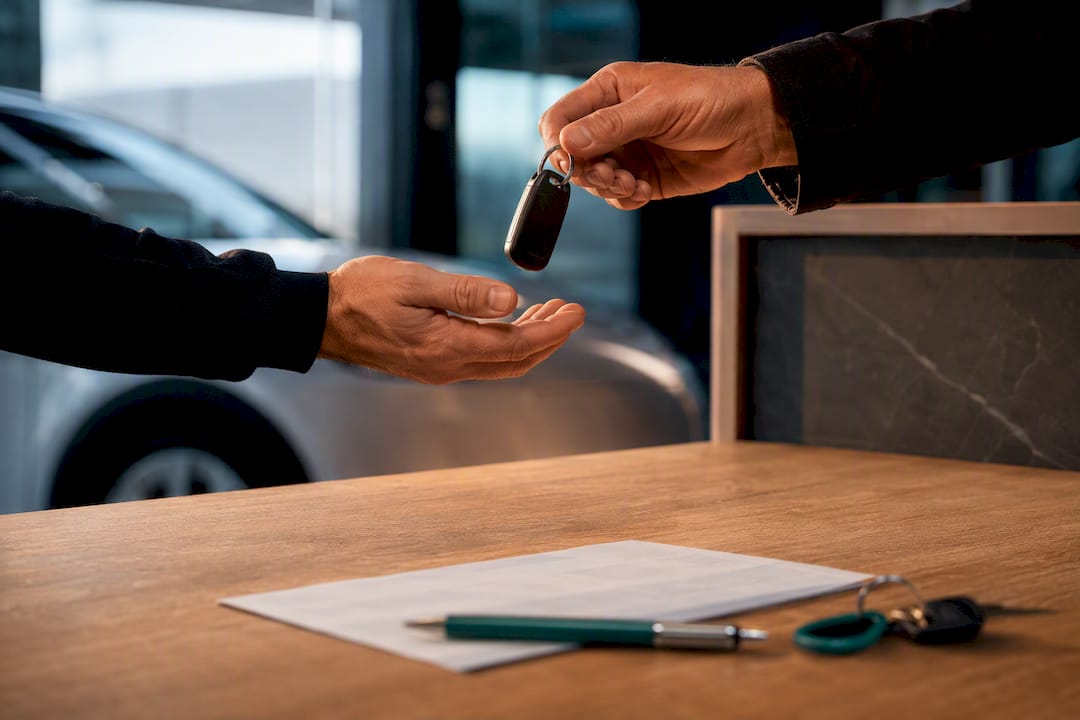
A valid private car sale receipt for Ireland must show the buyer and seller’s full names and addresses, the vehicle’s registration number and VIN, the agreed sale price, the date of sale, both signatures, and a clear “sold as seen” statement. Print two signed copies and keep one each. Once the receipt is done, the immediate next step is starting the official change of ownership with the Department of Transport, either online or by posting the relevant form.
TL;DR:
- The buyer’s full name, address, vehicle identifiers, sale price with payment method, and signatures are mandatory on the receipt, with two signed copies kept.
- For post-1993 cars, ownership transfer is done via the online PIN service, while pre-1993 vehicles require posting the RF200 form to the motor tax office.
- The purchase must be completed with a bank transfer, verified as cleared before handing over keys or the registration document, to ensure safety and traceability.
- Confirming no outstanding finance or liens on the vehicle is crucial; including this on the receipt protects the seller against future liabilities.
- Listing the car on platforms like Ecosteer becomes straightforward once paperwork is complete, helping sellers reach genuine buyers efficiently.
Table of Contents
- What to put on a private car sale receipt in Ireland
- How do you complete the receipt on the day of sale?
- How do you transfer ownership after a private car sale in Ireland?
- What’s the safest way to receive payment for a private car sale?
- Where can you find a reliable Ireland car sale receipt template?
- Ecosteer’s day-of-sale checklist for private sellers
- A seller’s perspective: why bother with a proper receipt?
- List your car once the paperwork is sorted
- Official forms and templates worth bookmarking
- Sources
- FAQ
What to put on a private car sale receipt in Ireland
Every field on the receipt earns its place. Miss one, and you risk a dispute later or a hold-up at the Motor Tax office.
Start with buyer and seller details: full legal names and current addresses. This matters more than it sounds. If a dispute ever reaches the small claims process, or the National Vehicle and Driver File needs correcting, vague or incomplete names cause real delays.
Next come the vehicle identifiers. List the registration number, the VIN (chassis number), make, model, year of registration, and the odometer reading on the day of sale. These details tie directly into the registration and insurance transfer, so double-check them against the actual vehicle, not just the logbook.
The sale price and payment method need their own line. Note the amount in euro and how it was paid. If it was a bank transfer, record the reference number and the account name it came from. This is a habit that pays off if a bank ever needs to investigate a payment dispute.
Add the date of sale and a short transfer-of-liability sentence confirming responsibility for the vehicle passes to the buyer from that date. Then comes the condition clause. “Sold as seen, tried and approved” is standard wording, but add a line for any known defects the seller has disclosed, whether that’s a slow puncture, a warning light, or bodywork damage.
Finally, address outstanding finance. If there’s a lien on the car, say so, or confirm there isn’t one. Both parties sign in ink, a witness is optional but sensible for higher-value sales, and you produce two identical signed originals, not photocopies passed back and forth.
- Buyer and seller names, addresses
- Registration number, VIN, make, model, year, mileage
- Sale price and payment method (with bank reference)
- Date of sale and liability transfer statement
- “Sold as seen” clause plus any disclosed defects
- Confirmation of no outstanding finance, or details of any lien
- Two signatures, optional witness
How do you complete the receipt on the day of sale?
Doing this in the right order avoids the most common private sale mistakes, particularly rushed handovers before money has actually landed.
- Agree final terms in writing first. Price, what’s included (spare key, service book, accessories), and the “sold as seen” condition, before any money changes hands.
- Check the vehicle identifiers together. Walk the reg number and VIN off the car itself, not just the paperwork, and log the odometer reading with the buyer present.
- Let the buyer inspect properly, and note anything they flag as a defect directly on the receipt.
- Record the payment method and reference, then wait for the funds to actually clear in your account before handing over keys or the Vehicle Registration Certificate (VRC).
- Sign two copies in ink. A witness signature is a good idea for higher-value cars.
- Start the ownership transfer immediately, either through the online change-of-ownership service or by posting the VRC or RF200.
Pro Tip: Agree the sale date out loud before you sign anything. The date on the receipt is what insurers and the Department of Transport treat as final, so if the buyer wants to “backdate” it for insurance reasons, say no. It affects liability if anything goes wrong on the drive home.
How do you transfer ownership after a private car sale in Ireland?
The method depends on when the vehicle was first registered. For cars registered from 1993 onwards, the reverse side of the VRC is completed and posted to the National Vehicle and Driver File, or you use the online service.
The Department of Transport’s online change-of-ownership service runs on a PIN system for many post-1993 transfers, and it’s steadily replacing the need to post paper forms at all. Both buyer and seller typically need a MyGovID account to complete their side, and the PIN issued to start the process is time-limited, so don’t leave it sitting for weeks. Because the recorded transfer date is final and affects insurance and liability, agree it with the buyer before you generate the PIN.
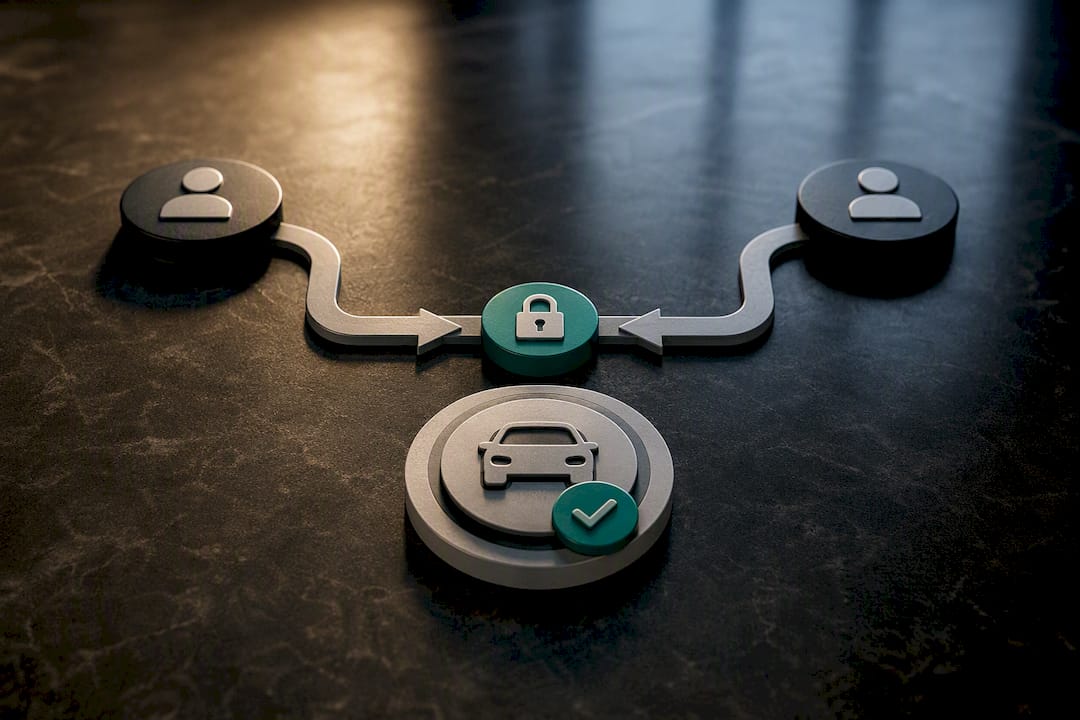
Vehicles registered before 1 January 1993 still go through the paper route: RF200, sent along with the registration book to the local motor tax office. This is a common pitfall. Sellers assume the online system covers everything, then discover their older vehicle needs the paper form instead, which delays the update by weeks.
Once submitted, processing generally takes a couple of weeks, though it can run longer around busy periods. If a buyer simply doesn’t follow through on their side of the transfer, sellers can make a statutory declaration to the motor tax office confirming the vehicle was sold, which protects against being pursued for tax, tolls, or penalty points incurred after the sale.
- Post-1993 vehicles: reverse-of-VRC or the online PIN service
- Pre-1993 vehicles: RF200 posted with the registration book
- Keep proof of posting and copies of everything submitted
- Check transfer status through Motor Tax’s online service
If you’re selling through a dealer rather than privately, a separate dealer transfer form applies, so it’s worth checking which route fits your sale before you start.
What’s the safest way to receive payment for a private car sale?
Bank transfer is the safest method available to private sellers in Ireland. It leaves a traceable record on both sides, and it’s the method Citizens Information specifically recommends for private vehicle sales. Cash and personal cheques carry more risk. Cheques can bounce days later, and cash leaves no paper trail unless you lodge it and keep the deposit slip as evidence.
If you’re taking a deposit to hold the car, write a short deposit receipt stating the amount, the balance owed, an agreed deadline, and what happens to the deposit if the buyer pulls out. Whatever payment method is used, the golden rule doesn’t change: don’t hand over the VRC or the keys until the money has actually cleared in your account, not just shown as “pending”.
For higher-value cars, some sellers arrange to meet at a bank branch so funds can be verified as cleared on the spot rather than trusting a phone screenshot.
- Bank transfer over cash or cheque, every time
- If cash is used, lodge it and keep the deposit slip
- Document any deposit separately with a clear refund condition
- Never release the VRC or keys before funds clear
- Notify your insurer and Motor Tax as soon as the sale completes
Pro Tip: Ask the buyer to send the transfer from an account in their own name, matching the one on the receipt. A payment from a third party’s account makes disputes far harder to untangle later.
Where can you find a reliable Ireland car sale receipt template?
A simple receipt covers most private sales. A fuller car sale agreement makes sense for higher-value cars, private imports, or anywhere you want more detailed warranty and condition wording. The difference is really depth: a receipt confirms the transaction happened; an agreement spells out terms in more legal detail.
Useful phrases to build into either document include “sold as seen, tried and approved by the buyer”, a payment confirmation line naming the amount and method, and a transfer-of-ownership statement confirming the date responsibility passes to the buyer. Prepare two signed originals and keep a scanned copy of each on your phone or email as a backup.
For ready-made wording, Motorcheck publishes a vehicle purchase receipt sample with fields set out for Irish sales, and NetLawMan offers a fuller car sale agreement template suitable for use in Ireland. Whichever you choose, check it references Irish process rather than a UK or US template with the wrong terminology for tax and registration.
- Citizens Information for the legal change-of-ownership steps
- Motorcheck’s PDF for simple receipt wording
- NetLawMan’s template for a fuller agreement
- gov.ie forms for the official transfer paperwork
Ecosteer’s day-of-sale checklist for private sellers
Selling privately goes more smoothly when the paperwork and the payment happen in a fixed order, not whichever way feels convenient in the moment.
- Before the buyer arrives: have the VRC, NCT certificate, and service history ready, and confirm there’s no outstanding finance on the car.
- When they arrive: complete the receipt together, checking the reg number, VIN, and odometer reading against the car itself.
- Payment: confirm the bank transfer reference, then wait, genuinely wait, until the funds show as cleared before handing anything over.
- Handover: sign two copies, hand over keys and the VRC together, and give the buyer their signed copy.
- After they leave: start the online change-of-ownership process or post the VRC or RF200 that same day, notify your insurer, and update Motor Tax.
Following that sequence protects both sides. Buyers get a car with clean paperwork behind it, and sellers close the liability loop before anything can go wrong down the road. If you’re selling a financed vehicle, the lien needs clearing before the sale completes, not after, so build that step in earlier if it applies to you.
A seller’s perspective: why bother with a proper receipt?
Skipping the receipt feels harmless when you trust the buyer. It rarely stays harmless. A signed receipt with the right fields is what stops a dispute over a mechanical fault turning into a drawn-out argument about who said what. It’s also what speeds up the transfer paperwork, because half of the delays sellers run into stem from missing or mismatched details on their own copy.
The worry most sellers have, “what if I forget something,” is solved simply: use a proper field list, not memory.
— ibrahim
List your car once the paperwork is sorted
Online platforms give Irish sellers a faster route to genuine buyers than juggling messages across multiple apps and unanswered calls. Once your receipt and transfer paperwork are ready, listing takes minutes: add your car’s details, set your price, and manage enquiries from one place instead of chasing replies across scattered platforms.
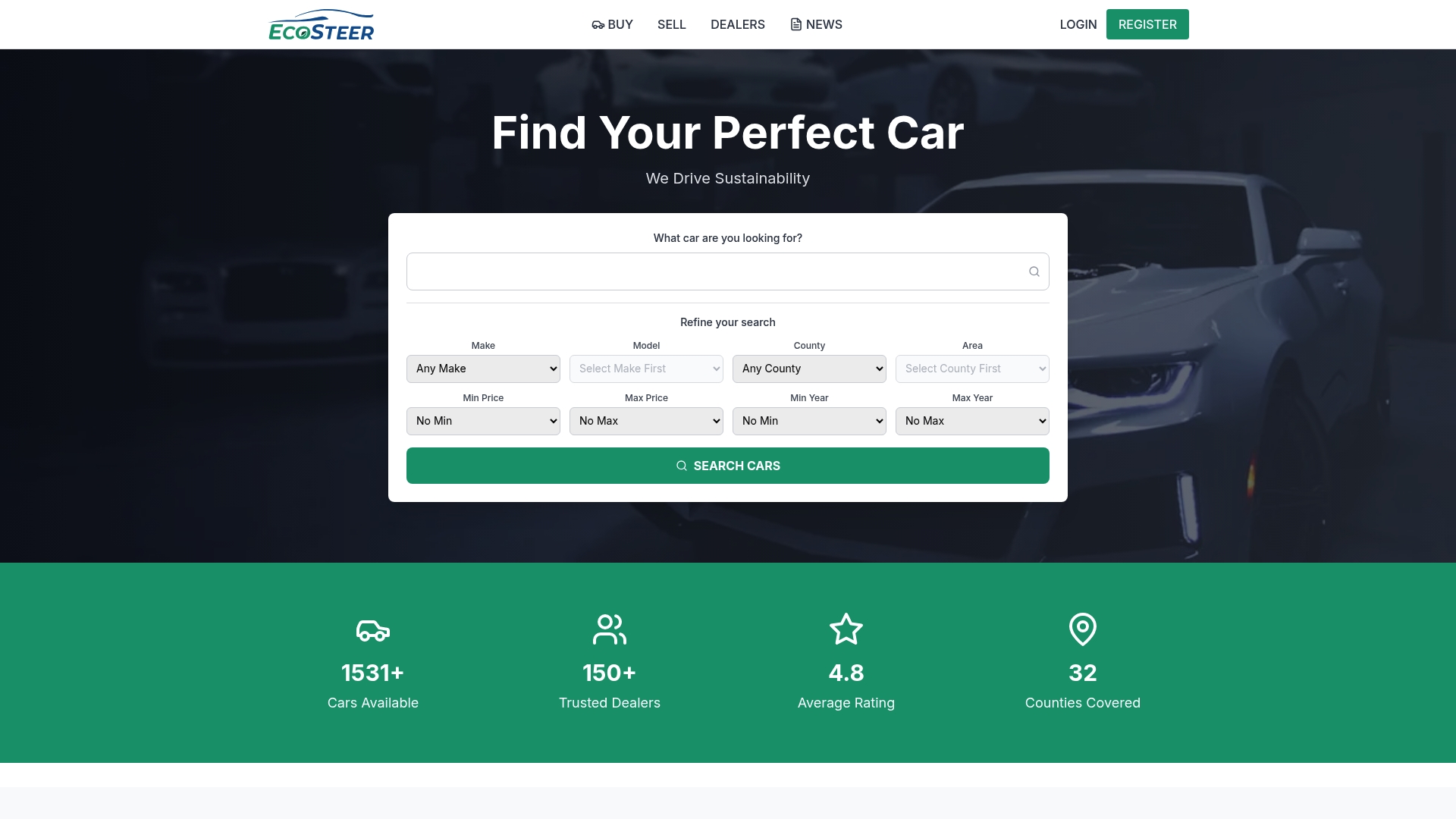
Search filters by county, price, mileage, and fuel type help your listing reach buyers who are actually looking for a car like yours, not just browsing. If you’re weighing up a private sale against going through a dealer, some platforms support both routes without pushing you toward one. When your receipt is signed and your transfer is under way, list your car for sale on Ecosteer and start hearing from genuine buyers directly.
Official forms and templates worth bookmarking
These are the sources you’ll actually need, in the order you’ll likely use them.
- Citizens Information: change of vehicle ownership for a plain-English walkthrough of the legal process
- Department of Transport’s online change-of-ownership service for the PIN-based transfer covering most post-1993 vehicles
- Motor Tax’s online change-of-ownership tool to start and track a transfer
- Motorcheck’s vehicle purchase receipt PDF for standard Irish receipt wording
- NetLawMan’s car sale agreement template for a fuller agreement on higher-value sales
- Gov if you’re selling to a motor dealer rather than a private buyer
If you want the step-by-step version of the transfer itself, Ecosteer’s guide to completing the VRC transfer walks through it on the same day as the sale, and the PIN transfer walkthrough covers the online route in more detail.
Sources
- Change of vehicle ownership | Citizens Information
- Online change of vehicle ownership
- Motor Tax Online change of ownership
- Vehicle purchase receipt (Motorcheck PDF)
FAQ
How do you write a receipt for a private car sale?
Include buyer and seller names and addresses, the vehicle’s registration number and VIN, make, model, year, odometer reading, sale price, payment method, date of sale, a “sold as seen” clause, and both signatures. Print two identical copies and sign both, keeping one each.
What paperwork is required when selling a car privately in Ireland?
You need a signed sale receipt, the Vehicle Registration Certificate, and confirmation of no outstanding finance. After the sale, complete the change-of-ownership process through the Department of Transport’s online service or by posting the VRC or RF200, depending on the vehicle’s age.
What is the official proof of ownership of a car in Ireland?
The Vehicle Registration Certificate (VRC) is the official proof of ownership. Selling a car privately means updating the National Vehicle and Driver File through the change-of-ownership process once the sale is agreed, using either the online PIN service or the paper RF200 for pre-1993 registrations.
What is the safest way to receive money when selling a car privately?
Bank transfer is the safest method, since it creates a traceable record that both Citizens Information and Ecosteer recommend over cash or personal cheques. Wait until the funds show as cleared, not just pending, before handing over keys or the VRC.
Does Ecosteer charge to list a car for sale?
Ecosteer offers free and paid listing options for sellers; current pricing details are available directly on the Ecosteer website.
Recommended
Ecosteer Editorial
Author