Test promoted listings profitability in Ireland with a €160 example
Euro-based worked examples and a step-by-step per-item profitability test for Irish sellers. Learn when promoted listings still pay after eBay fees and...

Promoted listings can be good value for Irish sellers when you promote high-margin or scarce items and apply a strict per-item profitability test before you commit a budget. The verdict depends on which campaign type you choose: General charges only when an ad-driven sale completes within 30 days, while Priority charges per click regardless of outcome. Both sit on top of your normal eBay selling fees, so the real question is never “does promotion work” but “does it still work once every fee is stacked”. The euro worked examples below will show you exactly where that line sits.
TL;DR:
- Promoted listings are most cost-effective for high-margin or rare items, especially when applying a strict profitability check before advertising.
- General campaigns charge only when a sale is completed within 30 days, while Priority campaigns cost per click regardless of outcome, affecting budgeting strategies.
- Ad fees are layered on top of eBay’s standard selling costs, which can significantly erode margins on low-value or commoditized items if rates go too high.
- Running small, time-limited tests with a modest ad rate and measuring return over the full attribution window is essential for maximizing profit.
- Local marketplaces like EcoSteer may be better suited for Irish car sellers seeking targeted, fee-free exposure alongside eBay promotions.
Table of Contents
- What are promoted listings and how do the campaign types differ?
- How attribution, ad-rate timing and the Priority auction actually work
- The full cost stack: ad rates on top of eBay’s selling fees
- When promoted listings are worth it for Irish sellers
- How to calculate per-item profitability for a promoted listing
- Testing, listing hygiene and measuring what actually works
- Alternatives and complements worth knowing about
- How visibility fits into an Irish seller’s wider channel mix
- Where EcoSteer fits for Irish car sellers
- FAQ
- Sources
What are promoted listings and how do the campaign types differ?
Promoted listings put your items in more prominent spots on eBay’s search results and category pages, usually marked with a small “Sponsored” label. eBay offers two distinct ways to pay for that extra visibility, and mixing them up is the most common costly mistake sellers make.
- General campaigns charge a fee only when a buyer clicks your ad and buys the item within 30 days, so you pay for completed sales rather than attention.
- Priority campaigns charge per click, win or lose, through a bidding system, which means exposure costs money even when nobody buys.
- Eligibility for promotion generally requires an active, policy-compliant listing, and higher seller performance levels tend to unlock better placement.
Beyond these two core products, eBay also runs Promoted Shops and Promoted Offsite, which work differently and are worth understanding before you settle on a strategy. General suits sellers who want predictable, sale-linked costs. Priority suits sellers chasing fast exposure on a new or time-sensitive listing, provided they can forecast click costs accurately.
How attribution, ad-rate timing and the Priority auction actually work
The mechanics behind promoted listings decide what you actually pay, and they catch out more sellers than the headline percentages do. General campaigns use last-click attribution with a 30-day window, which means if a buyer clicks your ad and purchases anything from you within that month, the sale counts towards your ad fee, even if they browsed other items first. Crucially, the fee applied is the ad rate in effect at the time of the sale, not the rate that was live when the buyer clicked.

Priority campaigns work through a second-price auction, where the winning bidder pays just above the next-highest bid rather than their own maximum. The cost per click is shaped by listing quality, keyword relevance, your bid, competition from other sellers and a reserve price set by eBay, so two sellers bidding the same amount can pay very different rates depending on how well their listing matches the search.
30 days is the attribution window that determines whether a click becomes a billable sale under General campaigns, which is why frequent rate changes on active SKUs are risky. Returns and unpaid items complicate the picture too: if a sale is refunded or cancelled, the ad fee logic generally follows the transaction outcome, so chasing volume with weak listings tends to generate ad charges without durable revenue.
The full cost stack: ad rates on top of eBay’s selling fees

Promotion fees never exist in isolation. They sit on top of eBay’s standard selling costs, and for Irish sellers that means factoring in the Final Value Fee and the Regulatory Operating Fee before judging whether an ad rate makes sense. Fee calculators built for the Irish eBay marketplace show that final value fees and other platform charges must be included in any per-item profitability check, because the ad rate itself is calculated on the total sale amount, which typically includes postage.
Here is how three different General ad rates affect the same sale:
- Item sells for €100 with €5 postage, giving a total sale amount of €105.
- At a 2% ad rate, the ad fee is €2.10, a modest dent in margin for most categories.
- At a 5% ad rate, the ad fee rises to €5.25, noticeable on thinner-margin goods.
- At a 10% ad rate, the ad fee reaches €10.50, which can erase the profit on low-value or commoditised items entirely.
A higher ad rate on the total sale amount can lead to ad fees that significantly reduce margins, even before the final value fee is applied. That single line item can be the difference between a healthy margin and a loss once postage, packaging and the final value fee are also deducted. Irish sellers listing vehicles or high-value parts should also build in transfer paperwork and timing considerations, since a lead generated today might not convert into a completed sale for weeks, all while sitting inside (or outside) the attribution window.
When promoted listings are worth it for Irish sellers
Promotion earns its keep in specific situations rather than as a blanket strategy. New listings with no sales history often benefit from an initial push to build momentum, since eBay’s organic ranking rewards early engagement. High-margin or genuinely scarce items can absorb an ad fee comfortably because the percentage taken is small relative to the profit left over. Sellers refreshing visibility on older stock that has stalled can also see a reasonable return, provided the listing itself is already strong.
- New listings with no sales or review history can use promotion to build early traction faster than organic ranking alone.
- High-margin or rare items absorb a percentage-based ad fee without threatening profitability.
- Stalled inventory with good photos and competitive pricing can regain visibility through a modest, time-limited campaign.
The reverse is just as important to recognise. Thin-margin items, poorly photographed or badly titled listings, and heavily commoditised goods where price is the only differentiator rarely benefit from promotion, because the ad fee simply shrinks an already small margin or buyers choose the cheapest option regardless of placement.
Pro Tip: Run the per-item profitability test before you set an ad rate, not after your first month of spend.
How to calculate per-item profitability for a promoted listing
A reliable formula removes the guesswork. Start with the gross sale price, add postage charged to the buyer, then subtract your cost of goods, packaging, the eBay final value fee, and finally the ad fee, which only applies if the sale is attributed to a click.
- Step 1: Add the item price and postage charged to get the total sale amount.
- Step 2: Subtract your cost of goods and packaging to find gross margin.
- Step 3: Subtract the eBay final value fee, calculated on the total sale amount.
- Step 4: Subtract the ad fee, which is the ad rate multiplied by the total sale amount, only when the sale is attributed.
- Step 5: What remains is your net profit per item.
Take a worked example relevant to Irish sellers: a used car part, say a set of alloy wheels, listed at €150 with €10 postage, giving a €160 total sale amount. The part cost €60 to source and €5 to package, leaving a gross margin of €95. After a final value fee of roughly €16 (based on typical Irish marketplace fee structures), margin falls to €79.
The sensitivity table below shows how conversion rate and ad rate interact on this same item:
The pattern holds across most categories: doubling the ad rate roughly doubles the fee, so the decision usually comes down to whether that extra visibility reliably produces sales you would not have made organically.
Testing, listing hygiene and measuring what actually works
Before you spend a cent on promotion, fix what promotion cannot fix. Promoted listings amplify visibility but do not correct a weak listing or an uncompetitive price, so sellers chasing conversions should tighten titles, improve photos, sharpen pricing and review postage costs first.
- Start with a small per-SKU test, applying a modest ad rate to one or two items rather than your whole catalogue.
- Measure attributed return on ad spend over a full 30-day cycle before judging results, since that is the attribution window.
- Scale only the items with a clear positive return, and pause anything where the ad fee erodes profit below an acceptable threshold.
- Check Seller Hub regularly for impressions, click-through rate and sales attributed to each campaign, adjusting rates gradually rather than in large jumps.
Running small, measurable tests and pausing or scaling based on per-item performance is the approach most consistently recommended across seller guidance, and it avoids the common trap of judging a campaign on total sales rather than genuine incremental sales.
Pro Tip: Give a General campaign the full 30-day attribution window before deciding it has failed, since late-cycle sales often arrive after the initial click.
Alternatives and complements worth knowing about
Promoted listings are not the only lever. Promoted Shops drives traffic specifically to your eBay shop front, while Promoted Offsite advertises eligible listings on external channels such as Google, both run on different fee structures to General and Priority campaigns.
- Promoted Shops suits sellers with a built-out shop and multiple complementary items worth cross-selling.
- Promoted Offsite extends reach to buyers searching outside eBay entirely, useful for distinctive or branded inventory.
- External channels, including automotive-specific platforms, can outperform eBay ads for higher-value items like vehicles, where Facebook inventory-based advertising is often built around different buyer intent.
- Organic optimisation, meaning sharper titles, better photos and competitive pricing, remains the cheapest way to lift sales and should come before any paid spend.
How visibility fits into an Irish seller’s wider channel mix
Promoted listings are one tool among several, and for Irish car sellers, a dedicated local marketplace can carry weight that a generic ad placement cannot. EcoSteer connects Irish car dealers and private sellers directly with local buyers, with search tools built around county, price, year and other details that matter specifically to the Irish market. A seller weighing up eBay’s ad fees against a free or low-cost local listing channel is really asking where their buyer is already looking.
— ibrahim
Where EcoSteer fits for Irish car sellers
If you are weighing eBay’s ad fees against other ways to reach buyers, EcoSteer gives Irish sellers a route that does not depend on per-click or per-sale advertising charges. Cars under €3,000 can be listed free, and the platform’s search filters by county, price, year and fuel type put your listing in front of buyers already looking for exactly that kind of car.
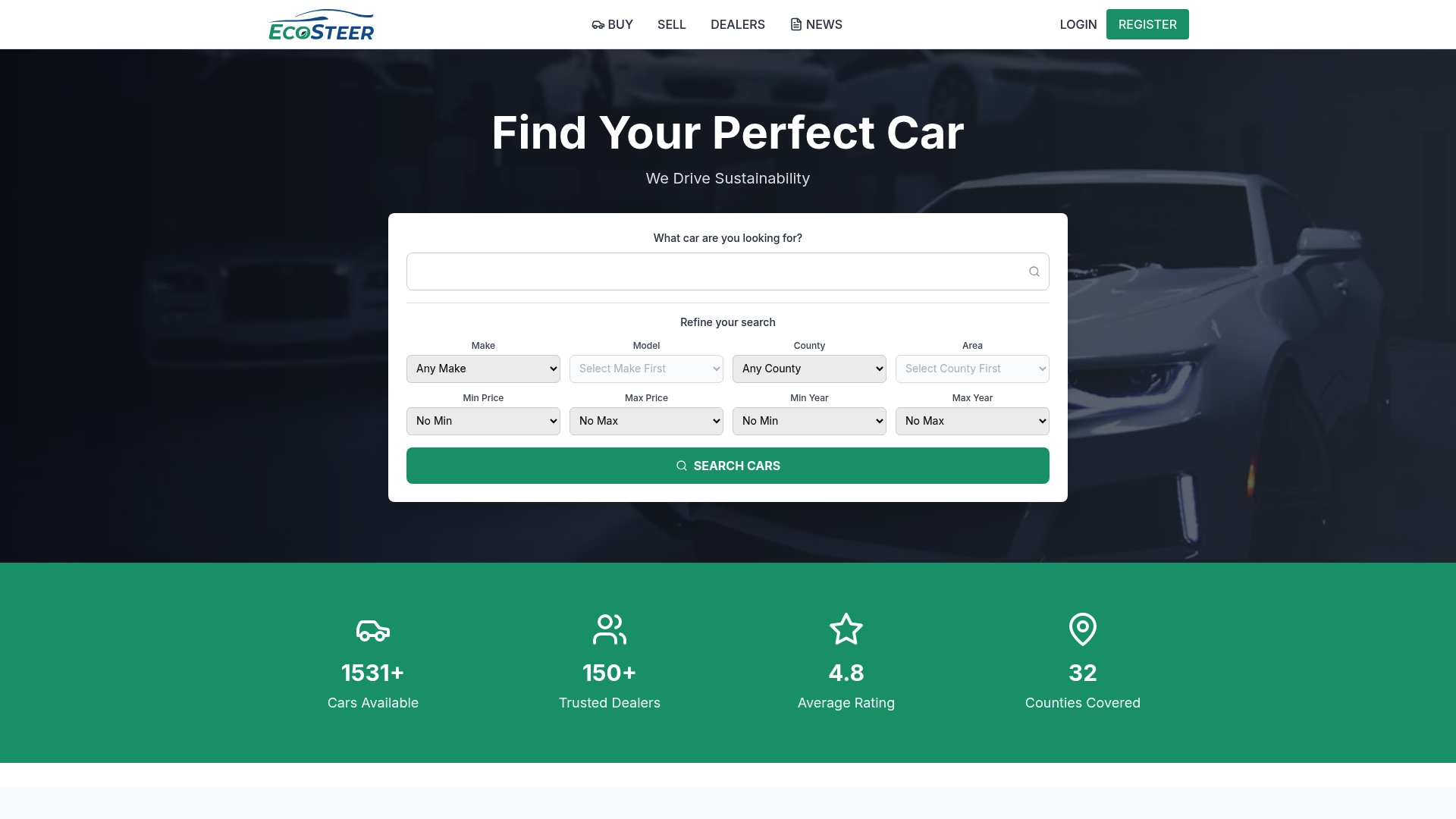
The honest trade-off is reach versus targeting: eBay’s audience is far larger, but a local, car-specific marketplace can put you directly in front of buyers who are closer to a decision. If you are selling a vehicle rather than general merchandise, it is worth listing on EcoSteer alongside any other channel you use, and browsing current cars for sale gives a quick sense of how listings are presented to buyers.
FAQ
Is it worth doing promoted listings on eBay?
It depends on your margin and category: promoted listings tend to pay off for high-margin, scarce or newly listed items, but they can erode profit on thin-margin or heavily commoditised goods. Running a per-item profitability check before committing to an ad rate is the most reliable way to decide.
How much do you pay for eBay promoted listings?
For General campaigns, you set your own ad rate as a percentage of the total sale amount, and you are only charged when a sale is attributed within the 30-day window. Priority campaigns charge per click through a second-price auction, so the cost varies with competition and listing quality.
I accidentally promoted an item on eBay. What should I do?
You can adjust or remove an item from an active campaign in Seller Hub, though be aware that changing the ad rate will not undo charges for sales already attributed within an open 30-day window. Check your campaign settings and pause the listing’s promotion if you no longer want it included.
What percentage should I promote my eBay listing at?
There is no single correct percentage, since the right ad rate depends on your margin, category competitiveness and how much of that margin you can afford to give up. Many sellers start with a modest rate around 2% to 5%, measure attributed sales over a full 30-day cycle, then adjust based on per-item profitability rather than following a fixed benchmark.
Sources
- eBay Promoted Listings: The Complete Guide (2026)
- eBay Promoted Listings — Channelsight
- IE eBay fee calculator | 3Dsellers
Recommended
Ecosteer Editorial
Author