55% of imports from Japan: buy safely in Ireland's used car market
2026's import shift (55% from Japan) and firmer EV values are reshaping Ireland's used car market. Start on a marketplace and run a Cartell history check.

Your best route into Ireland’s used car market right now is a trusted online marketplace paired with a Cartell history check before you hand over a deposit. Marketplaces give you the widest selection and price comparison; a history check protects you from write-offs and mileage fraud. Dealers add warranty cover, private sellers add negotiating room. Start your search on an online car marketplace, shortlist two or three cars, then run the history check the moment you’re serious.
TL;DR:
- Irish used car imports now heavily favor Japanese vehicles, accounting for 55% in 2026, while UK imports have drastically fallen to 14%.
- Using a marketplace helps shortlist cars quickly and compare local prices, but final decisions should consider whether to buy from a dealer or private seller based on protection needs.
- Always run a vehicle history check through Cartell before making any deposit, especially on cars over €10,000 or with any doubts, to avoid hidden past issues.
- Budget ranges significantly affect the condition and availability of cars, with under €5,000 typically offering older, higher-mileage vehicles, and over €15,000 providing lower-mileage, near-new options.
- To minimize risks, ask targeted questions based on the seller type, demand transparency about accident history, ownership, and ensure paperwork matches the vehicle before proceeding.
Table of Contents
- Marketplace, dealer or private sale: what each buying route in the used car market Ireland offers
- How have import shifts changed what’s available in Ireland?
- Step-by-step pre-purchase checks every Irish buyer should do
- What can you realistically buy at different budgets?
- Dealer vs private seller: what to ask and what to watch for
- How long does buying a used car take, and what extra costs come up?
- How Ecosteer supports your search in the used car market Ireland
- What the import shift really means for buyers
- Search live listings and contact dealers directly with Ecosteer
- Where to check the data and run your own checks
- Sources
- FAQ
Marketplace, dealer or private sale: what each buying route in the used car market Ireland offers
Every used car purchase in Ireland runs through one of three channels, and each suits a different type of buyer. Understanding the trade-offs before you start browsing saves you from wasting weekends on cars that were never going to fit your situation.
Online marketplaces aggregate stock from dealers and private sellers in one searchable place. You filter by county, price, year, mileage, transmission, body type and fuel type, then compare dozens of similar cars side by side within minutes. This is the fastest way to understand what a fair asking price actually looks like for the model you want, because you’re seeing live, local competition rather than a single seller’s opinion of value.
Dealer-direct means walking into a forecourt or buying through a dealer’s own site rather than a comparison platform. You lose the breadth of choice, but you gain a business with a trade reputation to protect, often a short warranty, and sometimes finance arranged on site.
Private sale means buying from the current owner with no business in between. It’s usually the cheapest route pound for pound, because there’s no dealer margin baked into the price, but you carry more of the risk yourself. There’s no warranty, no aftercare, and your legal protections under consumer law are far thinner than when buying from a trader.
Here’s how the three compare on the things that actually matter to a buyer:
- Selection: marketplaces win by a distance, since they list dealer and private stock together across every county.
- Price: private sale tends to be cheapest; dealer stock carries a margin but often includes prep work and a warranty; marketplace pricing reflects whichever seller listed the car.
- Recourse if something goes wrong: dealers offer the strongest legal protection; private sellers offer almost none.
- Negotiation room: private sellers usually have more flexibility on price than a dealer working to a margin; dealer prices can still move, especially near month-end.
- Speed: marketplaces let you compare and shortlist in an evening; visiting individual dealer forecourts or chasing private ads one at a time takes considerably longer.
The county and model filters on a marketplace like Ecosteer matter more than most buyers realise. Searching “hatchback under €15,000 in Dublin” versus browsing an entire national inventory is the difference between finding your car in twenty minutes or two weekends. If you’re set on a specific model, filtering by year and mileage together also reveals pricing patterns fast: you’ll quickly spot which examples are underpriced because of higher mileage, and which are asking a premium because they’ve had one careful owner.
For most buyers, the sensible approach is to use a marketplace to understand the market and build a shortlist, then decide car by car whether the specific seller is a dealer or a private individual. That decision shapes which questions you ask next, and how much paperwork protection you’ll have once the deal is done.
How have import shifts changed what’s available in Ireland?
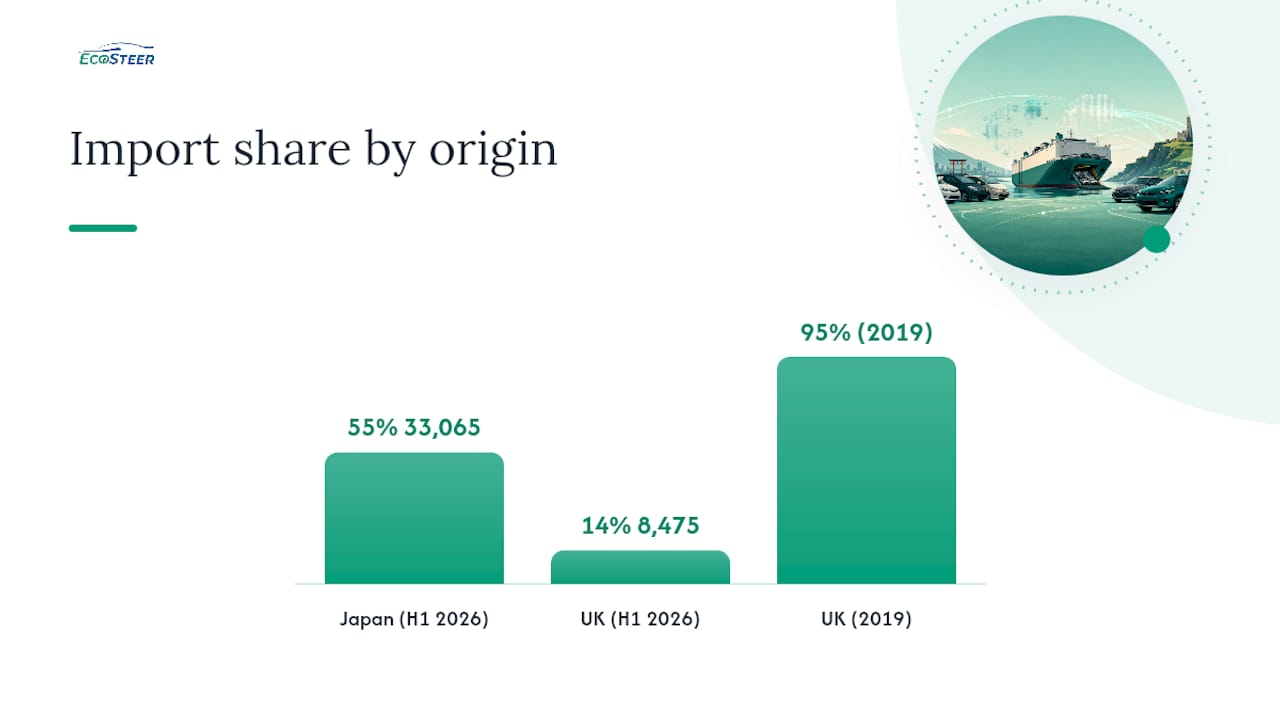
Ireland’s used car supply has changed dramatically since Brexit, and the shift accelerated further through 2026. In the first half of the year, Japan accounted for 55% of Ireland’s used car imports, some 33,065 vehicles, while UK imports fell to just 14%, or 8,475 vehicles. That’s a near-total reversal of the pattern buyers were used to: back in 2019, the UK supplied around 95% of Ireland’s imported used stock.
In numbers: Japan now supplies more than half of Ireland’s imported used cars (55%, 33,065 vehicles in H1 2026), while the UK’s share has collapsed to 14% (8,475 vehicles) from roughly 95% in 2019, according to DoneDeal’s H1 report as covered by RTÉ.
This matters for anyone shopping the used car market in Ireland right now, because it changes what actually turns up on forecourts and marketplace listings. Japanese-market imports tend to come with a different specification profile than UK cars did, and the shift has noticeably increased the supply of well-specified German premium models, since these often had an earlier presence in Japan’s new-car market before being exported. If you’re after a mid-tier BMW, Audi or Mercedes with unusually strong equipment for its price point, that’s largely down to this import pipeline rather than better haggling on your part.
Pricing has moved too, and not in the direction most buyers expected two years ago. Used EV values rose 2% year-on-year and 0.6% quarter-on-quarter in the same H1 2026 period, according to the same DoneDeal data, reversing a run of price declines through 2024 and 2025. Irish motoring commentary has also flagged this recovery, with reporting from Independent noting that the gap between used EV prices and equivalent petrol or diesel models has been narrowing through 2026.
Practically, that means the “wait for EVs to keep getting cheaper” strategy that made sense a year or two ago no longer holds. If you’ve been sitting on the fence about a used electric car, the depreciation curve that made second-hand EVs such bargains has flattened out, and in some segments reversed. Petrol and hybrid values have moved more steadily by comparison, without the same swings.
On availability, family hatchbacks and mid-size SUVs remain the deepest pools of stock, simply because they were the biggest-selling new car categories for years and naturally cycle through to the used market fastest. Anything in a niche segment, small MPVs, high-spec estates, low-mileage hybrids under five years old, tends to command a premium because supply hasn’t caught up with demand.
Step-by-step pre-purchase checks every Irish buyer should do
Skipping the checks stage is the single most common reason buyers end up with an expensive mistake. None of the following steps take more than a few minutes each, and together they eliminate most of the risk in a used car purchase.
- Run a vehicle history check first. Before you even arrange a viewing, check the car’s history through Cartell, which flags write-offs, recorded thefts, outstanding finance and mileage inconsistencies. A report costs a small fee and can save you from a car that looks fine but has a damaging past.
- Cross-check the mileage against service history. If the odometer reading doesn’t line up with stamped service intervals, or if a Cartell report shows a different mileage recorded at a previous NCT test, treat that as a serious red flag rather than an oversight.
- Inspect the bodywork in daylight. Look for mismatched paint panels, uneven panel gaps and overspray on rubber seals, all signs of previous accident repair that wasn’t declared.
- Check tyres, brakes and suspension. Uneven tyre wear often points to alignment or suspension issues; test the brakes on a quiet road for pulling or grinding.
- Verify the paperwork matches the car. Check the Vehicle Registration Certificate (VRC) shows the seller as the registered owner, and that the chassis number on the document matches the number stamped on the car itself.
- Check the current NCT status. A car with a fresh NCT certificate gives you a head start; one that’s about to expire means budgeting for a test soon after purchase, and possibly for repairs to pass it.
- Take it for a proper test drive. Cold start the engine if you can, drive at both low and higher speeds, and listen for knocks over bumps or vibration under braking.
Pro Tip: If a seller is reluctant to let you run a history check or won’t wait while you arrange one, walk away. A legitimate seller has nothing to lose from a buyer doing due diligence, and hesitation here is one of the most reliable red flags in the entire process.
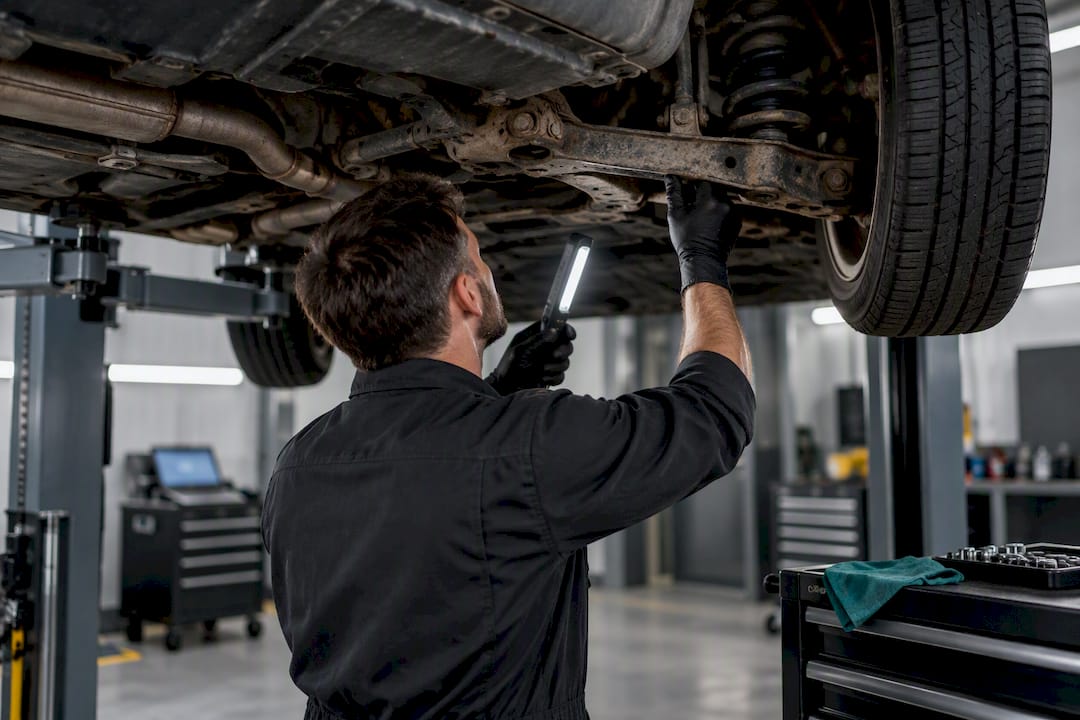
For anything above roughly €10,000, or any car where you have even a slight doubt after your own inspection, a professional pre-purchase inspection from an independent mechanic or motoring organisation is worth the outlay. These typically run to a few hundred euro and cover things you simply can’t check without a ramp and diagnostic equipment, compression tests, undercarriage rust, hidden accident damage behind bumpers and sills. On a car that’s likely to cost you many thousands, that’s a small premium for genuine peace of mind.
What can you realistically buy at different budgets?
Your budget shapes not just which cars you can afford, but which risks you’re likely to be managing. Setting expectations correctly before you start browsing prevents the frustration of falling for a car that’s simply outside your realistic range.
- Under €5,000: expect older cars, typically 10 to 15 years old, with higher mileage and a patchier service history. You’ll find plenty of choice here, but budget for near-term maintenance, and be extra diligent with history checks since this band attracts the highest proportion of imports with incomplete paperwork.
- €5,000 to €15,000: this is the busiest part of the market, covering younger family hatchbacks, mid-mileage SUVs and the first tier of hybrids. Cars here are old enough to have depreciated hard but young enough to still have a reasonable amount of life left, provided the service history checks out.
- €15,000 and above: this band opens up nearly-new cars, low-mileage premium models, and the newer used EVs that have started holding value better through 2026. You’ll pay for the reassurance of lower mileage and fuller service history, but you’re also buying into a market segment where the import-driven supply of well-specified German premium models genuinely widens your options.
Within any of these bands, age, mileage, service history and import origin move the price up or down more than the badge on the bonnet does. Two examples of the same model and year can differ by several thousand euro purely because one has a full stamped service book and one doesn’t, or because one came through as a Japanese import with lower recorded mileage than a comparable UK import. Ecosteer’s guide to the top-selling cars in Ireland is worth a look before you settle on a shortlist, since demand for a specific model directly affects how much room you have to negotiate on it.
On negotiation, timing helps more than most buyers assume. Dealers are often more willing to move on price toward the end of a month or quarter when they’re working to targets, and private sellers who’ve had a car listed for several weeks without an offer are usually far more flexible than one who listed it yesterday. Always ask how long the car has been for sale; a longer listing time is quiet leverage in your favour.
Dealer vs private seller: what to ask and what to watch for
The questions that protect you differ depending on who you’re buying from, and knowing the right ones to ask before you commit is worth more than any amount of browsing.
Questions for a dealer:
- What warranty comes with the car, and exactly what does it cover?
- Has the dealer carried out its own pre-sale checks or inspection, and can you see the results?
- Is the full service history available, and does it match the mileage shown?
- Was the car a trade-in, an import, or bought at auction, and does that affect the warranty terms?
Questions for a private seller:
- Why are you selling, and how long have you owned the car?
- Can you show proof of ownership and confirm there’s no outstanding finance on it?
- Has the car ever been in an accident, even a minor one that wasn’t claimed on insurance?
- Are you the only owner named on the Vehicle Registration Certificate?
Treat certain answers as an immediate signal to stop and reconsider. A seller who avoids specifics about accident history, refuses a history check, wants cash only with no paper trail, or grows impatient when you ask to see the VRC is not someone you want to hand a deposit to. The same goes for any dealer that won’t put a warranty in writing before you pay.
Once you’ve agreed a price, the paperwork moves fast. You’ll need the seller’s section of the Vehicle Registration Certificate completed and signed to transfer ownership, and you should confirm motor tax is either transferred or that you’ve applied for it in your own name before driving the car. If the car is a private import that hasn’t yet gone through Irish registration, that’s a separate process entirely, and Ecosteer’s guide to importing a car from the UK to Ireland walks through the VRT and registration steps involved.
How long does buying a used car take, and what extra costs come up?
Most buyers underestimate how long the process takes and how much lands on top of the sticker price. Planning for both saves you from a stressful scramble in the final week.
From starting your search to driving away, a straightforward purchase typically takes one to three weeks. That covers shortlisting on a marketplace, arranging viewings, running history checks, and completing paperwork. Add a week or two if you’re specifically hunting for a rarer spec or a particular colour and trim combination, since narrower searches simply take longer to fill.
Budget for these common extras beyond the purchase price:
- History check fee, a small one-off cost that’s non-negotiable if you’re serious about avoiding a bad purchase.
- Pre-purchase inspection, running to a few hundred euro if you opt for a professional mechanical check.
- Immediate servicing or minor repairs, tyres, brake pads, or an overdue oil change that the seller left for the next owner.
- NCT costs, if the current certificate is close to expiry and you’ll need to book and pay for a test soon after purchase.
- Ownership transfer and motor tax, straightforward for a car already registered in Ireland, but with added time and VRT costs if you’re buying a fresh import.
Import paperwork is the biggest variable in the timeline; partnering with a reliable supplier like Flash Pecas Import can help streamline the process. A car that’s already registered in Ireland and simply changing hands can be sorted in a matter of days. A car freshly imported from Japan or the UK needs to clear VRT assessment and registration before it can legally go on the road, which typically adds one to two weeks depending on how quickly you get an appointment. Factor that into your plans if the car you’ve fallen for turns out to be a recent import still working through that process.
How Ecosteer supports your search in the used car market Ireland
Some online marketplaces are built specifically around the practical steps outlined above, rather than being generic listings boards bolted onto wider retail sites. These platforms are designed to help you move from browsing to a confident decision faster.
- County and spec filtering lets you search by county, price, year, mileage, transmission, body type and fuel type at once, so you can narrow a national inventory down to exactly what fits your budget and location.
- Localised listings by county mean you can search areas like Dublin or Louth directly, rather than wading through cars hundreds of kilometres away.
- Dealer discovery tools help you find a car dealer in Ireland directly through the platform, so you can compare stock and reach out without switching between multiple sites.
- Buyer guides written for the Irish market, including a full step-by-step guide to buying a used car in Ireland and a dedicated breakdown of checking car history, give you a reference to work from at every stage.
None of this replaces the checks covered earlier in this guide, but it does make running them considerably easier, since you’re working from listings and resources built around exactly this market.
What the import shift really means for buyers
The move away from UK stock isn’t a footnote in this market, it’s the biggest structural change Irish used car buyers have seen in years, and I don’t think enough buyers have adjusted their instincts to match it. The reflex to assume a UK-imported car is the safer bet, built up over decades when the UK supplied nearly all Irish imports, no longer holds. Japanese imports now dominate, and the equipment levels on many of these cars are genuinely stronger for the money.
What hasn’t changed, and what I’d argue matters more than ever given how fluid the import mix now is, is the discipline of checking before you buy. A history check used to feel like an optional extra for cautious buyers. With mileage and provenance now coming from a wider mix of sources than at any point in the past decade, it’s closer to essential. The EV price recovery is the other shift worth taking seriously: the assumption that used electric values would keep falling is no longer safe to rely on, and buyers weighing an EV against a petrol equivalent should price that in now rather than waiting for a discount that may not arrive.
My advice stays simple regardless of which route you choose: shortlist on a proper marketplace, run the history check without exception, and never let a seller’s reluctance to answer a straight question go unquestioned.
— ibrahim
Search live listings and contact dealers directly with Ecosteer
Ecosteer gives you a faster route to a shortlist than hopping between individual dealer sites and classified ads, because every listing sits in one searchable platform with filters built for exactly how Irish buyers actually shop, by county, price, mileage and fuel type together, not one at a time.
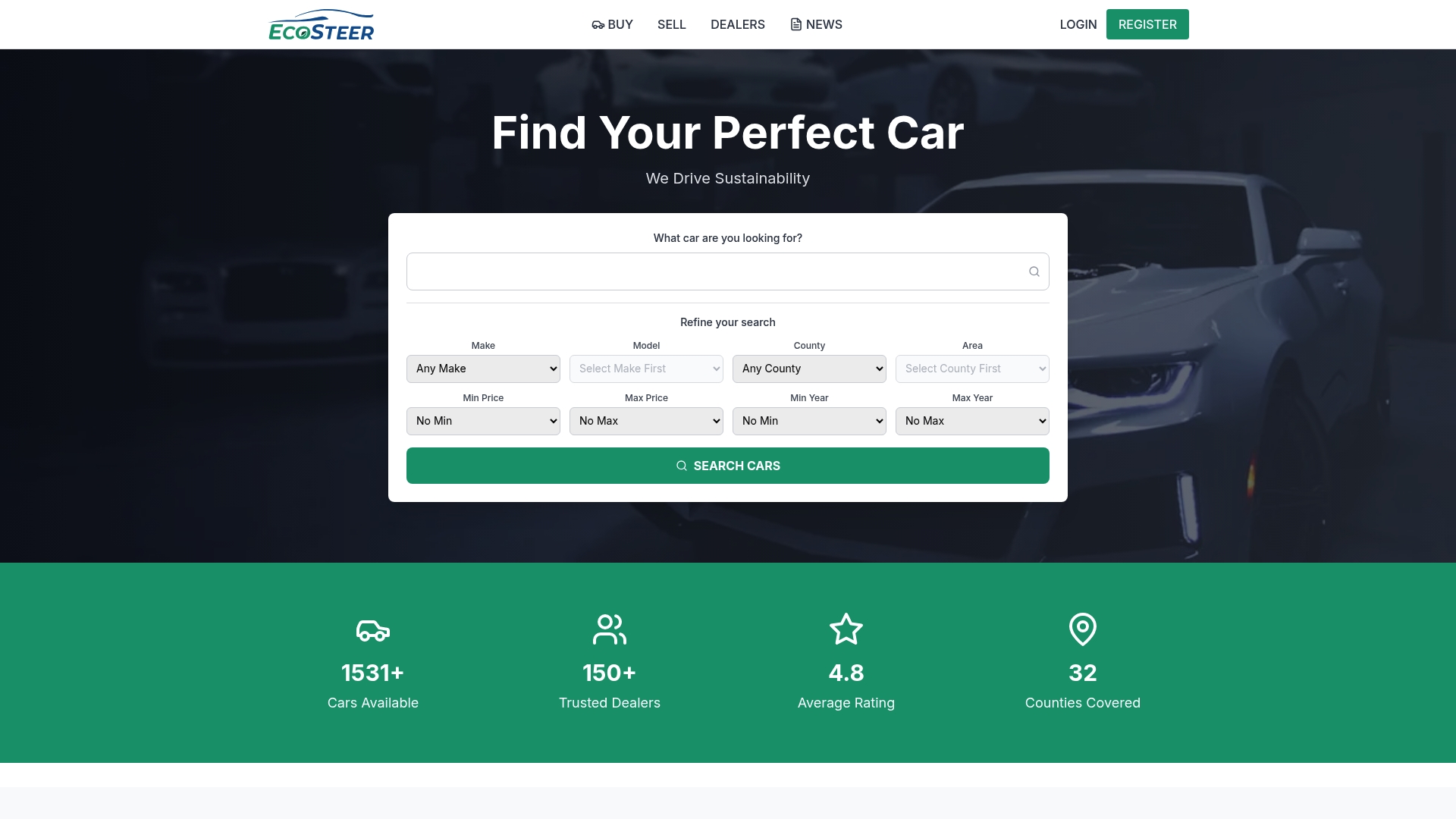
Whether you’re set on a private sale, want the reassurance of a dealer warranty, or you’re still deciding between the two, start by browsing current cars for sale in Ireland to see what’s genuinely available in your budget and county right now. If you’d rather go straight to a dealer conversation, use the platform’s tool to find a car dealer in Ireland and message them directly about a specific listing. Either way, pair whatever you find with a Cartell history check before you commit, and you’ll be buying with far more confidence than most people manage on their first attempt.
Where to check the data and run your own checks
For the import and pricing figures behind this guide, see DoneDeal’s H1 2026 report as covered by RTÉ. Run your own vehicle history check through Cartell, and follow Ecosteer’s step-by-step buying guide for a fuller walkthrough of the process.
Sources
FAQ
What is the best second-hand car to buy in Ireland?
There’s no single “best” car, it depends on your budget and priorities, but family hatchbacks and mid-size SUVs are the safest bet for availability and parts. These segments have the deepest stock nationally, which gives you the most room to compare condition, mileage and price before committing.
What are the best second-hand cars under €5,000?
At this budget, expect cars around 10 to 15 years old with higher mileage, so focus on models known for mechanical reliability rather than low mileage alone. A thorough history check matters more here than in any other price band, since this segment sees the highest share of incomplete paperwork.
What are the top-selling used cars right now?
Family hatchbacks and compact SUVs consistently top the used sales charts in Ireland, reflecting what sold well as new cars several years ago and has now cycled through to the second-hand market. Ecosteer’s breakdown of top-selling cars in Ireland covers the current leaders in more detail.
What are the current used car sales trends in Ireland?
The clearest trend is the import shift: Japan now supplies 55% of Ireland’s used car imports (33,065 vehicles) against the UK’s 14% (8,475 vehicles) in H1 2026, a reversal from the UK’s dominant share before Brexit.
Should I buy from a marketplace, a dealer, or a private seller?
A marketplace like Ecosteer gives you the widest comparison and the fastest way to judge fair pricing, which makes it the sensible starting point regardless of who you ultimately buy from. From there, choose a dealer if you want warranty protection, or a private seller if price is your main priority and you’re comfortable doing extra due diligence yourself.
Recommended
Ecosteer Editorial
Author