How to import a car from the UK to Ireland in 2026
How to import a car from the UK to Ireland in 2026 ! Person reviewing car import paperwork at home Importing a car from the UK to Ireland follows a defined legal process governed by Revenue, Irish Customs, and the National Car Testing Service (NCTS).

Importing a car from the UK to Ireland follows a defined legal process governed by Revenue, Irish Customs, and the National Car Testing Service (NCTS). The short version: buy the car, complete a Customs Declaration if it comes from Great Britain, pay import VAT at 23% on the purchase price plus transport costs, then register within 30 days of bringing it into Ireland or face penalties and possible seizure. Vehicles from Northern Ireland that were genuinely in use there attract no import VAT and no customs duty, only Vehicle Registration Tax (VRT).
Most private importers underestimate the full cost. Customs agent fees, administrative time, travel to collect the vehicle, and compliance paperwork all add up before you even factor in VRT.
The essentials at a glance:
- V5C logbook and purchase invoice — both required; names must match Revenue forms
- Customs Declaration with Master Reference Number (MRN) — mandatory for GB imports before registration
- Import VAT at 23% — applies to all GB imports; not applicable to genuine NI vehicles
- VRT appointment at NCTS — must be booked within 7 days of arrival in Ireland
- Vehicle registration — must be completed within 30 days to avoid fines or seizure
- Trusted specialists — UK Car Imports and Saltmarine Cars are two verified Irish businesses that handle the process end to end
How to import a car from the UK: step by step
The process runs in a strict sequence. Skipping or reordering steps causes registration refusals and delays.
-
Buy the car in the UK or Northern Ireland. Obtain the full V5C logbook from the seller, not just the green slip. Get a detailed purchase invoice showing the date, price, and both parties’ names. If buying from a Northern Ireland dealer whose stock originated in Great Britain, ask for customs paperwork confirming duties were paid on arrival into NI.
-
Arrange transport. Roll-on/roll-off ferry is the most common and cost-effective method for UK to Ireland imports. Container shipping offers more protection but costs more and takes longer. You can also drive the car to the ferry port on its UK plates, provided you carry all purchase documents.
-
Complete the Customs Declaration (GB imports only). Vehicles from Great Britain require a full Customs Declaration filed through Revenue’s Automated Import System (AIS) before registration. The declaration must include the Vehicle Identification Number (VIN) and generates a Master Reference Number (MRN). Without the MRN, NCTS cannot register the vehicle.
-
Complete Form VRTVPD2 on Revenue.ie. This Vehicle Purchase Details form must be submitted online before you book your VRT inspection. It records the purchase price, vehicle details, and your personal information.
-
Book your VRT appointment at ncts.ie within 7 days. Slots at busy centres in Dublin and Cork fill quickly, so book immediately after the car arrives in Ireland. Missing the 7-day booking window risks late registration penalties.
-
Attend the NCTS inspection. Bring the car, V5C, purchase invoice, Customs Declaration with MRN, and your completed VRTVPD2 form. The inspector verifies the VIN against your paperwork, checks make, model, engine size, and colour, then confirms the vehicle matches documentation. Pay VRT on the spot by card and receive your Irish registration number immediately.
-
Order Irish plates and register for motor tax. Once you have your registration number, order plates from any motor factor. Register for motor tax at motortax.ie using your new Vehicle Registration Certificate (VRC).
-
Take out Irish insurance. You need a valid Irish insurance policy before driving the car on public roads after registration.
Pro Tip: Complete the Customs Declaration and VRTVPD2 form before the car arrives in Ireland if possible. Waiting until after arrival eats into your 7-day booking window and your 30-day registration deadline simultaneously.

What does it cost to import a car from the UK to Ireland?
The total landed cost depends heavily on whether the vehicle comes from Great Britain or Northern Ireland, and on its CO2 emissions for VRT purposes.
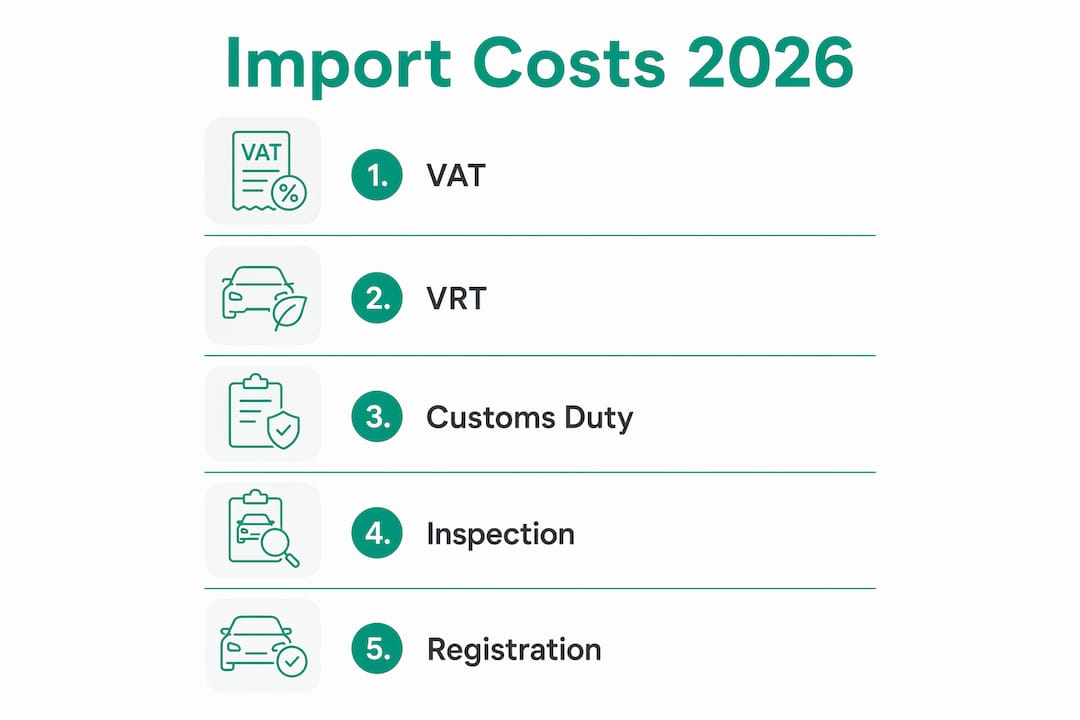
Import VAT (GB imports only): 23% on the purchase price plus transport and insurance costs. On a car bought for £12,000 with €400 in transport costs, that is roughly €3,312 in VAT alone.
Vehicle Registration Tax: VRT rates for all imports range from 7% to 41% of the vehicle’s Open Market Selling Price (OMSP) in Ireland, based on CO2 emissions. A low-emission hybrid attracts 7%; a high-emission petrol or diesel can hit 41%.
Customs duty: 0% for vehicles of UK origin meeting rules of origin under the EU-UK Trade and Cooperation Agreement. Non-UK origin vehicles (for example, a Japanese-manufactured car sold in the UK) attract customs duty of up to 6.5%.
| Cost item | GB import | NI import (genuine use) |
|---|---|---|
| Import VAT (23%) | Yes | No |
| Customs duty | 0% (UK origin) / up to 6.5% (non-UK) | No |
| VRT based on a percentage of OMSP, varying according to emissions. | Yes | Yes |
| Customs agent fee | Yes | No |
| NCTS inspection fee | Yes | Yes |
| Transport (ferry/container) | Yes | Yes |
Often overlooked costs:
- Customs agent fees for filing the AIS declaration
- Travel costs to collect the vehicle in the UK
- Short-term UK insurance for the drive to the ferry
- Administrative time for Revenue registration and form completion
- Possible Certificate of Conformity fee if CO2/NOx data is missing (default NOx charge: €4,850 for diesel, €600 for other fuels)
The saving on a UK import is real on higher-value cars but can disappear on cheaper ones where VRT minimums apply. Always run the numbers on Revenue’s VRT calculator before you buy.
Which UK car import specialists in Ireland can you trust?
Two verified Irish businesses specialise in UK car imports and handle the administrative complexity on your behalf.
| Provider | Services offered | Specialisation | Location | Google rating |
|---|---|---|---|---|
| UK Car Imports | Vehicle sourcing, customs assistance, VRT handling, transport | UK car imports to Ireland | Dublin | 4.6★ (122 reviews) |
| Saltmarine Cars | UK car imports, VRT processing, shipping solutions | Established UK import dealer | Ireland | 4.5★ (651 reviews) |
UK Car Imports focuses specifically on helping Irish buyers source and import vehicles from the UK. Their service covers the full process: finding the car, arranging transport, filing customs paperwork, and managing VRT registration. For buyers who want a single point of contact from purchase to Irish plates, this is a strong fit.
Saltmarine Cars is an established Irish car dealer with a long track record in UK imports. Their scale and experience suit buyers who want a dealership-backed purchase rather than a private import, with VRT and shipping handled as part of the transaction.
Using either specialist reduces the risk of missing customs deadlines, filing incomplete AIS declarations, or arriving at NCTS without the correct MRN documentation.
How to choose a customs agent and avoid import delays
Filing an AIS Customs Declaration is not straightforward for a private individual. You need to register for Revenue Online Service (ROS), obtain an EORI number, and submit a correctly coded H1 import declaration including the vehicle’s VIN. Getting any of this wrong blocks registration at NCTS.
A qualified customs agent handles the declaration on your behalf, generates the MRN, and confirms clearance before you book your NCTS appointment. Using a customs agent is the most reliable way for private importers to avoid the delays and penalties that incomplete declarations cause.
What to look for when choosing a customs agent:
- Proven experience with vehicle imports from GB to Ireland specifically
- Transparent fee structure with no hidden charges
- Fast turnaround on declaration filing, ideally same day or next day
- Clear communication on MRN confirmation and NCTS readiness
- Knowledge of rules of origin to correctly claim 0% customs duty where applicable
Pro Tip: Ask any customs agent directly whether they have handled vehicle AIS declarations before. General freight agents sometimes lack vehicle-specific knowledge, which can cause classification errors and delays.
An incomplete or delayed declaration does not just slow things down. Under Irish law, a vehicle without a completed Customs Declaration is liable to seizure if it is not registered within 30 days of arrival.
What documents do you need beyond customs and VAT paperwork?
The V5C and customs forms are the most discussed, but several other documents are required for a complete registration.
- V5C (full logbook): The complete UK registration certificate from the seller. Registration will be refused without it; the green slip alone is not sufficient.
- Purchase invoice: Must show the date, price paid, and both buyer and seller details, matching the name on your VRTVPD2 form exactly.
- Certificate of Conformity (CoC): Confirms CO2 and NOx emissions. Without NOx data, Revenue applies default charges of €4,850 for diesel vehicles or €600 for others.
- Proof of address: A utility bill or bank statement showing your Irish address, required for vehicle registration.
- Proof of identity: Passport or driving licence.
Always confirm with the seller whether the vehicle was originally registered in Northern Ireland or Great Britain. A car sold by a NI dealer but sourced from GB stock requires the dealer’s customs paperwork showing duties were paid on entry into NI.
What happens at the NCTS inspection after import?
The VRT inspection at an NCTS centre is a conformity check, not a roadworthiness test. The inspector verifies that the physical vehicle matches the documentation you have submitted, not that it is mechanically sound.
The inspector checks the VIN against the V5C and VRTVPD2 form, confirms make, model, engine size, and colour, and reviews your Customs Declaration MRN. The car must be physically present and suitable for inspection. A vehicle that is immobilised or cannot be driven to the centre will miss the inspection slot, eating into your 30-day deadline. If the car has mechanical issues, arrange transport to the NCTS centre rather than risking a failed attendance.
After passing the inspection and paying VRT, you receive your Irish registration number on the spot. You can then order plates and proceed with motor tax registration.
Hidden and additional costs you should budget for
Beyond VAT and VRT, several costs catch first-time importers off guard.
- Customs agent fee: Varies by agent; typically charged per declaration.
- NCTS inspection fee: Charged at the time of the VRT appointment.
- Short-term UK insurance: Required if you are driving the car to the ferry port in the UK.
- Ferry or shipping costs: Roll-on/roll-off is cheaper; container adds protection at higher cost.
- Travel and accommodation: If collecting the car in person from a UK dealer.
- Certificate of Conformity fee: Some manufacturers charge for issuing or reissuing a CoC.
- Irish insurance before driving: You cannot legally drive the car in Ireland after registration without a valid Irish policy.
- Motor tax: Due at registration; rate depends on engine size or CO2 band.
The total cost of importing a car from the UK can be significantly higher than the purchase price alone suggests. For a used car buying guide covering the full financial picture of vehicle ownership in Ireland, Ecosteer’s resource covers the key steps in detail.
Ecosteer: browse Irish cars without the import complexity
If the customs paperwork, VRT calculations, and 30-day deadlines make importing feel more trouble than it is worth, there is a straightforward alternative. Ecosteer is Ireland’s online car marketplace, connecting buyers directly with verified dealers and private sellers across the country.
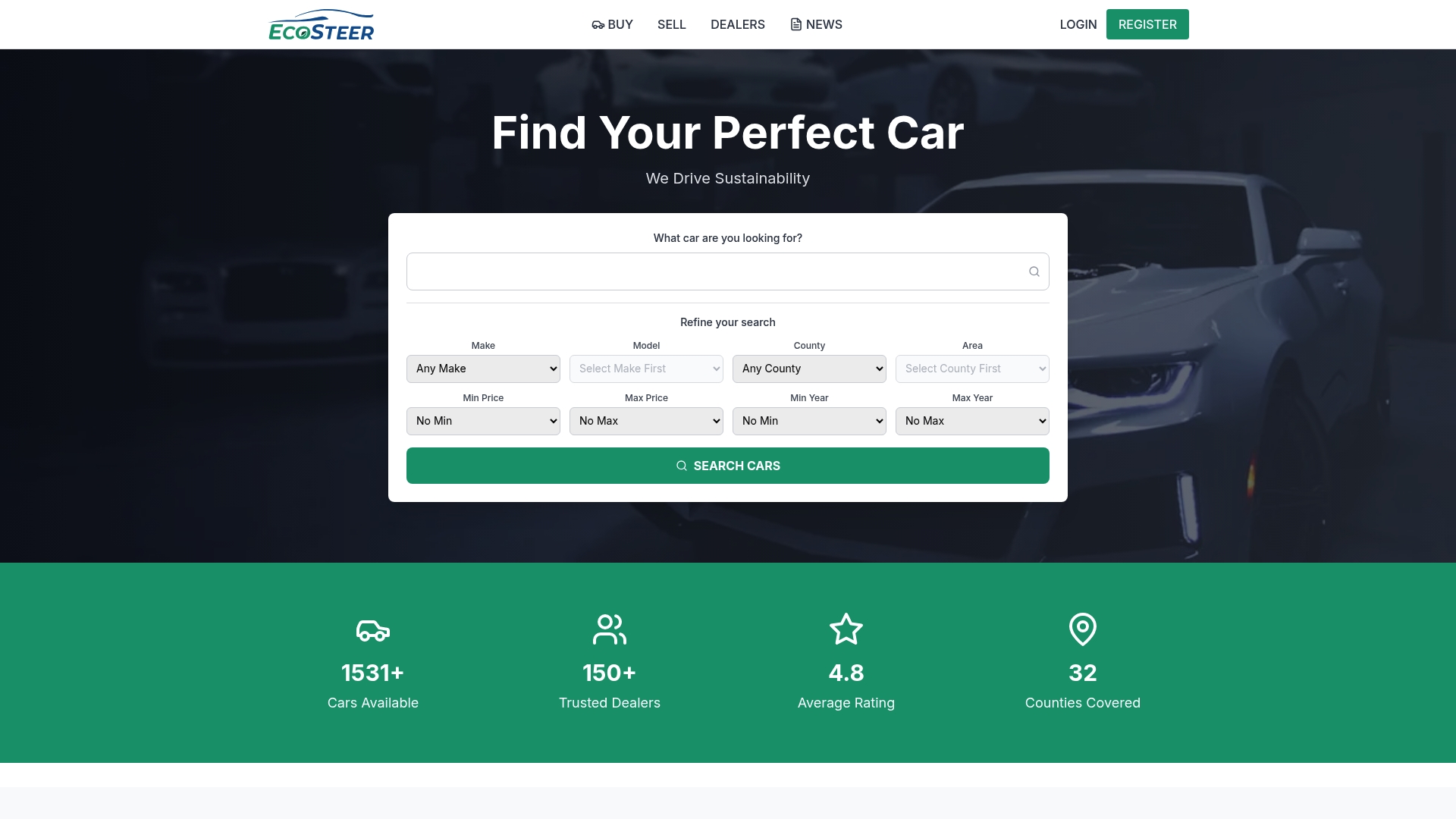
You get the same range of makes, models, and price points without the administrative burden of a UK import. Search by county, fuel type, mileage, body type, and price on Ecosteer’s car listings, or use the dealer finder to connect with a trusted local dealer who can source the right car for you. No customs declarations, no MRN chasing, no NCTS appointment within 7 days of arrival.
Key takeaways
Importing a car from the UK to Ireland requires completing a Customs Declaration, paying 23% import VAT on GB vehicles, and registering at an NCTS centre within 30 days to avoid penalties or seizure.
| Point | Details |
|---|---|
| GB vs NI tax difference | GB imports attract 23% import VAT; genuine NI vehicles pay only VRT, which ranges from 7% to 41% based on emissions. |
| 30-day registration deadline | Failure to register within 30 days risks fines and vehicle seizure under Irish law. |
| Customs Declaration is mandatory | An MRN from a completed AIS declaration is required before NCTS will register the vehicle. |
| Hidden costs add up | Budget for customs agent fees, ferry costs, CoC charges, and Irish insurance on top of VAT and VRT. |
| Ecosteer alternative | Browse verified Irish car listings on Ecosteer to avoid the import process entirely. |
Recommended
Ecosteer Editorial
Author