Buy the Condition, Not the Number: Mileage vs Age in Ireland
Use Ecosteer's checklist to check annual kilometres, verify service history and order independent inspection. Buy condition, not the odometer.

Neither number wins on its own. A car with 120,000 km and full service stamps often outlasts a 40,000 km car that sat neglected in a driveway for a decade. The real tie-breakers are verified maintenance history, the type of miles covered (motorway versus stop-start city driving), and a proper pre-purchase inspection. Get those three right and the odometer or the registration year becomes far less important than most buyers assume.
TL;DR:
- A high mileage car driven mainly on motorways can be mechanically healthier than a low mileage car used predominantly in stop-start city traffic.
- Age-related deterioration affects rubber seals, hoses, batteries, and electronics regardless of mileage, making thorough inspections essential.
- Verifiable maintenance history and a proper pre-purchase inspection are more critical than odometer readings when assessing a used vehicle.
- Buyers should compare annual mileage against typical benchmarks of 11,100 to 15,000 km and be cautious of gaps in service records or inconsistent wear patterns.
- Costly future repairs often relate more to a car’s age than its mileage, with major services like timing belt or clutch replacements scheduled around specific km thresholds.
Table of Contents
- What mileage tells you about mechanical wear
- What a car’s age reveals that the odometer can’t
- How to evaluate mileage and age before you buy
- Newer high-mileage or older low-mileage: which suits you?
- Budgeting for repairs tied to mileage and age
- Why the mileage vs age debate needs real verification, not guesswork
- How mileage and age influence insurance premiums
- Common myths about mileage and age in used cars
- The one rule that beats mileage and age combined
- Search, verify, decide: how Ecosteer supports your used car checklist
- Sources
- FAQ
What mileage tells you about mechanical wear
The odometer is a proxy for mechanical stress. Every kilometre driven puts cyclical load on the engine, transmission, brakes, and suspension bushings, so higher mileage generally means more wear on parts that move and rub against each other. But the number on its own tells only half the story: how those kilometres were driven matters just as much as how many there were.
A car that spent its life on the motorway, cruising at steady revs, suffers far less thermal and mechanical stress than one that did short, cold urban runs with constant stop-start braking and gear changes. Steady motorway driving keeps the engine at optimal operating temperature and reduces the wear cycles that stop-start traffic causes. So a higher number of mostly motorway kilometres can leave a car in better mechanical shape than fewer kilometres of pure city driving.
Working out whether a car’s mileage is normal for its age is simple arithmetic. Divide total kilometres by the car’s age in years, and compare that figure against typical benchmarks. Cars24 puts average annual driving at roughly 11,100 to 15,000 km, so anything well above that range points to a heavy commuter car, while anything well below might mean long periods of inactivity, which brings its own problems.
Certain jobs are triggered by mileage regardless of the car’s age, and skipping them is expensive:
- Timing belt or chain service, typically due somewhere between 90,000 and 160,000 km depending on the manufacturer.
- Clutch and gearbox inspection, especially on manual cars used heavily in traffic.
- Suspension bushings and wheel bearings, which wear faster under higher mileage and rough surfaces.
- Brake discs and pads, obviously mileage-driven but also affected by driving style.
What a car’s age reveals that the odometer can’t
Time does damage that kilometres alone never will. Rubber seals, hoses, and gaskets dry out and crack with age, whether the car has been driven or not, and that process is largely independent of mileage. A 10-year-old car with only 40,000 km on the clock can still need new engine mounts, brake lines, and suspension bushings, because rubber degrades chemically over years, not distance.

Batteries, fluids, and electronics follow the same pattern. A car’s 12 volt battery has a shelf life measured in years rather than kilometres, and dashboard electronics, sensors, and wiring insulation degrade gradually with age and exposure to heat cycles. This is also where newer registration years earn their premium: a car built five years ago is far more likely to carry autonomous emergency braking, lane-keep assist, and more efficient engine management than one from a decade earlier, simply because safety and efficiency technology moved on.
Long periods of storage bring their own age-related risks, separate from ordinary wear:
- Flat-spotted or perished tyres from sitting in one position for months.
- Fuel system problems from old fuel degrading in the tank.
- Corrosion on brake discs, exhaust systems, and underbody components, especially in damp storage.
- Seized components such as callipers or handbrake mechanisms that haven’t moved in a long time.
A car with a clean body and low kilometres but a history of sitting idle for long stretches deserves more scrutiny, not less.
How to evaluate mileage and age before you buy
Working through a used car listing systematically takes the guesswork out of the mileage vs age used car debate. Follow this sequence before you commit to anything.
- Calculate annual kilometres. Divide the total on the clock by the car’s age and compare it against the 11,100 to 15,000 km yearly benchmark. A figure well outside that range is a prompt to ask why.
- Request the full service history. Stamped logbooks, dated invoices, and a continuous chain of servicing at recommended intervals matter more than the brand of garage that did the work. Gaps in the history are the biggest red flag in the whole process.
- Run a vehicle history check. A VIN check can reveal odometer anomalies, previous write-offs, outstanding finance, and whether the mileage recorded lines up with previous NCT or service records.
- Take a proper test drive, including a cold start. Listen for rattles on first ignition, check how smoothly the car shifts once warm, and test the brakes, steering, and suspension over varied surfaces.
- Book an independent pre-purchase inspection. Ask the mechanic to check timing belt condition, look for oil leaks, inspect suspension bushings, and assess brake wear against the mileage shown.
Pro Tip: Ask the seller directly whether the car was driven mostly on motorways or in town, then cross-check that claim against the service history. A car serviced every 15,000 km that shows heavy brake wear at only 40,000 km total is telling you something the odometer won’t.
Vehicle history checks and independent inspections consistently reduce the risk of buying a car with hidden accident damage or a rolled-back odometer, which is exactly why both steps sit near the top of every serious buyer’s checklist.
Newer high-mileage or older low-mileage: which suits you?
This is where the mileage and age debate gets genuinely practical, because the “right” answer depends on how long you plan to keep the car.
- A younger car with higher mileage usually comes with better safety tech, modern infotainment, and improved fuel economy, but check whether it’s approaching a major mileage-triggered service like a timing belt or clutch replacement, because that cost should be factored into your offer.
- An older car with low mileage can look like a bargain, but age-related deterioration doesn’t care how few kilometres are on the clock. Seals, hoses, and rubber components may need replacing regardless, and you should ask why the mileage is so low.
- Short-term ownership (two to three years) tips the balance towards the younger, higher-mileage car, since you’re less likely to hit the next big service interval.
- Long-term ownership makes the older, low-mileage car more viable, provided you budget for age-related repairs early and get a thorough inspection before buying.
If a car is due a major service soon, or shows early signs of age-related wear, that’s a legitimate reason to negotiate the price down. Sellers rarely volunteer this information, so raise it yourself once the inspection findings are in.
Budgeting for repairs tied to mileage and age
Knowing which costs to expect changes how you read a listing. Mileage-driven expenses tend to arrive in predictable clusters:
- Timing belt or chain replacement: often £400 to £900 depending on the engine, usually due between 90,000 and 160,000 km.
- Clutch replacement: a few hundred pounds on smaller engines, more on performance or diesel variants, typically triggered by heavy stop-start use.
- Major gearbox service or repair: can run into four figures if neglected for too long.
Age-driven expenses show up on a calendar rather than an odometer:
- 12 volt battery replacement: usually needed every four to six years regardless of mileage.
- Tyre replacement: rubber compounds harden and lose grip with age even if tread depth looks fine, so tyres over six years old deserve a close look.
- Seals, hoses, and corrosion repair: costs vary widely but tend to escalate the longer a car sits between check-ups.
Consumer Reports advises buyers to prioritise maintenance records and inspection over the raw age or mileage figure, noting that when a genuine compromise is unavoidable, many experts lean towards the newer car for its safety and fuel-economy advances. Setting aside a modest emergency fund each year, rather than assuming a “low mileage” car needs nothing, is the more realistic approach to used car ownership. Ecosteer’s breakdown of car ownership costs in Ireland is a useful starting point for working out what a realistic annual running budget looks like.
Why the mileage vs age debate needs real verification, not guesswork
Getting this decision right depends on checking claims rather than trusting a listing’s headline numbers. Kelley Blue Book points out that modern vehicles can rack up long service lives when properly maintained, and that service history is one of the strongest predictors of how a car will hold up after you buy it. That’s the whole point of pairing an ad’s stated mileage with a documented service trail rather than reading the two numbers in isolation.
Search tools let you filter listings by year, mileage, county, and price at the same time, so you can compare a genuine sample of similar cars rather than judging one listing against vague memory of “what’s normal.” Browsing a real example, such as this 2011 Volkswagen Touran, shows how a detailed vehicle page presents mileage, year, and specification together, which is exactly the combination this checklist asks you to evaluate.
If you’re weighing up an electric vehicle, calendar age matters differently again, as explained in Future-proofing transport fleets for insights into EV battery calendar-age effects and fleet management. Battery degradation is driven by charge cycles and time as much as kilometres, which is why Ecosteer built a dedicated EV battery health check for used electric cars in Ireland. For a walkthrough of how to interpret service stamps and ownership records, Ecosteer’s guide to checking car history in Ireland sets out what a clean history document should actually contain.
How mileage and age influence insurance premiums
Insurers price risk, and both mileage and age feed into that calculation in different ways. Higher annual mileage generally pushes premiums up because more time on the road statistically means more exposure to claims, so a car doing 30,000 km a year will usually cost more to insure than an identical model doing 10,000 km.
Vehicle age cuts the other way on some fronts and not others. Older cars often attract lower premiums because their market value is lower, so a total loss claim costs the insurer less. But older cars can also lack modern safety features like autonomous braking or advanced airbag systems, which some insurers factor into risk pricing, occasionally offsetting that lower-value discount.
There’s a practical wrinkle worth knowing before you buy: insurers sometimes ask for expected annual mileage upfront, and understating it to get a cheaper quote can affect a claim later if the real figure turns out higher. Be honest about how the car will actually be used, whether that’s a daily long commute or occasional weekend driving, because that figure should match what the odometer shows a year from now. It’s also worth checking whether your chosen model carries any age-related restrictions, since some insurers apply different terms to cars over a certain number of years old regardless of condition.
Common myths about mileage and age in used cars
A few persistent myths distort how buyers approach this decision, and each one is worth correcting directly.
Myth: low mileage always means a better car. Fact: a car with low kilometres but poor storage conditions can have seized components, perished rubber, and degraded fluids that a heavily driven, well-maintained car never develops.
Myth: high mileage always means the car is nearly finished. Fact: type of miles matters enormously. A motorway-heavy car with 180,000 km and a complete service record can be mechanically sounder than a neglected car with half that mileage.
Myth: a newer registration year guarantees fewer problems. Fact: a newer car with patchy servicing and heavy urban use can develop problems faster than an older, well-cared-for one. Registration year buys you newer safety tech, not automatic reliability.
Myth: dealer cars are always safer bets than private sales. Fact: the seller type matters less than the paperwork. A private seller with a complete, verifiable service history is a safer bet than a dealer listing with gaps in the records.
Myth: mileage and age move independently, so you can ignore one. Fact: the two interact constantly. A car’s age determines how much its rubber, seals, and electronics have degraded, while its mileage shows how hard its mechanical parts have worked, and a genuine assessment needs both figures read together, backed by verification.

The one rule that beats mileage and age combined
Buy the condition, not the number. That single habit will save you more money than obsessing over whether a car has 80,000 or 120,000 km on the clock, because a documented service history and a clean inspection report tell you far more than either figure alone.
For a daily commuter, prioritise motorway-heavy mileage with a continuous service record over a lower number with gaps in the paperwork. For an occasional driver, be more cautious about age-related deterioration, since the car may have sat idle for long stretches between short trips. For anyone planning a short-term ownership window of two to three years, lean towards the newer car with better safety tech, since you’re less likely to hit an expensive mileage-triggered service before you sell it on.
Certain red flags should end negotiations outright: a missing or inconsistent service history, an odometer reading that doesn’t match wear patterns or history-check data, obvious corrosion beyond surface rust, and a seller who resists an independent inspection. None of those are negotiable, whatever the price looks like.
— ibrahim
Search, verify, decide: how Ecosteer supports your used car checklist
Ecosteer is built for exactly the process this article walks through, filtering listings by year, mileage, county, price, and fuel type so you can compare real cars rather than guessing at averages.
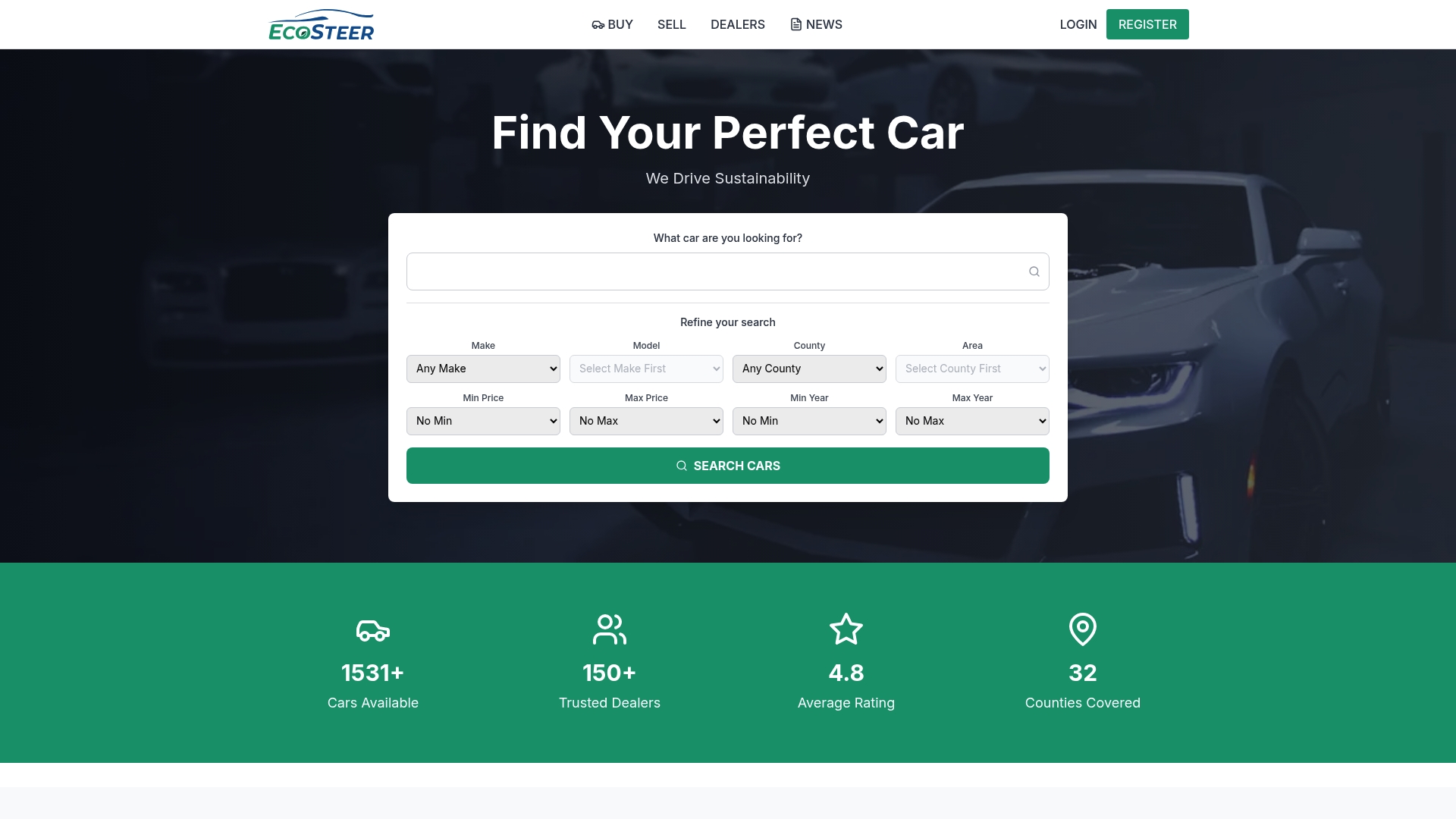
Once you’ve narrowed your search on the Ecosteer cars page, open a detailed listing, such as this 2023 Skoda Scala, to see mileage, registration year, and specification laid out side by side. From there, request the service history, run a vehicle history check, and if the car passes those first tests, use Ecosteer’s dealer finder to arrange a professional pre-purchase inspection before you commit. Whatever the odometer and registration plate say, weigh that against the likely maintenance bill ahead, because that’s the number that actually determines whether you got a good deal. Start browsing current listings on Ecosteer and apply the checklist to a real car today.
Sources
Consumer Reports weighs maintenance history against raw numbers. Cars24 sets out annual mileage benchmarks. KBB explains why modern cars last longer when serviced properly. Ecosteer’s ownership cost breakdown adds Ireland-specific budgeting detail.
- Is age or mileage more important when buying a used vehicle? - Consumer Reports
- Used car age vs. mileage: Which matters most when buying? - Cars24
- Used-car shopping insider tip: what’s more important—mileage or age? - KBB
FAQ
Is age or mileage more important when buying a used car?
Neither wins outright. Consumer Reports frames it as maintenance history and inspection mattering more than either figure alone, with newer cars often preferred when a genuine compromise is unavoidable, mainly for safety and fuel-economy reasons.
Does mileage decrease with age in a car?
No, mileage only accumulates, it never decreases. What changes with age is the rate of accumulation relative to a benchmark, so comparing annual kilometres against the typical 11,100 to 15,000 km range shows whether a car has been driven more or less than average for its age.
Is 30,000 km a year high for a car?
That figure sits above the commonly cited average of 11,100 to 15,000 km annually, so it counts as heavy use. It’s not automatically a problem if the miles were mostly motorway driving with a complete service history, but it’s worth asking directly how the car was used.
Is 100,000 km good for a 12 year old car?
The car’s annual mileage appears below typical benchmarks, suggesting light use. Given the car’s age, check carefully for age-related wear such as perished rubber, tyre condition, and battery health, since low mileage doesn’t protect against time-driven degradation.
Recommended
Ecosteer Editorial
Author