Save About €1,500 a Year? Hybrid or Petrol in Ireland 2026
Practical 2026 decision framework for Irish buyers. Compare hybrid, PHEV and petrol with real running-cost examples, Revenue BIK effects and EcoSteer actions.

For most Irish drivers doing a mix of urban and shorter trips, a self-charging hybrid (HEV) is the smarter buy. Petrol still makes sense for very low-mileage drivers or those doing mostly motorway journeys. The gap comes down to running costs, motor tax, resale value and, if you drive a company car, Benefit-in-Kind. The numbers below give you a proper decision framework, not just a hunch.
TL;DR:
- Hybrids generally cost more upfront but offer better resale value and lower motor tax, especially for drivers covering over 15,000 km annually.
- The real savings from hybrid models depend heavily on charging habits, with plug-in hybrids only outperforming petrol cars if charged regularly and used within their electric range.
- For low-mileage drivers under 15,000 km per year or mostly motorway travel, petrol may remain the more economical choice due to limited hybrid benefits.
- Benefit-in-Kind tax advantages make PHEVs particularly attractive for company car users, often offering significant reductions in taxable benefit based on electric range.
- Maintenance and battery warranty transfer are critical considerations, as hybrid repairs tend to be more complex and warranty coverage varies.
Table of Contents
- At-a-glance: hybrid vs petrol in Ireland
- Real running costs: what hybrid and petrol actually cost you
- What HEV, MHEV and PHEV actually mean for you
- Choosing by mileage, trips and charging access
- Tax, motor tax and company car rules that change the maths
- Resale value and insurance: what to expect
- The real downsides of hybrid ownership
- Using EcoSteer’s tools to run your own comparison
- Are hybrids now the sensible default for Irish buyers?
- Find your next hybrid or petrol car on EcoSteer
- Sources
- FAQ
At-a-glance: hybrid vs petrol in Ireland
Before you read the detailed breakdowns, here’s what actually separates these two drivetrains on the road and on your bank statement.
Hybrids typically cost more to buy new, but the price gap has narrowed as hybrids accounted for 22.48% of new-car registrations in Ireland in 2025, and when combined with plug-in hybrids that figure rises to 37.3%, making electrified powertrains the largest segment of the new-car market. That volume has pushed prices down and improved resale liquidity for hybrid models.
- Upfront cost: hybrids usually carry a premium over an equivalent petrol model, though the gap has shrunk as electrified models have become mainstream.
- Running costs: for a mid-size SUV doing 20,000 km a year, petrol comes in at €4,195 annually versus €3,803 for a full hybrid, a real but modest saving.
- Motor tax and insurance: hybrid motor tax bands tend to sit lower thanks to reduced CO₂ figures, and insurance for HEVs runs roughly level with petrol.
- Best fit: choose HEV for regular urban and mixed driving, PHEV if you can charge daily and mostly do short trips, and petrol if your annual mileage is low or dominated by long motorway runs.
If you drive fewer than roughly 15,000 km a year, the savings from a hybrid may never fully offset the higher purchase price, a point worth weighing against the mileage thresholds that also apply when comparing petrol and diesel.
Real running costs: what hybrid and petrol actually cost you
Numbers settle this argument faster than opinions. Take a mid-size SUV, similar in size to a Hyundai Tucson, driven 20,000 km a year: petrol costs around €4,195 a year to run, against €3,803 for the full hybrid version, and just €2,690 for the plug-in hybrid, provided you charge it regularly.

€2,690 a year is what a disciplined PHEV owner can expect to pay for a mid-size SUV covering 20,000 km, according to Irish running-cost analysis, roughly €1,500 less than the petrol equivalent.
That last condition matters more than most buyers realise. The PHEV advantage collapses if you skip charging, since you end up hauling a heavy battery pack around while burning petrol anyway. Real-world fuel consumption for popular hybrid models, including the Hyundai Kona, Toyota Yaris Cross and Hyundai Tucson, sits around 4.5 to 6.5 litres per 100 km depending on the model and how you drive it.
Your own total cost of ownership depends on a handful of variables:
- Annual mileage: higher mileage widens the hybrid advantage because fuel savings compound faster than the price premium.
- Driving mix: stop-start urban driving favours hybrids, which recover energy through braking; steady motorway cruising narrows the gap.
- Charging discipline (PHEV only): the electricity cost per km is far lower than petrol, but only if you actually plug in overnight.
- Fuel price movements: the Government’s excise reductions on petrol and diesel, extended until 31 October 2026 with phased restoration through February 2027, mean petrol running costs could rise later in the year, so treat any TCO calculation as a snapshot, not a fixed forecast.
A small hatchback doing 10,000 km a year will see smaller absolute savings from a hybrid than the SUV example above, simply because there are fewer kilometres over which to recoup the price difference. At 30,000 km a year, the maths tilts more firmly towards hybrid or PHEV territory, assuming you can charge the latter.
What HEV, MHEV and PHEV actually mean for you
Not every “hybrid” badge means the same thing under the bonnet, and mixing them up leads to bad buying decisions.
A full hybrid (HEV) combines a petrol engine with an electric motor and battery that recharges itself through braking and engine power, never plugging into the mains. It can run on electric power alone for short bursts, usually at low speed, which is exactly why it excels in Irish city and town driving.
A mild hybrid (MHEV) uses a small electric motor to assist the petrol engine rather than drive the wheels alone. It improves efficiency modestly but never delivers electric-only driving, so treat it closer to a petrol car with a fuel-saving boost than a true hybrid.
A plug-in hybrid (PHEV) adds a larger battery and external charging, giving genuine electric-only range, often 40 to 60 km, before the petrol engine kicks in. This is where the biggest misconception lives: plenty of buyers assume every hybrid can be plugged in. Only PHEVs can.
- HEV suits: commuters and mixed drivers who want lower fuel bills with zero extra effort.
- MHEV suits: buyers who want a small efficiency gain without the complexity or cost of a full hybrid system.
- PHEV suits: drivers with home charging access whose daily trips fall mostly within the electric range.
If you’re weighing a PHEV, it’s worth reading up on practical sizing for home solar charging before you commit, since the running-cost figures above only hold up if charging becomes a genuine habit.
Choosing by mileage, trips and charging access
Your annual mileage and where you actually drive matter more than any spec sheet. Use this as a quick filter before you go car hunting.
- Under 15,000 km a year, mostly local: petrol or a used HEV both work; the hybrid premium may take longer to pay back at this mileage.
- 15,000 to 25,000 km a year, mixed urban and motorway: an HEV is usually the sweet spot, delivering fuel savings without demanding any change in behaviour.
- Daily commute under 50 km with home charging: a PHEV can run almost entirely on electricity, making it the cheapest option per kilometre, provided you plug in every night.
- High motorway mileage, 30,000 km plus: petrol or diesel efficiency narrows the hybrid advantage, since regenerative braking does little at steady motorway speeds.
- Company car drivers: check your Benefit-in-Kind exposure before anything else, since it can outweigh every other factor on this list.
Pro Tip: If you’re unsure whether you’d actually charge a PHEV consistently, buy the HEV instead. The self-charging version protects you from your own good intentions.
Take two practical cases. An urban commuter in Dublin doing 18,000 km a year, mostly short trips with regular stops, will see meaningful fuel savings from an HEV without lifting a finger. A rural driver in Cavan covering 35,000 km a year on mostly open roads will find the hybrid advantage shrinks considerably, and a well-specced diesel or petrol model may still make more financial sense.

Tax, motor tax and company car rules that change the maths
Irish tax rules can shift the hybrid-versus-petrol decision more than fuel prices ever will, particularly if you drive a company car.
Revenue’s Benefit-in-Kind system uses CO₂-based categories, and the electric range of a plug-in hybrid can move it into a lower BIK category, which materially cuts the tax an employee pays on a company car. This is the single biggest reason PHEVs dominate company car lists in Ireland right now.
37.3% is the combined share of hybrid and PHEV models among new-car registrations in Ireland in 2025, a figure that reflects how strongly tax treatment and running costs are pulling both private and company buyers towards electrified powertrains.
- Lower CO₂ figures generally place hybrids in cheaper motor tax bands than comparable petrol models.
- PHEVs with longer electric ranges often land in the most favourable BIK category, reducing the taxable benefit substantially for employees.
- The catch is behavioural: BIK relief on a PHEV assumes typical usage, so a company car driver who never charges the vehicle still gets the tax benefit but not the fuel savings.
If you’re comparing a hybrid company car against a petrol one, run the BIK numbers first. The tax difference alone can outweigh several years of fuel savings on a petrol model.
Resale value and insurance: what to expect
Depreciation and insurance rarely get the attention they deserve, yet both affect what a car actually costs you to own.
Several hybrid models, Toyota’s range in particular, tend to hold their value slightly better than petrol equivalents on the Irish used market, partly thanks to strong demand and a reputation for reliability. Insurance for HEVs runs roughly level with petrol, while PHEVs typically add 5 to 10% to premiums because of the higher repair cost of the battery and charging components.
- Get an insurance quote before you buy, since PHEV premiums vary more between insurers than petrol ones.
- Check that any hybrid battery warranty transfers to a second owner, and get it in writing.
- Ask for full service history, since hybrid systems still need scheduled checks even though brake wear tends to be lower.
- Run a recall check on the specific model and year before agreeing a price.
If you’re weighing a used hybrid against a used petrol car more broadly, the depreciation patterns across fuel types in the Irish second-hand market are worth a read before you commit.
The real downsides of hybrid ownership
Hybrids aren’t a free lunch, and being upfront about the drawbacks means you won’t be caught out.
Battery life is the most common worry, though most manufacturers back hybrid batteries with warranties lasting several years or a set mileage, whichever comes first. Repairs, when they’re needed, tend to be more complex than a straightforward petrol engine job, simply because there are more systems involved. On the plus side, hybrids often go easier on brakes thanks to regenerative braking, which can offset some of that complexity in servicing costs.
- Ask the dealer directly whether the hybrid battery warranty is still active and whether it transfers to you.
- Request documentation of any hybrid-specific recalls for the exact model and year.
- Check the service book for hybrid system checks, not just standard oil and filter changes.
- Confirm whether the 12V auxiliary battery, a common hybrid failure point, has been replaced recently.
Pro Tip: A hybrid with patchy service history is a bigger risk than a petrol car in the same state, because a skipped hybrid system check can hide a fault that’s expensive to fix later.
Using EcoSteer’s tools to run your own comparison
EcoSteer’s buyer guides cover exactly these trade-offs in more depth, including a model-specific look at the Toyota Corolla Hybrid if you want worked numbers for a specific car. On the marketplace itself, you can filter listings by fuel type, motor tax band, county and mileage, which turns the framework above into an actual shortlist rather than a spreadsheet exercise. Once you’ve narrowed things down, save your search, then contact dealers directly with the checklist from the sections above: battery warranty status, service history and charging habits for any PHEV.
Are hybrids now the sensible default for Irish buyers?
Given registration figures, resale strength and the tax treatment of PHEVs, hybrids have moved from niche to mainstream in Ireland. For most drivers doing everyday mixed mileage, a hybrid is now the practical default rather than the adventurous choice. I’d still pick petrol for a car that mostly does long, steady motorway runs, where a hybrid’s strengths barely get used. Run your own numbers against the examples above before deciding.
— ibrahim
Find your next hybrid or petrol car on EcoSteer
Working out the right drivetrain is only half the job. Finding the actual car at the right price is the part that takes time, and that’s where EcoSteer’s car search earns its place, letting you filter listings across Ireland by fuel type, county, price and mileage in one pass.
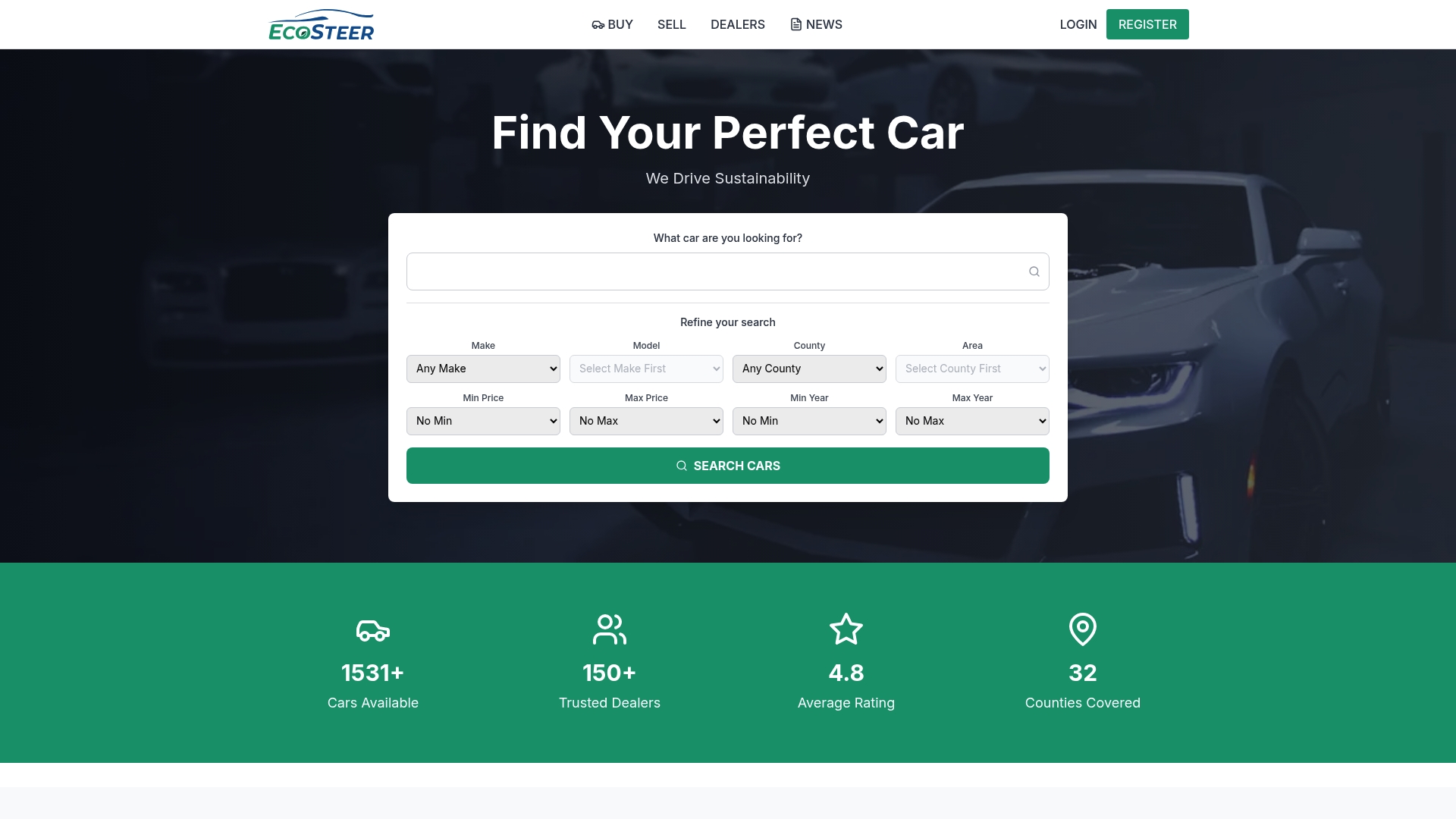
Whether you’ve landed on a hybrid or decided petrol still suits your driving, EcoSteer’s dealer discovery tool connects you directly with sellers in counties from Dublin to Kildare to Louth, so you can ask the questions that actually matter before you view a car in person.
- Ask about the hybrid battery warranty and whether it transfers to you as a new owner.
- Ask for the motor tax band and CO₂ figure so you can check your own running-cost assumptions.
- Ask for full charging history on any PHEV, since this tells you whether the fuel-cost figures quoted actually apply.
Save your search on EcoSteer, apply the fuel-type filter, and compare listings against the total cost of ownership figures in this guide before you make an offer.
Sources
FAQ
Is it better to get petrol or a hybrid car?
For most Irish drivers with mixed or urban mileage, a hybrid works out cheaper to run and often holds resale value better, as shown by running-cost comparisons for a mid-size SUV. Petrol still suits low-mileage drivers or those doing mostly long motorway trips, where the hybrid’s fuel-saving advantage barely comes into play.
What is the main downside to owning a hybrid car?
The main downsides are a higher purchase price and slightly more complex repairs when something does go wrong with the battery or electric motor system. Regenerative braking does reduce brake wear, which offsets some of that added servicing complexity over time.
What happens if a hybrid runs out of petrol?
A full hybrid (HEV) cannot run on electric power alone once the petrol tank is empty, since its small battery only assists the engine rather than replacing it entirely. A plug-in hybrid (PHEV) behaves the same way once its larger battery is depleted, reverting to the petrol engine, so running dry stops the car exactly as it would a petrol-only vehicle.
Should I buy a hybrid or petrol car in Ireland?
Check your annual mileage and driving pattern first, since these decide the answer more than brand or badge. Drivers doing 15,000 to 25,000 km a year with a mix of town and motorway driving tend to benefit most from a full hybrid, while very low-mileage or long-motorway drivers may find petrol remains the simpler, cheaper option.
Recommended
Ecosteer Editorial
Author