3 Checks for Featured Car Listings in Ireland: Seller, NCT, Warranty
Buyer first checklist for featured car listings in Ireland: verify seller identity, read the NCT, get the VRC and a written warranty.

Featured car listings are curated adverts that speed discovery, but treat them as a starting point: check the seller identity, NCT and service history before you buy. A prominent placement means a listing has caught a platform’s eye for visibility, not that the car has passed any independent check. Before contacting a seller, confirm whether you are dealing with a dealer or a private individual, then verify the price, mileage and NCT status.
TL;DR:
- Verifying the seller’s identity is crucial, as dealer sales offer stronger protections and clearer recourse if issues arise after purchase.
- Confirm the vehicle’s NCT certificate date, odometer readings, and request a vehicle history check to avoid mileage discrepancies or unclear ownership.
- Conduct an in-person inspection focusing on bodywork, tyres, interior wear, and engine leaks, and consider a professional mechanical inspection for higher-mileage cars.
- Always obtain written warranty terms, full service history, and sale documents before completing the purchase, and avoid paying full deposit before viewing the car.
- Featured listings highlight paid visibility but do not guarantee the car’s condition, so use them as a starting point for thorough checks and seller verification.
Table of Contents
- What a quality featured listing includes and why each field matters
- A practical pre-contact checklist before you reach out to a seller
- If the checks look good: viewings, inspections and completing the sale
- How we curate featured listings and support safer buying
- Why the real work starts after you click on a listing
- Find trusted featured listings and book a viewing today
- FAQ
- Sources
What a quality featured listing includes and why each field matters
A featured listing earns your trust by showing its work, not just its photos. The strongest adverts give you everything you need to judge a car before you pick up the phone, rather than leaving gaps that only become obvious after a wasted trip.
Look for these fields on every listing you consider:
- Dealer or seller identity, clearly stated
- Price, mileage and registration or model year
- Fuel type and transmission
- Service history and warranty terms
- Clear, recent photos and the car’s location
Dealer identity matters more than any other field because it changes your legal position. The CCPC explains that protections differ between traders selling as part of a business and private individuals selling their own car, so knowing which one you are dealing with shapes what recourse you have if something goes wrong after the sale.
Supporting documents carry as much weight as the headline details. A Vehicle Registration Certificate (VRC) confirms who has legally owned the car, and a dealer-issued history report adds a second layer of reassurance, though it works best alongside your own checks rather than instead of them.
Pro Tip: A listing with no service history mentioned at all is worth a direct question to the seller before you go any further.
A practical pre-contact checklist before you reach out to a seller
Before you ring a seller or book a viewing, a short round of checks can save you a wasted afternoon and protect you from an expensive mistake. Work through these in order:
- Understand what the NCT does not cover. A pass confirms the car met safety standards on the day it was tested; it is not a mechanical warranty, so issues that develop afterwards are not covered by that certificate.
- Request a vehicle history check and the VRC. Confirming the registration number and the chain of previous owners protects you against buying a car with an unclear title.
- Ask for warranty terms in writing. SIMI advises buyers to verify service history and get written warranty confirmation, particularly where cover and exclusions vary significantly between dealers.
- Confirm whether you are buying from a trader or a private seller. This single fact determines your consumer rights if a fault appears after purchase, so ask directly if the listing does not say.
- Cross-check the price against similar listings. A figure well below comparable cars is a signal to look harder, not a reason to move faster.
Buyers who skip these steps often discover problems only after money has changed hands, when their options are far more limited. A quarter of an hour spent on this checklist, before you ever speak to the seller, is the cheapest insurance you will find in the entire buying process.
If the checks look good: viewings, inspections and completing the sale
Once a listing clears your initial checks, the next stage is seeing the car in person and confirming everything the advert claimed. Bring your driving licence, a list of questions drawn from the listing, and enough time to look properly rather than rushing.
At the viewing, inspect these points directly:
- Bodywork panel gaps and paint consistency, which can reveal past accident repairs
- Tyre wear patterns, which often hint at alignment or suspension issues
- Interior wear against the stated mileage, since heavy wear on a low-mileage car is worth questioning
- Engine bay cleanliness and any fluid leaks
An independent mechanical inspection is worth commissioning before you commit, particularly on a car with higher mileage or a thin service history. A thorough check covers the engine, transmission, suspension, brakes and electronics, catching faults that neither a visual inspection nor the NCT would flag.
Before any money changes hands, collect the signed sale agreement, the VRC, the NCT certificate, full service history, written warranty terms and receipts for any recent work. Keep every document together, since you may need them for insurance, future resale or a warranty claim.
Pro Tip: Pay a deposit only once you have seen the car in person, and avoid any seller who pressures you to pay the full amount before a viewing.
How we curate featured listings and support safer buying
Our platform is designed to connect car dealers and buyers through a fast, transparent online experience, which shapes how featured placements work. Dealers list vehicles and manage leads directly through us, which keeps listing details current and puts dealer identity front and centre rather than buried in small print.
The platform’s positioning leans toward sustainable choices alongside broad coverage of counties, makes and models, and it offers free listings for vehicles under a certain price to keep the marketplace accessible to a wide range of sellers. For sellers wanting to present a car well, our car ad templates resource outlines what a strong, complete listing looks like, which in turn gives buyers more of the detail this guide recommends checking.
Why the real work starts after you click on a listing
The most common mistake in car buying is treating a prominent listing as a shortcut rather than a starting point. A featured placement tells you a dealer paid for visibility or a platform judged the advert worth surfacing. It tells you nothing about whether the clutch has another 20,000 kilometres left in it.

Conventional advice often stops at “check the mileage and look at the photos,” which undersells how much protection sits in three unglamorous habits: confirming whether you are buying from a trader or a private seller, reading the NCT certificate properly rather than treating a pass as a clean bill of health, and getting warranty terms in writing before you hand over a deposit. None of these take long, and all three are routinely skipped by buyers in a hurry.
If you prioritise one thing above all else, make it seller identity. It is the fact that determines what happens if the car develops a fault next month, and it is usually the easiest thing on a listing to verify.
Find trusted featured listings and book a viewing today
We make it straightforward to search dealer listings, filter for EV and sustainable options, and contact a seller directly through the listing itself. Rather than scrolling through adverts with missing details, you can narrow results by county, price, mileage and fuel type, then book a viewing with a dealer whose identity and stock are already visible on the page.
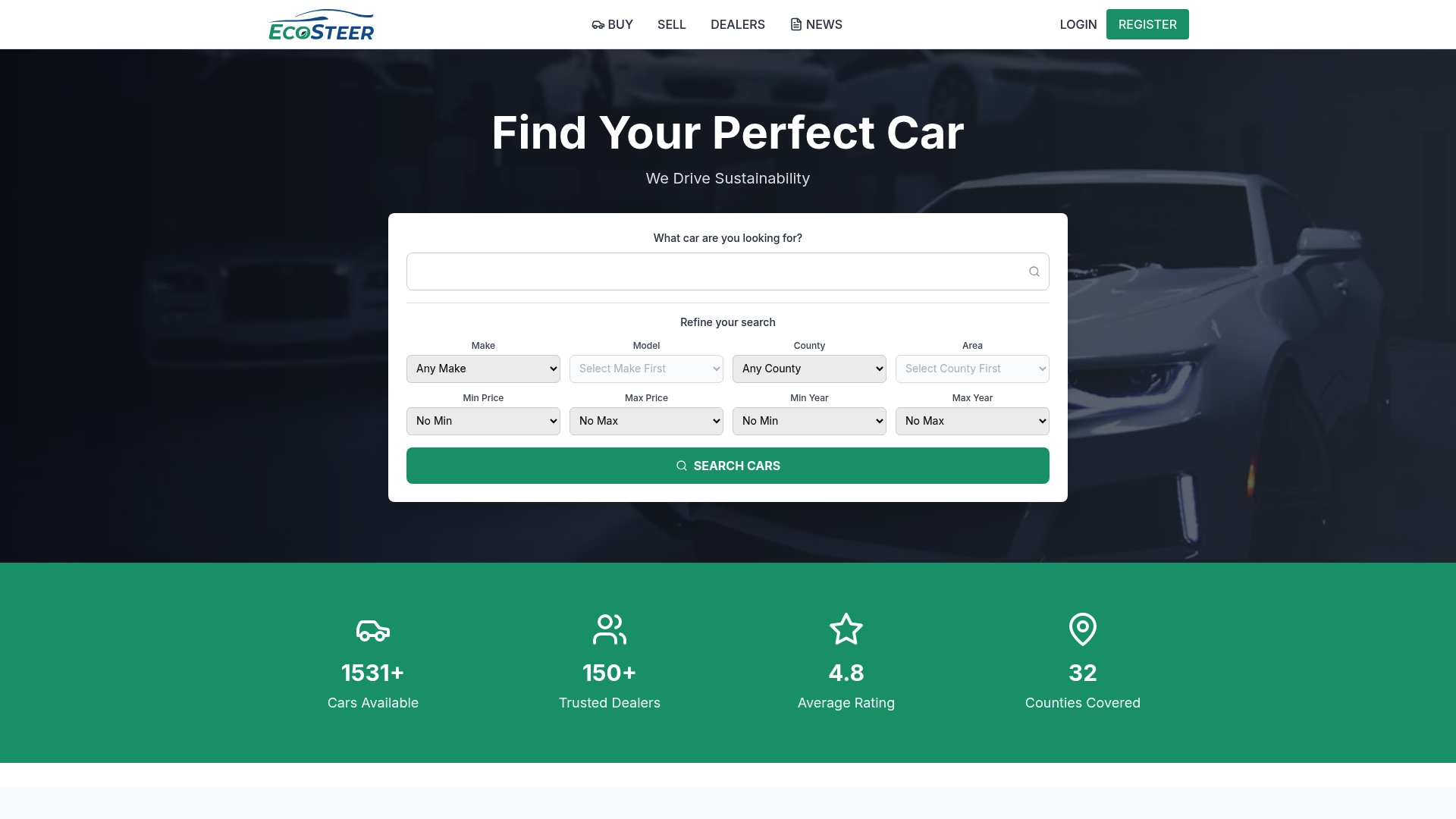
To get started:
- Search featured listings on our cars page and filter by dealer verification
- Use the fuel and transmission filters to surface EV and hybrid stock
- Contact the seller directly through the listing to arrange a viewing
| Step | What you do | Where |
|---|---|---|
| Search | Filter by county, price and fuel type | Cars |
| Verify | Check dealer identity and listing details | Listing page |
| Contact | Message the seller to book a viewing | Listing page |
Browse our cars for sale listings now and start narrowing down your shortlist.
FAQ
What is a featured car listing?
A featured car listing is an advert given extra visibility on a marketplace, usually because a dealer paid for the placement or the platform promoted it. It helps you discover stock faster but is not a guarantee of the car’s condition or legal status.
Is it safer to buy from a dealer than a private seller?
Buying from a dealer generally gives you stronger consumer protections than buying from a private individual, according to CCPC guidance. Always confirm which type of seller you are dealing with before you commit to a purchase.
Does passing the NCT mean a car is mechanically sound?
No. An NCT pass confirms the car met safety standards on the day it was tested, but RSA guidance/about-the-national-car-test-(nct)) makes clear it is not a mechanical warranty. An independent inspection catches issues the NCT does not cover.
What should I ask a dealer about warranty cover?
Ask for the warranty terms in writing, including what is covered, for how long, and any exclusions. SIMI advises buyers to confirm this detail directly rather than relying on verbal assurances.
How can I find dealer-verified featured listings?
You can search by county, price and fuel type on our cars for sale pages, where dealer identity and listing details are shown alongside each advert. Filtering this way narrows your shortlist to sellers you can verify before contacting them.
Sources
Recommended
Ecosteer Editorial
Author