Avoid a Wasted Test: 4 Step Checklist to Pick CVRT or NCT in Ireland
Avoid wasted bookings and fees. Find whether CVRT or NCT applies in Ireland, why tax class doesn't decide, and use a 4 step checklist.

CVRT and NCT are separate tests for separate vehicle types, and mixing them up wastes your time and money. The National Car Test covers passenger cars (category M1), while the Commercial Vehicle Roadworthiness Test covers vans, trucks, buses and certain trailers and tractors. What decides which one applies to your vehicle is its construction and registration category, never its tax class. If you are unsure, the Road Safety Authority, CVRT and NCTS websites confirm the correct regime for your registration number.
TL;DR:
- The NCT applies only to passenger cars registered as category M1, while the CVRT covers commercial vehicles, buses, trailers, and certain tractors based on construction category.
- Vehicle age and registration category determine testing frequency: cars start with a four-year interval, then every two years until ten, with annual testing beyond that; commercial vehicles generally require their first CVRT at one year old and annual thereafter.
- Both tests examine only what inspectors can see on the day, with a pass indicating compliance at that moment but not guaranteeing long-term reliability.
- Booking errors can cause wasted time and money, as NCT and CVRT are booked through separate systems with differing fees and re-test rules.
- Verifying the vehicle’s registration category before testing or purchase prevents costly mistakes, especially since tax class does not determine the applicable test.
Table of Contents
- CVRT vs NCT: which vehicles each test covers
- When is each test due? Frequency and start ages
- What each test checks and the certificate you get
- Booking, fees and re-tests: what to expect
- Common misunderstandings and practical tips
- Quick checklist: how to tell which test your vehicle needs
- Why getting this wrong costs Irish buyers more than they expect
- Checking a car before you commit to CVRT or NCT hassle
- Where to check the official rules
- Sources
- FAQ
CVRT vs NCT: which vehicles each test covers
The confusion between CVRT and NCT usually starts with a simple mix up: people assume the test depends on how a vehicle is used, when it actually depends on how it was built. Ireland’s roadworthiness system splits vehicles by category, and that category is set out on your registration certificate, not decided by your motor tax disc.
The NCT applies to category M1 vehicles, which means standard passenger cars. The National Car Testing Service (NCTS) administers this test on behalf of the state, running dozens of centres nationwide where private car owners book their slot.
The CVRT covers a wider and more varied group. It applies to N1, N2 and N3 goods vehicles, M2 and M3 buses (anything with more than eight passenger seats), certain O3 and O4 trailers, and some tractors, according to EU roadworthiness mapping for Ireland. This test runs through RSA-authorised CVRT centres rather than NCTS branches.
Typical examples make the split clearer:
- Hatchbacks, saloons, estates and most SUVs used for private motoring: NCT.
- Vans, box trucks, articulated lorries and flatbeds: CVRT.
- Minibuses and coaches carrying more than eight passengers: CVRT.
- Certain trailers over 3.5 tonnes and fast tractors: CVRT.
A crew cab van registered as a goods vehicle still falls under CVRT even if it spends half its life carrying passengers. Construction and registration category override everyday use every time.
When is each test due? Frequency and start ages
CVRT and NCT don’t just cover different vehicles, they also run on different clocks, and getting the due date wrong is one of the easiest ways to end up driving on an expired certificate without noticing.
The NCT schedule for cars runs like this, per NCTS guidance:
- First test: four years from the date of first registration.
- Second test onward: every two years, up to the tenth anniversary.
- After ten years: annual testing.
- Owners can book up to 90 days early without losing any time off the certificate’s expiry date.
CVRT timing is stricter from the outset. Most commercial vehicles need their first test at one year old, then annually after that, according to CVRT booking guidance for vans and jeeps. Certain fast tractors are the exception: their first test is delayed to four years, then repeats every two years rather than annually.
In both systems, the anniversary of first registration sets your due date, so it pays to mark that date rather than relying on memory or a sticker on the windscreen.
What each test checks and the certificate you get
Both tests examine only what an inspector can see and access on the day, which is a detail worth remembering before you treat either certificate as a guarantee of long-term reliability.
The NCT focuses on items relevant to passenger cars: brakes, steering, suspension, tyres, lights, emissions and structural corrosion, among other checks. The CVRT covers similar ground but adds goods-vehicle specifics: load-securing equipment, coupling devices on trailers, tachographs where fitted, and the condition of load-bearing components under heavier operating stress.
Results in both systems fall into similar bands: pass, or a fail graded by severity. A dangerous defect means the vehicle should not be driven at all; a major defect requires repair and retest; pending or minor issues typically still allow a pass with advisory notes.
The paperwork differs by name only. Cars that pass get an NCT certificate. Commercial vehicles get a Certificate of Roadworthiness (CRW), which must be displayed and which confirms the vehicle met the standard on the day of testing, according to the RSA’s CVRT overview. Neither document promises anything about next week, only about the moment the inspector signed off.
Booking, fees and re-tests: what to expect
Booking the wrong test wastes a day and sometimes a fee, so know your route before you pick up the phone. NCT slots go through the NCTS website or phone line, while CVRT tests are booked directly with RSA-authorised centres or through the My CVRT booking system.
Fees differ by vehicle type and include a CVR levy plus VAT on the commercial side, with the exact schedule published on the CVRT fee page. NCT fees are set out on the NCTS site and vary slightly depending on vehicle type and fuel class.
Re-test rules follow a similar logic in both systems:
- Minor defects usually qualify for a free visual re-test within a set window, without needing a full re-test.
- More serious failures require a full lane re-test, which carries its own fee.
- CVRT re-tests generally must happen within a limited number of days and, for certain checks, within a specified distance of the original test centre, according to the official guidelines.
- Bring valid presenter ID (driving licence, passport, or Public Services Card) to every test, commercial or private.
Payment methods are broadly the same everywhere: card payment is standard, with some centres also accepting cash.
Common misunderstandings and practical tips
Motor tax class trips up more Irish owners than anything else in this comparison. Paying commercial tax on a vehicle does not automatically mean it needs a CVRT, and paying private tax does not guarantee an NCT is correct either. The deciding factor is the vehicle’s registration category and construction, a distinction industry guidance on CVRT exemptions makes clear. Check the category letter on your registration certificate before assuming anything from your tax disc.
Pro Tip: Before presenting any vehicle for testing, check lights, tyre tread, brake feel and that your documentation (NCT/CVRT history, insurance, registration cert) is in the car. A five-minute check at home catches the faults that cause the most re-tests.
If you’re buying a used vehicle, a current CRW or NCT certificate is not a mechanical warranty. It only confirms the vehicle met the standard on inspection day, so an independent mechanical check before purchase remains worthwhile, particularly for higher-mileage commercial vehicles. Our guide on preparing for the NCT walks through the checks most likely to catch owners out.

One rule has no flexibility: if a CVRT inspector records a dangerous defect, do not drive the vehicle. Arrange recovery instead, because continuing to drive risks fines and penalty points regardless of any certificate you’re still holding.
Quick checklist: how to tell which test your vehicle needs
- Find your vehicle category on the registration certificate, looking for M1 (car), N1/N2/N3 (goods vehicle), or M2/M3 (bus).
- Ask whether the vehicle was built or adapted to carry goods or more than eight passengers. If yes, it almost certainly needs CVRT.
- If the category still isn’t clear, check the RSA, CVRT or NCTS websites, or call their helplines directly.
- Book the matching test regime and bring valid ID (driving licence, passport, or Public Services Card) on the day.
Four steps, and you’ve settled the CVRT vs NCT question for good, at least until the vehicle changes hands or gets reclassified.
Why getting this wrong costs Irish buyers more than they expect
The mistake I see most often in the Irish second-hand market isn’t ignorance of the rules, it’s misplaced confidence. Buyers assume a van taxed privately must be on the NCT system, or that a valid CRW means a vehicle has no hidden problems. Both assumptions cost money, sometimes through a wasted test booking, sometimes through a nasty repair bill discovered after purchase.
Good preparation closes that gap. A buyer who checks the registration category before viewing a vehicle, and who treats any certificate as a snapshot rather than a promise, avoids most of the expensive surprises that surface in Irish classifieds every week. Resources like our NCT prep checklist and NCT penalty guide exist precisely to close that knowledge gap before it costs you.
— ibrahim*
Checking a car before you commit to CVRT or NCT hassle
Some online car marketplaces provide detailed vehicle listings, including model specifics and dealer contact, helping you avoid wasted journeys on wrongly categorized or unsuitable vehicles for your next test.
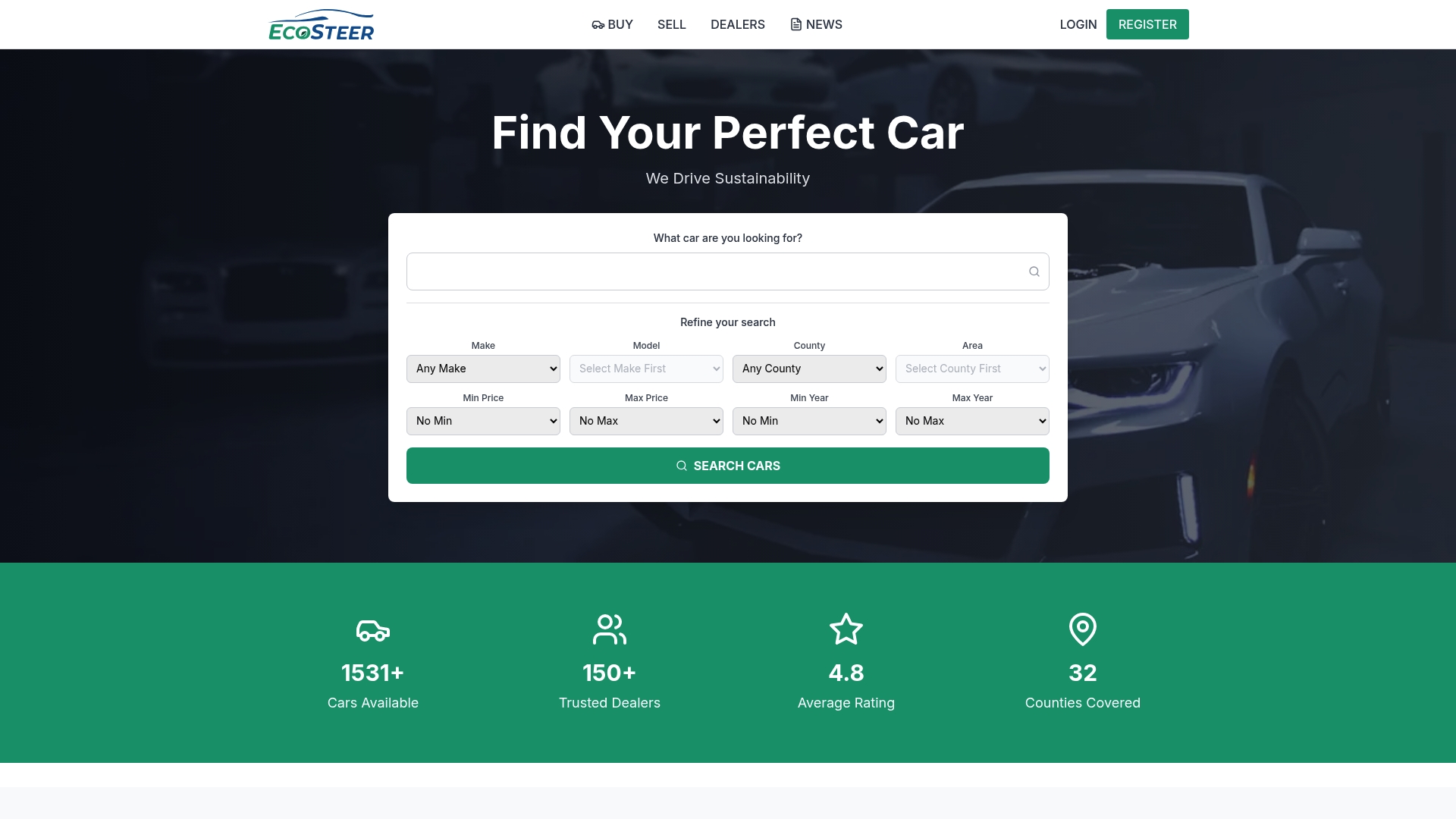
Rather than guessing from a photo and a price, browse cars for sale in Ireland on Ecosteer and filter by county, price, year, mileage, transmission, body type and fuel type until you find vehicles that actually match your budget and your test obligations. If you’re weighing up a specific model, listings like the 2024 Toyota Corolla Cross or a 2023 Skoda Scala show the kind of detail that helps you judge a car before you view it in person. Start browsing on Ecosteer and shortlist a few options before you book any inspection.
Where to check the official rules
For legally authoritative detail, go straight to the source. The RSA’s CVRT page covers commercial vehicle rules and certificates. NCTS handles car test booking and fees. Citizens Information offers a plain-English walkthrough of CVRT preparation and booking steps.
Sources
- Ireland RWC models - Mobility & Transport - Road Safety
- Vans & Jeeps - CVRT
- NCTS guidance
- Commercial Vehicle Roadworthiness Testing (CVRT) - RSA
- Commercial Vehicle Roadworthiness Test in Ireland (CVRT) - Citizens Information
FAQ
What is the difference between CVRT and NCT?
The NCT tests passenger cars (category M1) through NCTS centres, while the CVRT tests commercial vehicles, buses with more than eight passenger seats, and certain trailers and tractors through RSA-authorised centres. The deciding factor is the vehicle’s registration category and construction, not its tax class or how it’s actually used day to day.
How much does a CVRT cost in Ireland?
CVRT fees vary by vehicle type and include a CVR levy plus VAT, with the exact schedule published on the CVRT fee page. Check that page directly for the figure matching your specific vehicle class before booking.
Can you drive without a CVRT?
No. Driving a commercial vehicle without a valid Certificate of Roadworthiness is illegal, and if a tester has flagged a dangerous defect, continuing to drive risks fines and penalty points regardless of any certificate you previously held. Arrange recovery rather than risk it on the road.
What does the CVRT check?
The CVRT inspects brakes, steering, tyres, lights and structural condition, plus goods-vehicle specifics such as load-securing equipment, coupling devices and load-bearing components, according to the RSA’s CVRT overview. Only visible and accessible parts are assessed, so a pass reflects the vehicle’s condition on the day rather than a guarantee going forward.
Recommended
Ecosteer Editorial
Author