Get Car Finance Pre Approval in Ireland: 7 Steps to a Same Day Decision
Clear, Ireland first guide to car finance pre approval: the 7 steps to apply, what lenders must check under Central Bank rules, and the documents to bring.

Yes, you can get car finance pre-approval in Ireland. Banks, credit unions and finance houses all offer an approval-in-principle before you pick a car, but it is conditional, not a guaranteed loan. Your immediate next step is simple: gather your photo ID, proof of address, recent payslips and three months of bank statements now, so you can apply the moment you find a car worth chasing.
TL;DR:
- Pre-approval in Ireland is conditional and requires validation of the specific vehicle’s value, your current income, and credit status before final approval.
- Applying through your bank or credit union provides a better comparison and often more favorable rates than dealer pre-checks, and should be done before car viewing.
- Quick approvals depend on complete paperwork, including proof of identity, income, and bank statements, with decisions typically valid for a few weeks to months.
- A pre-approval can be withdrawn or revised if your financial situation or vehicle valuation changes, or if new information appears on your credit report.
- Personal loans or credit union financing generally prove more cost-effective than PCP or dealer finance, especially when combined with trade-ins or government grants.
Table of Contents
- What does car finance pre-approval actually mean in Ireland?
- Who issues pre-approvals and when should you apply?
- How to get pre-approved for car finance in Ireland: step-by-step
- How reliable is a pre-approval, and when does it fall through?
- PCP, hire purchase or a personal loan: how pre-approval differs
- What to ask lenders, and red flags to avoid
- What to do once you’re pre-approved
- What pre-approval really buys you
- Where Ecosteer fits once you’re pre-approved
- Sources
- FAQ
What does car finance pre-approval actually mean in Ireland?
Pre-approval, sometimes called approval in principle, is a lender’s early assessment of what it would lend you based on your income, outgoings and credit history. It is not the same as a final loan offer. A final offer only comes once the lender has confirmed the actual vehicle, its valuation, and reconfirmed your finances haven’t changed since the pre-check.
Every regulated lender in Ireland has to run a genuine affordability assessment before offering or recommending credit, and unsolicited pre-approved credit is banned outright under the Central Bank’s Consumer Protection Code. That rule matters more than it sounds. It means a lender cannot simply hand you a pre-approved credit limit out of nowhere; you have to apply, and they have to check that repayments genuinely fit your budget. That’s also why a pre-approval always comes with caveats attached: the lender typically reserves the right to reassess affordability, verify your identity again, and value the specific car before releasing funds.
Who issues pre-approvals and when should you apply?
Pre-approval in Ireland comes from several sources: retail banks, credit unions, manufacturer finance arms tied to specific brands, and independent finance houses. Dealers themselves often run a quick pre-check through their finance partner, which is useful but not the same as an independent lender quote.
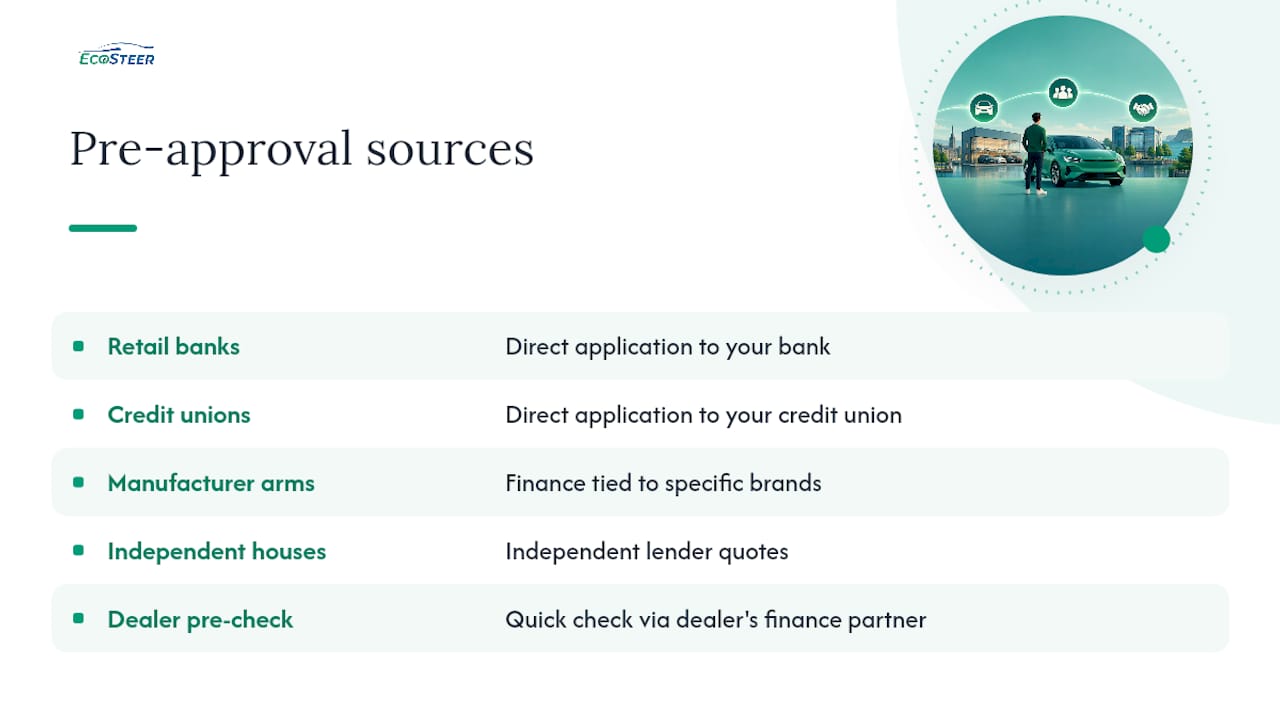
It pays to get both. A dealer’s pre-check tells you what that finance partner might offer; a direct application to your own bank or credit union gives you a comparison point and, often, a better rate. Apply for pre-approval before you start seriously viewing cars, not after. It sharpens your budget, gives you real negotiating weight with a dealer, and speeds up a private sale where the seller wants proof you can actually pay before they take the car off the market.
How to get pre-approved for car finance in Ireland: step-by-step
Getting a decision quickly comes down to preparation. Lenders move fast when your paperwork is complete on the first attempt.
- Gather your identity documents. A passport or driving licence, plus a recent utility bill or bank statement showing your current address.
- Pull together three months of bank statements. Lenders want to see genuine spending patterns, not just your payslip.
- Collect recent payslips or proof of income. If you’re self-employed, expect to provide tax returns or a Revenue statement of income instead.
- Have your PPSN ready. Most online applications ask for it upfront to run identity and credit checks.
- Work out your realistic budget first, including insurance and running costs, not just the monthly repayment figure.
- Reduce the amount you need to borrow where possible. A trade-in or, for electric vehicles, the SEAI grant both cut the loan size and improve your odds of approval.
- Apply online or in branch. Most banks and credit unions now offer a same-day or next-day decision once documents are uploaded.
During this process, the lender runs an affordability assessment and, for loans of €2,000 or more, must pull your Central Credit Register report. This shows your existing credit commitments and repayment history, and it directly shapes what you’re offered.
Pro Tip: Apply to only one or two lenders within a short window. Multiple credit applications in quick succession show up on your Central Credit Register file and can make you look like a higher risk than you actually are.
How reliable is a pre-approval, and when does it fall through?
A pre-approval usually holds for a few weeks up to a few months, depending on the lender, but it is never unconditional. Treat it as a strong indication, not a locked-in loan.
The most common reasons a pre-approval doesn’t convert to final funding: the car’s valuation comes in lower than expected, you’ve taken out new credit since applying, your income has changed, or something new shows up on your Central Credit Register file. Because affordability rules require lenders to check your position again before releasing funds, a gap of even a few weeks between pre-approval and drawdown can matter. If you’re made redundant, change jobs, or open a new credit card in that window, expect the lender to ask questions, and possibly revise the offer.
PCP, hire purchase or a personal loan: how pre-approval differs
The finance route you choose changes what a pre-approval is actually promising you.
| Finance type | What pre-approval covers | Ownership at the end |
|---|---|---|
| PCP | Monthly figure based on an assumed Guaranteed Minimum Future Value (GMFV) and mileage cap | You choose to buy, return, or trade in |
| Hire Purchase (HP) | Capacity to repay the full amount in equal instalments | Car is yours once the final payment clears |
| Personal loan / credit union | A straightforward sum you can borrow, unconnected to a specific car | Yours from day one |
With PCP, the pre-approved monthly figure looks appealing because a chunk of the car’s value is deferred into that final balloon payment. Ask exactly what GMFV and mileage limit were used, because a lower balloon figure means higher monthly repayments. HP pre-approval is a more honest picture of what full ownership actually costs each month, since there’s no deferred balance. Personal loans, particularly through a credit union, tend to pre-approve fastest because there’s no vehicle valuation involved. Credit unions often undercut dealer finance on rate, but you’ll usually need to be a member first.
What to ask lenders, and red flags to avoid
Before signing anything, get straight answers on a handful of specifics.
- The total amount payable over the full term, not just the monthly figure.
- The APR, and whether it’s fixed for the whole agreement.
- Any arrangement, documentation or early repayment fees.
- For PCP specifically: the exact GMFV and the mileage cap it’s based on.
- Whether the intermediary arranging the deal is on the CCPC’s register of authorised credit intermediaries.
Be wary of a dealer who won’t clearly break down the total cost, or who’s vague about how their commission works. On hire purchase agreements, Irish consumer law includes a “half-rule” giving you certain rights to return the car once you’ve paid at least half the total amount, so ask how that applies to your specific agreement.
Pro Tip: If a dealer pushes you toward their in-house finance without offering to show you the figures side by side against a direct lender quote, ask for the comparison yourself. A confident dealer won’t mind.
What to do once you’re pre-approved
Use your pre-approval as leverage. When you’ve found the car, tell the dealer or private seller you’re pre-approved and ready to move, which strengthens your position on price. It signals you’re a serious buyer, not someone still shopping around for finance.
The lender still has final checks to run: a valuation of the specific vehicle, a fresh affordability look, identity confirmation, and often another Central Credit Register lookup if time has passed since your original application. At handover, have your ID, the pre-approval documentation, and proof of insurance ready, and get the finance agreement and sale terms in writing before any money changes hands.

What pre-approval really buys you
Pre-approval buys speed, not certainty. Dealer finance can turn around a decision in minutes, but a direct lender or credit union pre-check usually gives you a clearer, less commission-driven number to negotiate against. Once you’re pre-approved, transparency from the seller matters more than ever, since a confident buyer with a vague dealer is still a vulnerable one. Never treat pre-approval as money in the bank. It’s a strong start, not the finish line.
— ibrahim
Where Ecosteer fits once you’re pre-approved
Pre-approval only pays off if you can find the right car quickly, and that’s where most buyers lose momentum, sifting through scattered listings with no clear way to compare dealers. Ecosteer gives you a faster route: search listings across counties, filter by price, mileage, transmission and fuel type, and browse verified dealers side by side, rather than chasing separate sites for each one.
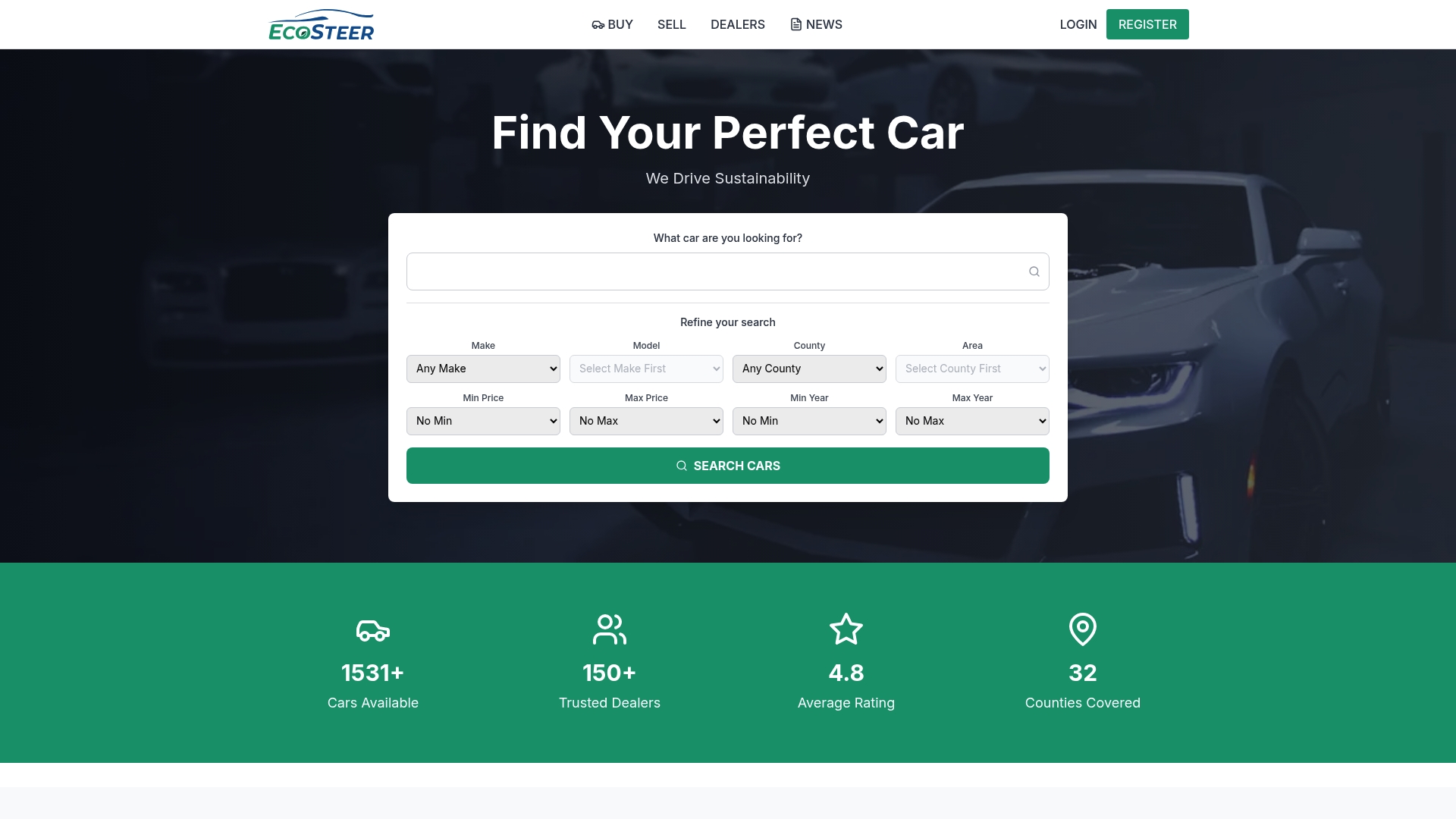
Once you know your budget from pre-approval, Ecosteer’s guides on buying and financing help you match that figure against real listings, so you’re negotiating with actual numbers rather than guesswork. If you’re ready to put your pre-approval to work, find a dealer near you and start comparing cars that fit what you’ve been approved to spend.
Sources
- Consumer Banking, Credit, Arrears and Certain Other Financial Arrangements | Central Bank of Ireland
- Central Credit Register — sample credit report and explanation
- CCPC register of credit intermediaries
FAQ
Is it possible to get pre-approved for a car loan in Ireland?
Yes. Banks, credit unions and finance houses all offer approval in principle, subject to an affordability assessment required under the Consumer Protection Code. It’s conditional, so final approval still depends on the vehicle’s valuation and a fresh check of your finances.
Can I get a large car loan with a poor credit history?
It’s harder, but not automatically impossible. Lenders weigh your income, existing debts and your Central Credit Register history together, so a stronger income or a smaller loan relative to your earnings can offset a patchy credit record.
How accurate is a pre-approval for a car loan?
It’s a genuine indication of what you can likely borrow, not a locked-in guarantee. The figure can shift if the car’s valuation differs, your income changes, or new entries appear on your credit file between pre-approval and final funding.
What’s the cheapest way to finance a car in Ireland?
For most buyers, a personal loan or a credit union loan tends to work out cheaper than PCP or dealer finance, since you own the car outright and avoid balloon payments and mileage restrictions. Using a trade-in or an SEAI grant on an electric vehicle also cuts the amount you need to borrow before you even apply.
Recommended
Ecosteer Editorial
Author