Lose 15–25% in Year One: Car Depreciation in Ireland, VRT and Mileage
See cars in Ireland lose 15%–25% in year one and 50%–60% by year three. Learn how VRT, CSO mileage norms and marketplace listing signals shape resale value.

A typical mainstream family car in Ireland loses 15% to 25% of its value in the first year and around 50% to 60% by year three, according to Odo. On a €40,000 car, that’s roughly €6,000 to €10,000 gone before your first NCT is even due. The single biggest lever you control is buying nearly new rather than brand new, then protecting the car’s value with full service history and sensible mileage. The sections below break down the numbers by brand, fuel type, and Revenue’s VRT mechanics.
TL;DR:
- Choosing a three to four-year-old car with full service history and below-average mileage maximizes residual value retention.
- Mainstream family cars typically lose 15% to 25% of their value in the first year and 50% to 60% in three years, with brands like Toyota, Skoda, and Honda depreciating more slowly.
- Mileage above the CSO average of 15,000–16,000 km per year significantly accelerates depreciation, especially beyond common thresholds like 100,000 km or 150,000 km.
- Electric vehicles have stabilized in depreciation after recent price drops, but future infrastructure improvements could influence their resale value.
- Revenue’s VRT and OMSP calculations closely track actual dealer prices, and maintaining good condition and verifiable history helps preserve value during sale.
Table of Contents
- Car depreciation rates in Ireland: year by year
- Which brands hold their value best in Ireland
- Fuel type and EVs: what sells well in Ireland right now
- How Revenue’s VRT and OMSP shape used car values
- How to protect your car’s value: a practical checklist
- What Ecosteer sees in the Irish resale market
- Warranty and insurance: an overlooked value factor
- Age and mileage thresholds that matter in Ireland
- Tax implications for private car owners in Ireland
- Author perspective: the one strategy that actually works
- Find your next car without the value guesswork
- Sources
- FAQ
Car depreciation rates in Ireland: year by year
Depreciation front-loads hard. Most of the damage happens in the first three years, then the curve flattens.
Here’s how it typically plays out for a mainstream family car, based on the loss bands reported by odo.ie and residual patterns tracked by Motorcheck:
Depreciation is usually the single largest cost of owning a car in Ireland — bigger than fuel, motor tax, and insurance added together, according to odo.ie’s analysis. Most owners never calculate it because no bill ever arrives for it.
Mileage shifts every one of these bands. The Central Statistics Office puts average annual distance for a private car at roughly 15,000 to 16,000 km. A car sitting well above that, say 25,000 km a year, will fall towards the bottom of each retention range. One well under it, closer to 8,000 to 10,000 km, tends to sit at the top. If you’re comparing two similar three-year-old cars, the one with 45,000 km on the clock is worth meaningfully more than its twin with 90,000 km, even with identical service records. For a fuller picture of how depreciation stacks against fuel, tax, and insurance, our guide to car ownership costs in Ireland breaks down the full annual bill.
Which brands hold their value best in Ireland
Reliability reputation and parts availability do most of the heavy lifting here. Buyers in Ireland gravitate towards a small pool of brands they trust not to surprise them with a garage bill, and that demand keeps residuals firm.
- Toyota — consistently among the strongest performers in Motorcheck’s residual-value analysis, driven by hybrid reliability and low running costs.
- Skoda — the Fabia and Octavia retain around 65% to 67% of value after three years in small-hatch and family segments, per the same Motorcheck data, thanks to shared VW Group mechanicals at a lower price point.
- Honda — strong in the Civic and CR-V, valued for engine longevity and a smaller but loyal buyer base that rarely haggles hard on price.
- Volkswagen — the Golf and Passat remain default choices for buyers wanting a “safe” used purchase, which keeps demand, and therefore price, steady.
- Mazda — the Mazda3 and CX-5 punch above their weight on residuals, partly because Mazda buyers tend to service diligently and partly because supply is lower than VW or Toyota equivalents.
Small hatchbacks aimed at first-time and learner drivers (Fabia, Yaris, Fiesta-class cars) tend to hold value especially well, since demand from that buyer group barely dips even in a slow market. Mid-size family cars follow reliability reputation closely: a Skoda Octavia with full history will usually out-resell a less-trusted rival on the same forecourt, even at a similar price.
Fuel type and EVs: what sells well in Ireland right now
Fuel choice is no longer a side detail. It’s one of the biggest swing factors in what a car is worth two or three years after you buy it.
- Petrol and self-charging hybrids are currently the safest bet for resale, holding value steadily across most segments.
- Diesel still performs well in low-tax-band models with full service history, though Motorcheck notes the buyer pool has narrowed as tax bands and regulation shifted against larger diesel engines.
- Electric vehicles went through a sharp price correction, but Odo suggests declines are moderating as used sales pick up, meaning the market may be finding its floor.
- Hybrid and PHEV licences have grown quickly according to CSO transport data, widening the pool of buyers competing for these cars secondhand.
The practical upshot: a used EV bought after its steepest early drop can be genuinely good value, provided battery health and charging costs stack up for your driving pattern. Aviva’s guidance on resale value points out that infrastructure improvements could reshape EV depreciation curves again before 2030, so today’s bargain-basement EV isn’t guaranteed to stay cheap forever. Our diesel vs petrol vs EV guide covers this in more depth if you’re weighing up fuel types for your next purchase.
How Revenue’s VRT and OMSP shape used car values
Every used car imported into Ireland gets valued against Revenue’s Open Market Selling Price (OMSP), and that same mechanism quietly influences prices on Irish forecourts too. Here’s how it works in practice:
- Revenue assigns each model a depreciation table that tracks expected value loss by age, based on official VRT guidance.
- Standard mileage norms are applied automatically. The VRT manual sets these at 1,500 km per month for most vehicles and 2,100 km per month for diesels.
- Cars above those norms get a downward mileage adjustment, and cars in poor condition get a further deduction from OMSP.
- Dealers importing stock price against these same tables, which is why import valuations and domestic asking prices tend to track each other closely.
These depreciation tables are actively maintained and sit behind Revenue’s online VRT calculator, making them one of the most consistently updated valuation tools in the Irish market. Because of that, dealer residual pricing is rarely far removed from what Revenue’s own tables suggest.
To estimate your own car’s current value, take its original purchase price, apply the retention percentage for its age from the table above, then adjust up or down for mileage against the 15,000 to 16,000 km CSO baseline. A car with heavy scrapes, cracked alloys, or a patchy service history should be marked down further again; condition adjustments in Revenue’s own system confirm that cosmetic and mechanical condition are treated as real value factors, not soft ones.

How to protect your car’s value: a practical checklist
Some depreciation is unavoidable. A meaningful chunk of it, though, is within your control.
- Buy in the three to four year sweet spot. This is where the steepest depreciation curve has already happened, but the car still has years of reliable use left.
- Keep every service receipt and NCT record. Full service history alone can add €1,000 to €2,000 to a three-year-old trade-in, and 15% to 20% on older private sales, according to odo.ie.
- Watch your annual mileage. Staying near or below the 15,000 to 16,000 km CSO average keeps you out of the mileage-penalty zone Revenue applies.
- Fix cosmetic issues before you sell, not after a buyer points them out and uses them to knock down price.
- Favour higher-residual trims within a model range: mid-spec trims with popular options usually resell faster than stripped-out base models or overloaded top-spec ones.
Pro Tip: Before listing your car, run its mileage through MyNCT and pull your last two service invoices. A buyer who sees consistent, verifiable history rarely negotiates as hard as one who has to take your word for it.
On private sale versus dealer trade-in: private sale nearly always nets more money, but it costs time and requires you to handle viewings and negotiation yourself. A trade-in is faster and lower-hassle, but dealers price in their own margin, so expect to lose some value for that convenience. Our step-by-step guide to buying a used car in Ireland and our trade-in value guide both cover this trade-off in more detail.
What Ecosteer sees in the Irish resale market
Listing patterns on Ecosteer tell a consistent story: cars with documented service history attract more enquiries per week than identical models without it, and buyers filter aggressively by county and mileage before they even look at photos.
- Search behaviour skews heavily towards mileage bands under the CSO average, confirming that low-mileage cars generate more buyer interest.
- County-level filtering is one of the most used search tools, reflecting how local Irish buyers prefer to view cars close to home before committing.
- Sellers using detailed condition and history notes tend to close sales faster than those with bare-bones listings.
For sellers, that means the platform’s county filters, dealer contact tools, and detailed listing fields aren’t just convenience features. They’re direct levers on how quickly, and at what price, a car sells.
Warranty and insurance: an overlooked value factor
A car sold with remaining manufacturer warranty commands a real premium, because it removes the buyer’s biggest fear: an expensive mechanical failure right after purchase. This matters more in Ireland than in markets with cheaper labour rates, since Irish garage costs make an uncovered repair sting harder.
Extended warranties bought separately can add a modest resale boost too, though nowhere near what factory-backed cover does, since buyers place more trust in the manufacturer standing behind the car than a third-party policy. Insurance history plays a quieter but real role. A car with a clean insurance record and no written-off history will always outsell one with gaps or past claims flagged, even at an identical spec and mileage. Buyers checking a vehicle’s history before purchase increasingly expect sellers to disclose this upfront, and a seller who volunteers it tends to build the kind of trust that shortens negotiation.
None of this shows up as a line item on a price tag, but it shapes the offers a seller actually receives. A car description that mentions “12 months manufacturer warranty remaining” or “no claims, no write-off history” does measurable work in getting a buyer to commit at asking price rather than haggling it down.
Age and mileage thresholds that matter in Ireland
Irish buyers treat certain age and mileage points as psychological cliffs, and prices drop faster around them than a smooth depreciation curve would suggest.
The NCT threshold at four years old is one of the sharpest. Cars just under four years old, still exempt from needing an NCT, often command a small premium over otherwise identical cars just past that mark. Mileage has similar cliff points: cars creeping past 100,000 km and 150,000 km tend to see buyer interest drop off sharply, even when the car itself is mechanically sound, simply because those round numbers act as mental red flags. A car at 98,000 km will often outsell one at 102,000 km by a wider margin than the 4,000 km difference would justify on paper.

This is where Revenue’s own mileage norms, 1,500 km per month for petrol and hybrid, 2,100 km per month for diesel, become genuinely useful as a benchmark. If your car is well ahead of that pace, it’s likely to fall into a steeper depreciation band than the standard tables suggest, and it’s worth pricing accordingly rather than hoping a buyer won’t notice.
Tax implications for private car owners in Ireland
For most private individuals, depreciation itself isn’t a taxable event. You don’t pay tax on the fact that your car lost value, and you can’t claim that loss against income tax the way a business can claim capital allowances on a company vehicle. Private motoring is treated as a personal expense, not a taxable transaction, in nearly every ordinary use case.
Where tax does enter the picture is at the point of change, specifically around VRT when a vehicle is first registered or deregistered in Ireland. That’s calculated against the OMSP and depreciation tables covered earlier, and it’s a one-off charge tied to registration rather than an ongoing depreciation tax. If you’re simply selling a privately owned car you’ve used yourself, there’s generally no capital gains tax to worry about, since a car is treated as a wasting asset rather than an investment for CGT purposes. The exception worth flagging is if a vehicle has been used partly for business purposes and claimed against as such, in which case the tax treatment shifts and it’s worth checking your specific position with a professional rather than assuming the private-use rules apply.
Author perspective: the one strategy that actually works
If you buy one car decision to get right, make it this: choose a three to four year old model with full service history and below-average mileage. Everything else is fine-tuning around that.
— ibrahim
Find your next car without the value guesswork
A car marketplace can provide features such as county filtering, mileage and service history visible upfront, and direct contact with dealers instead of a middleman.
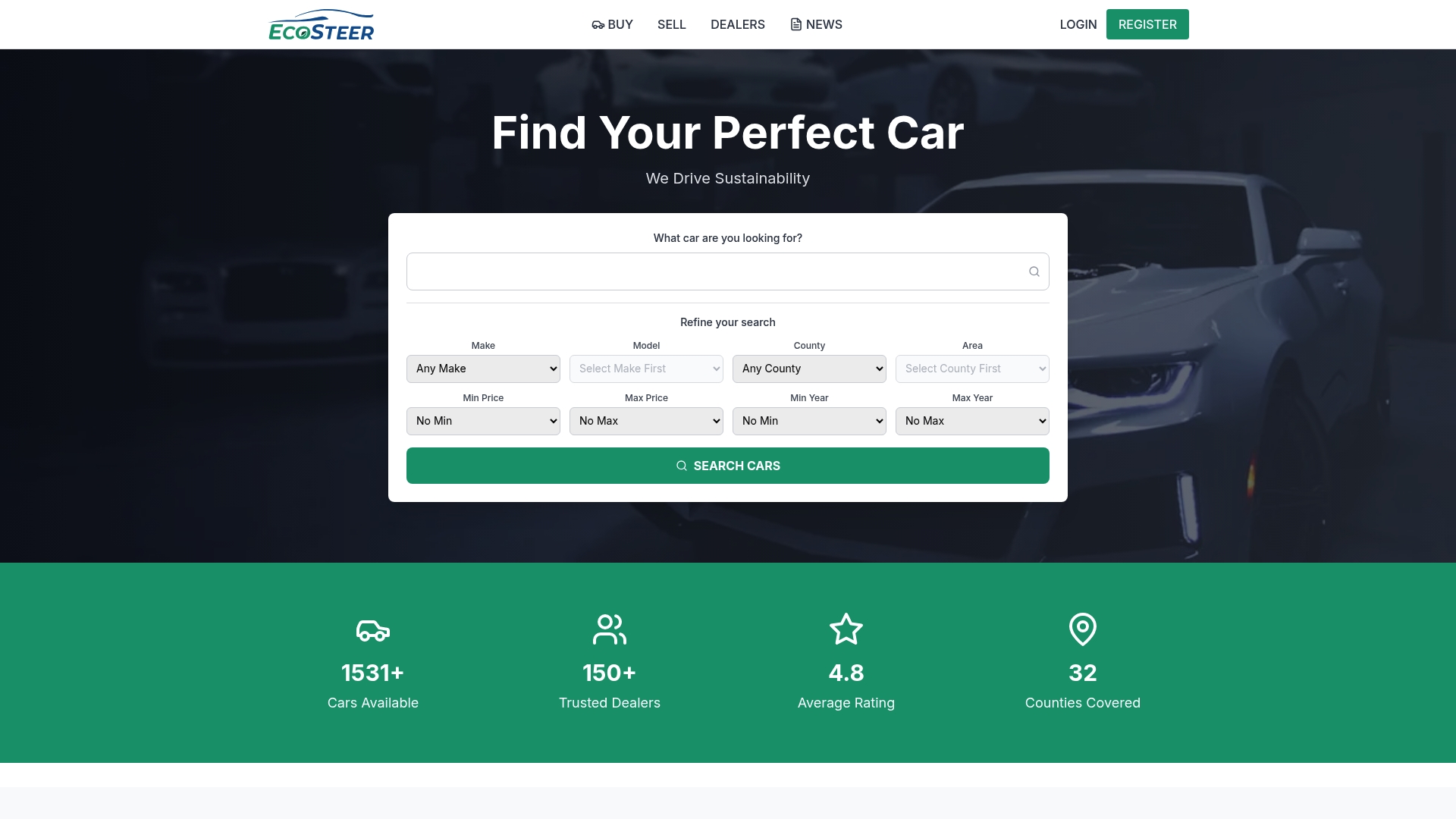
That matters because, as this guide has shown, the cars that hold their value in Ireland are the ones bought with full history and sensible mileage, and those are exactly the details that are easy to hide in a vague listing but impossible to hide on Ecosteer’s search filters. You can filter by county, price, mileage, and fuel type in one search rather than trawling multiple sites. Browse cars for sale across Ireland, including listings in Dublin, Kildare, and Carlow, or use Find a Dealer if you’d rather deal directly with a trusted seller. Start your search today and put these depreciation numbers to work before your next purchase.
Sources
- Assessing the value
- Average vehicle kilometres travelled (CSO)
- Odo
- RV Analysis shows the Irish cars that lose least of their value — Motorcheck
FAQ
How can I calculate the depreciation of my car?
Take your car’s original price, apply the retention percentage for its current age (roughly 75% to 85% at one year, 40% to 50% at three years, based on odo.ie’s figures), then adjust down if mileage is above the CSO average of 15,000 to 16,000 km a year. Poor condition or gaps in service history push the figure down further.
What is the current depreciation rate for cars in Ireland?
Mainstream family cars typically lose 15% to 25% of value in year one and 50% to 60% by year three, according to odo.ie’s market data. Toyota, Skoda, Honda, Volkswagen, and Mazda tend to depreciate more slowly than the market average.
How do I calculate the depreciation value of my car for VRT purposes?
Revenue uses its own Open Market Selling Price and depreciation tables rather than a simple percentage formula, factoring in age, mileage against standard norms, and condition. Their online calculator applies these tables automatically once you enter the vehicle’s details.
How much does a car depreciate after 7 years in Ireland?
By seven years old, most mainstream cars retain roughly 18% to 25% of their original value, based on the depreciation bands reported by odo.ie. A car with high mileage or a patchy service history will typically sit at the lower end of that range.
Can Ecosteer help me find a car that holds its value?
Yes. Ecosteer’s search filters let you sort by mileage, service history, county, and fuel type, so you can compare cars against the exact factors covered in this guide before you commit. Browse current listings on the Cars page to see what’s available near you.
Recommended
Ecosteer Editorial
Author