No Minimum Score: Get Car Finance in Ireland, Check CCR First
Often you can get car finance in Ireland with poor credit. Check your CCR, gather payslips, compare HP/PCP and credit union offers, and browse realistic...

Yes, you can usually get car finance in Ireland with bad credit, but approval depends on affordability, not a fixed credit score. Lenders check your Central Credit Register record alongside your income and existing debts. Routes include hire purchase, PCP, personal loans, credit union loans and specialist lenders, each with different costs. Start by checking your CCR report, gathering payslips and bank statements, and considering a larger deposit or a guarantor.
TL;DR:
- Lenders prioritize affordability, considering income, outgoings, and existing debts over a fixed credit score when assessing applications.
- Improving your chances can involve saving larger deposits, fixing CCR errors, and applying to fewer, more likely lenders rather than multiple providers.
- Costs of finance include higher APRs for bad credit, along with fees that typically range from €50 to €150 for documentation and up to €300 for repossession.
- The half rule under the Consumer Credit Act allows voluntary early termination of hire purchase agreements after paying a substantial portion, but not before halfway.
- Checking your Central Credit Register report upfront and correcting errors can significantly increase your approval likelihood and reduce application-related damage.
Table of Contents
- What car finance options exist in Ireland if your credit isn’t perfect
- How lenders in Ireland actually assess your application
- Getting your paperwork ready before you apply
- Ways to strengthen a weak application
- What car finance really costs, and your legal protections
- Free help if you’re struggling or unsure where to start
- How EcoSteer fits into your search for the right car
- What this guide gets right that most advice misses
- Prefer to browse cars first? Here’s another way in
- Sources
- FAQ
What car finance options exist in Ireland if your credit isn’t perfect
Ireland’s car finance market has several distinct products, and each suits a different financial situation. Hire purchase (HP) lets you pay in instalments while the finance company owns the car until the final payment clears. Personal contract plans (PCP) work similarly but end with a larger optional balloon payment if you want to keep the car. Personal loans from banks or credit unions give you the cash upfront to buy outright, which sometimes means more room to negotiate on price.
Credit unions often take a more personal view of applicants with a patchy credit history, particularly if you’re a long-standing member with a visible savings pattern. Dealer finance, arranged through the garage at the point of sale, can be convenient but is worth comparing against independent lenders. Specialist or adverse credit lenders exist specifically for applicants who’ve been refused elsewhere, though they typically charge higher APRs to offset the risk.
- Hire purchase and PCP both carry legal protections including the half rule, covered later in this guide.
- Credit unions frequently ask for a savings or membership history rather than relying solely on a credit score.
- Dealer finance is quick but rarely the cheapest, so it pays to compare against a bank or credit union quote first.
- Specialist adverse credit lenders fill a gap for applicants refused by mainstream banks, at a higher cost.
Be cautious of high-cost credit and door-to-door moneylenders. These providers are regulated by the Central Bank, and any legitimate lender should be able to confirm its licence status if you ask. Avoid anyone who can’t, or won’t.
How lenders in Ireland actually assess your application
There’s no universal minimum credit score for car finance in Ireland, and any website claiming otherwise is oversimplifying. Lenders assess affordability: your income, your regular outgoings, your existing loans and how much disposable income is left each month. A thin credit file with no negative marks can still lead to a decline if the numbers don’t add up, while someone with a past missed payment might still be approved if their current finances are solid.
The Central Credit Register plays a central role here. It records loan agreements of €500 or more, and lenders must request your report when you apply for finance of €2,000 or more, which covers almost every car loan.
Data point: the Central Credit Register’s Q3 2025 report shows millions of active personal credit agreements on file, a reminder of just how mainstream consumer credit checking has become in Ireland.
You have the right to request your own CCR report and check it for accuracy before you apply anywhere. If you spot an error, whether it’s a loan that’s not yours or a payment marked late when it wasn’t, you can have it corrected. Doing this before submitting applications avoids the frustration of being declined for something that isn’t even true.

Getting your paperwork ready before you apply
Lenders move faster when you hand them everything they need upfront, and a complete file often makes the difference between a same-day answer and a week of back-and-forth. Most Irish lenders, whether banks, credit unions or specialist providers, ask for broadly similar documentation.
- Photo ID, such as a passport or driving licence.
- Proof of address, typically a utility bill or bank statement from the last three months.
- Three months of payslips if you’re employed, or accounts if you’re self-employed.
- Three months of bank statements showing your regular income and outgoings.
- Proof of any other income, such as social welfare payments, where relevant to your application.
Credit unions may also want to see a savings history if you’re a member, while dealer finance providers sometimes move faster but ask fewer questions about your broader finances, which can work against you if affordability later becomes an issue.
You can request your CCR credit history directly and check it for mistakes before a lender does. If you find an inaccuracy, you have a legal right to have it corrected.
Pro Tip: Request your CCR report at least a week before you apply anywhere, so you have time to fix errors instead of discovering them mid-application.
Ways to strengthen a weak application
A few practical moves can shift a likely decline into an approval, or at least bring your APR down to something more manageable. None of these guarantee success, but each reduces the lender’s perceived risk.
- Save a bigger deposit. A larger upfront sum lowers what you’re borrowing and cuts your monthly repayment, which directly improves affordability on paper.
- Bring in a guarantor. A guarantor with a stronger credit history and stable income can make a lender more comfortable, though they become liable if you miss payments, so it’s a serious ask.
- Try your credit union first. Local lenders sometimes weigh your membership history and character alongside the numbers, unlike larger automated lenders.
- Fix CCR errors before applying, and avoid submitting several applications at once. Multiple hard searches in a short space of time can make you look financially stretched even when you’re not.
- Consider a cheaper car. A smaller loan is easier to get approved and cheaper to insure, tax and maintain, which strengthens your overall affordability picture. Our used car buying guide walks through how to choose a realistic model for your budget.
Pro Tip: Apply to one or two lenders at most, in order of likelihood, rather than scattering applications across half a dozen providers.
What car finance really costs, and your legal protections
Bad credit finance tends to carry a higher APR than a standard loan, since lenders price in the added risk. Our breakdown of current car finance APRs in Ireland covers typical rates across HP, PCP and credit union products if you want a fuller comparison before you commit.
Fees add up too, and it’s worth knowing what’s normal versus what’s excessive:
- Documentation fees, commonly €50 to €150.
- Completion fees, typically €50 to €75.
- Repossession charges, around €300 where a vehicle is reclaimed.
- Missed-payment penalties, usually a fixed surcharge rather than a percentage.
Under the Consumer Credit Act, the “half rule” gives you the right to voluntarily end a hire purchase agreement once you’ve paid a substantial portion of the total amount payable. Before that point, handing the car back can still leave you owing money up to the halfway mark, so it’s not a free exit. This protection applies specifically to HP and PCP agreements, not personal loans.
High-cost credit providers, including moneylenders, are regulated by the Central Bank and must operate within defined APR limits. Always check that a lender is licensed before signing anything. An unlicensed lender isn’t just risky, it’s operating outside the law.

Free help if you’re struggling or unsure where to start
If repayments already feel like a stretch, or you’re worried about taking on finance at all, free and impartial advice is available before you sign anything.
- Contact MABS (the Money Advice and Budgeting Service) for free, confidential budgeting help and support if you’re worried about repayments.
- Check your CCR report and gather your documents so you know exactly where you stand before approaching a lender.
- Work out a realistic monthly repayment using your actual outgoings, then approach a credit union or lender with that figure in hand rather than guessing.
The CCPC also offers guidance on managing car repayment problems, and the Financial Services and Pensions Ombudsman handles complaints if a lender treats you unfairly.
How EcoSteer fits into your search for the right car
This platform connects buyers with car dealers across Ireland, letting you filter by price, year and location to find a car that matches a repayment you can afford before discussing finance.
What this guide gets right that most advice misses
Most bad credit car finance content in Ireland leans on the myth of a magic minimum score, as though there’s a number you need to hit before anyone will lend to you. That framing does readers a disservice. Affordability is the real gatekeeper, and it’s within your control in a way a credit score alone isn’t. You can’t rewrite your credit history overnight, but you can tidy your bank statements, correct a CCR error, and choose a smaller loan that fits comfortably within your income.
The other gap in conventional advice is sequencing. Too many guides jump straight to “apply here” without mentioning that checking your own CCR report first, and fixing anything wrong with it, often matters more than which lender you eventually choose. Multiple declined applications do more damage than a single well-prepared one. If you take one thing from this guide, let it be this: get your paperwork and your credit file right before you approach anyone, not after.
Prefer to browse cars first? Here’s another way in
If you’d rather see what’s realistically available before worrying about finance approval, you can search by price, county and year to get a feel for what fits your budget on the site.
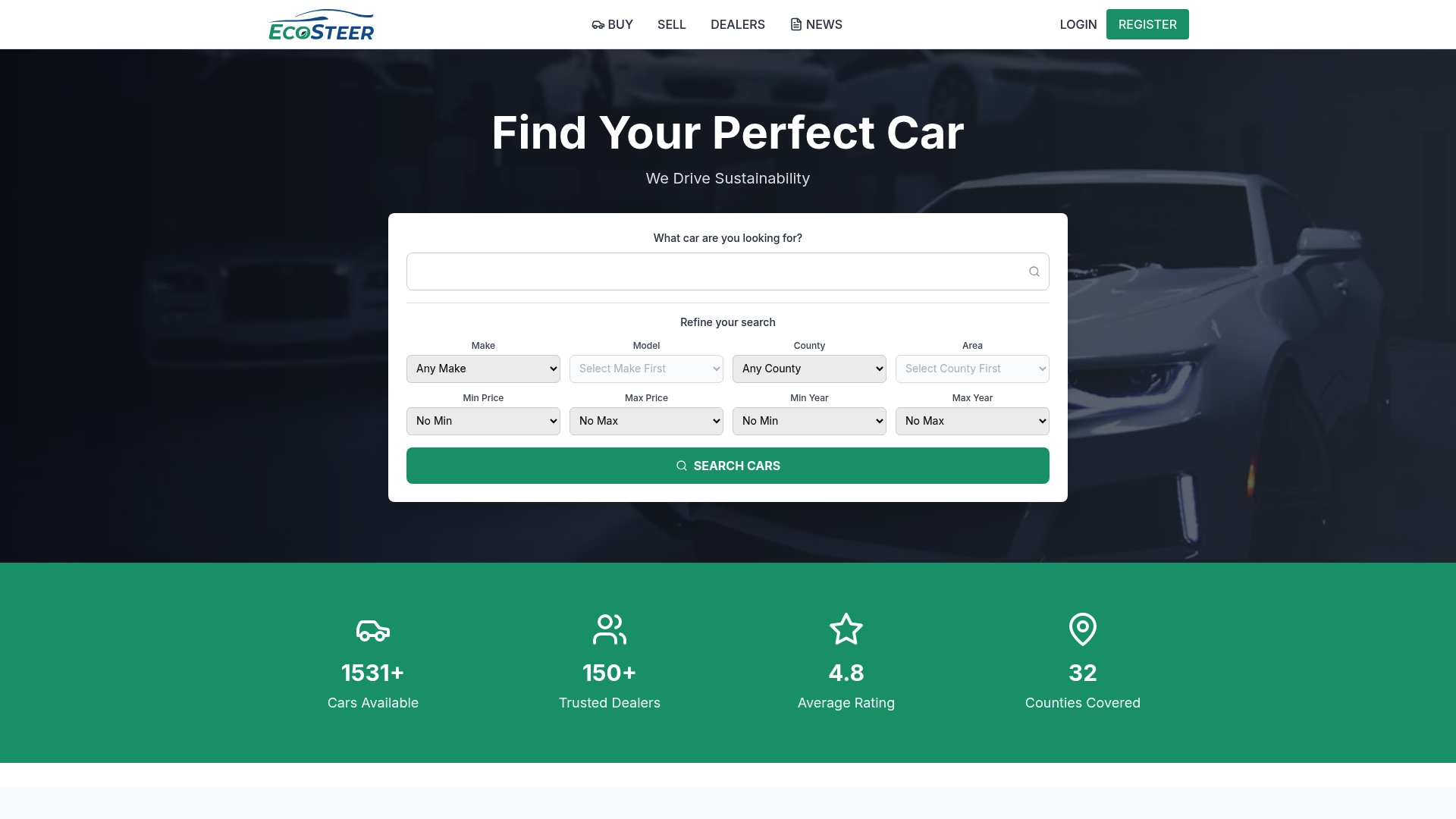
- Filter cars for sale by price range, county and mileage to shortlist realistic options.
- Browse county pages, such as Dublin or Kildare, to see what’s listed near you.
- Use the price filter to estimate a monthly repayment before contacting a dealer or lender.
The service is a marketplace for finding the car and the dealer, not a lender. Once you’ve found something you like, confirm finance terms directly with the dealer or a regulated lender. Start browsing on the EcoSteer homepage.
Sources
Check your credit history with the CCR, read CCPC guidance on hire purchase rights, and contact MABS for free budgeting advice.
This article is general information, not a substitute for advice from a qualified financial advisor. Consult a qualified financial professional about your own circumstances before acting on anything here.
- Your credit history | CCPC
- Central Credit Register service Q3 2025
- Hire purchase. Car finance explained | CCPC
FAQ
Can I get car finance with bad credit history in Ireland?
Yes, most lenders in Ireland will consider applicants with a poor credit history if their current income supports the repayments. Approval depends on affordability checks rather than a fixed credit score, so a stable income and clean bank statements can outweigh past missed payments.
Can I get car finance with very poor credit?
It’s harder, but not impossible, particularly through credit unions or specialist adverse credit lenders who focus on your current financial position. Expect a higher APR and possibly a request for a larger deposit or a guarantor to offset the added risk.
Can I finance a car with poor credit?
Yes, options include hire purchase, PCP, personal loans, credit union loans and specialist lenders, each assessing your affordability rather than applying a single credit threshold. Preparing your documents and checking your Central Credit Register report in advance improves your chances.
What is the lowest credit score to get approved for a car loan?
There is no official minimum credit score for car finance in Ireland, since lenders assess income, outgoings and existing debts rather than a single number. A thin or imperfect credit file can still lead to approval if your affordability is clearly demonstrated with payslips and bank statements.
Recommended
Ecosteer Editorial
Author