Irish Dealers and Sellers: 23% VAT and 15 Days' Notice on Car Listing Fees
Ireland guide for dealers and sellers: calculate car listing costs with 23% VAT, P2B and DSA notice rules, ROI steps and negotiation tips.

Before you sign anything, read the platform’s terms and conditions for notice periods, suspension grounds and exclusivity clauses, then run a short trial to work out your likely cost-per-enquiry.
TL;DR:
- Choosing a fee model depends on your volume and margins, with subscription plans being cheaper for dealers listing more than a few cars monthly.
- Promoted listings and featured placements often come with automatic renewal and variable costs, especially during busy periods when bidding escalates.
- VAT at 23 percent adds significantly to promotional costs unless you are VAT-registered and can recover input VAT through proper invoicing.
- Fee obligations and rules are subject to strict regulations requiring clear terms, at least 15 days’ notice for changes, and enforceable dispute mechanisms.
- Running short trial periods and carefully reviewing terms can prevent hidden costs from clauses on exclusivity, suspension, and refund policies.
Table of Contents
- Typical listing fee models in Ireland
- How promoted listings and featured placements get billed
- Tax and regulatory essentials that shape your real cost
- How to calculate ROI: cost-per-enquiry and cost-per-sale
- Reviewing T&Cs: the clauses that create hidden cost and risk
- A practical checklist and negotiation tactics for dealers
- Listing with EcoSteer: an Ireland-first way to manage the cost
- A marketplace operator’s honest take on pricing
- FAQ
- Sources
Typical listing fee models in Ireland
The fee structure a platform uses determines whether it suits your stock, your turnover and your margins. Per-listing fees charge a flat rate for each vehicle advertised, which tends to work best for low-volume sellers or dealers moving higher-margin cars where one extra cost per unit barely registers.
Dealer subscriptions, sometimes called seat plans, bundle a set number of vehicle slots with lead credits and reporting tools into a monthly fee. These suit dealers with consistent stock turnover who want predictable monthly costs rather than a per-car charge that scales unpredictably with inventory.
Pay-per-lead and cost-per-click variants charge only when a buyer makes contact or clicks through, which sounds efficient until enquiry volume rises and the marginal cost per sale climbs faster than expected. Bundled packages that fold in photography, write-ups or promoted slots can obscure the real advertised price, so it is worth unbundling each component before comparing platforms.
- Per-listing: a flat fee per vehicle, best for occasional or high-margin sales.
- Subscription: a monthly fee covering a set vehicle allowance plus lead credits.
- Pay-per-lead or CPC: charges per enquiry or click, which can rise sharply with volume.
- Bundles: photography or promotion packaged into the headline price, worth breaking out separately.
A small dealer running ten vehicles a month might find a subscription cheaper than paying per listing once volume passes a handful of cars, but the comparison only holds once promoted add-ons are counted separately.
How promoted listings and featured placements get billed

Promoted placements sit on top of a base listing fee and come in a few recognisable shapes: top-of-search positioning, homepage features and badge-style highlights that mark a listing as “featured” without necessarily moving its position. Each affects visibility differently, though platforms rarely disclose exact traffic increases from a badge alone.
Billing for these slots usually follows one of three patterns: a flat daily or weekly rate, an algorithmic boost tied to a bid, or a cost-per-click or cost-per-enquiry charge. Flat-rate slots are easiest to budget for; bid-based boosts can escalate during busy selling periods when competing dealers raise their own bids.
- Minimum run lengths: many promoted slots require a set number of days before you can cancel.
- Auto-renewal: a promoted placement often renews automatically unless you cancel in writing.
- Refund policy: under-delivery on promised impressions rarely triggers an automatic refund.
- Reporting: impressions, clicks and leads are the usual metrics supplied, though lead quality is rarely broken down further.
Advertising and promotional services carried out on Irish platforms are generally liable to VAT at the standard rate of 23%, according to Revenue’s guidance on advertising services, which materially changes the real cost of any promoted slot once you account for it properly.
Tax and regulatory essentials that shape your real cost
Two layers sit underneath the sticker price of any listing: VAT and platform regulation. Advertising and promotional services, including boosted or featured car listings, are generally liable to VAT at 23% in Ireland, confirmed by Revenue’s guidance on advertising services, which also sets out worked examples for how VAT applies to non-cash promotional arrangements. If you are VAT-registered, request a proper VAT invoice from every platform you pay so that input VAT can be recovered.
On the regulatory side, the Platform-to-Business Regulation requires marketplaces to keep terms and conditions clear and accessible, and to give business users at least 15 days’ notice before a fee-affecting change takes effect, according to CCPC’s P2B guidance. Separately, the Digital Services Act requires platforms to collect trader traceability information and build interfaces that let traders meet their own legal obligations, with CCPC’s DSA guidance noting that CCPC enforces several of these articles for Irish-based providers while Coimisiún na Meán coordinates DSA implementation nationally.
- Keep every VAT invoice from promotional spend to support input VAT recovery.
- Check that your platform’s terms disclose a 15-day notice period for fee changes.
- Know that CCPC and Coimisiún na Meán both have defined roles if a dispute arises.
How to calculate ROI: cost-per-enquiry and cost-per-sale
Two numbers tell you whether a platform’s fees are worth paying: cost-per-enquiry and cost-per-sale. Cost-per-enquiry is your total platform spend divided by the number of genuine enquiries received; cost-per-sale is the same spend divided by the sales you can actually attribute to that platform.
- Add up everything you paid the platform in the period, including VAT charged on promotional services.
- Log every enquiry that came through the platform, whether by call, message or form.
- Attribute sales honestly: only count vehicles you can trace back to a platform lead, not every sale that month.
- Add your own handling time or admin cost per lead if you want a fully loaded figure rather than a headline one.
A low-turn dealer selling two or three cars a month from a handful of leads will see a very different cost-per-sale from a high-turn dealer processing dozens of enquiries weekly; so benchmarks from one tier rarely transfer cleanly to another.
Pro Tip: Run a two- to four-week trial on any new platform before committing to a longer contract. That window is usually enough to see whether your real conversion rate matches the platform’s promised reach.
Reviewing T&Cs: the clauses that create hidden cost and risk
Fees are only half the picture. The other half sits in the small print, and a handful of clauses can turn an apparently cheap listing into an expensive commitment.
- Check for exclusivity or price-parity clauses that restrict where else you can list the same vehicle.
- Read the suspension grounds closely; some platforms can pull a listing for vague “quality” reasons with no appeal.
- Note the minimum contract term and whether it renews automatically without a reminder.
- Confirm the refund policy if a promoted slot under-delivers on promised impressions or leads.
Before signing, ask the platform in writing for its exact reporting cadence, any penalties for early cancellation, and who legally owns the lead data your enquiries generate. Vague definitions of what “featured” actually means, opaque credit systems that never quite add up, and an inability to produce a VAT invoice on request are all practical red flags worth taking seriously. For broader guidance on what to check in a seller agreement, consignment agreement terms for consignors cover similar contractual ground from a different angle.
Pro Tip: Ask for a capped cancellation fee and a performance credit clause before you sign; both are cheap for a platform to offer and expensive for you to go without.
A practical checklist and negotiation tactics for dealers
Once you understand the fee models and the contract risks, the final step is turning that knowledge into a short, repeatable evaluation process before every signup.
- Total the all-in monthly cost including VAT, not just the headline listing fee.
- Confirm VAT invoices are available and arrive promptly each billing cycle.
- Check the minimum term and whether a trial period exists before a longer commitment.
- Ask whether reporting on impressions, clicks and leads is guaranteed or merely “available on request”.
- Enquire about volume discounts if you plan to list several vehicles at once.
When negotiating, ask for pilot pricing tied to measurable KPIs, with credits owed if the platform under-delivers on what it promised. Bringing your own numbers, monthly turnover, historic sell-through rate, repeat buyer share, strengthens your position more than simply asking for a lower rate. A shorter, more flexible contract is often worth more than a discount locked into a long term, particularly while you are still testing a new platform. For general listing strategy across different sale routes, a guide to selling a car by owner covers comparable ground for private sellers weighing their options.
Listing with EcoSteer: an Ireland-first way to manage the cost
We built EcoSteer around the same problem this guide walks through: fee clarity. Dealers and private sellers list vehicles with us across Irish counties, manage leads and buyer communication from one dashboard, and track exactly what each promoted placement costs against the enquiries it brings in.
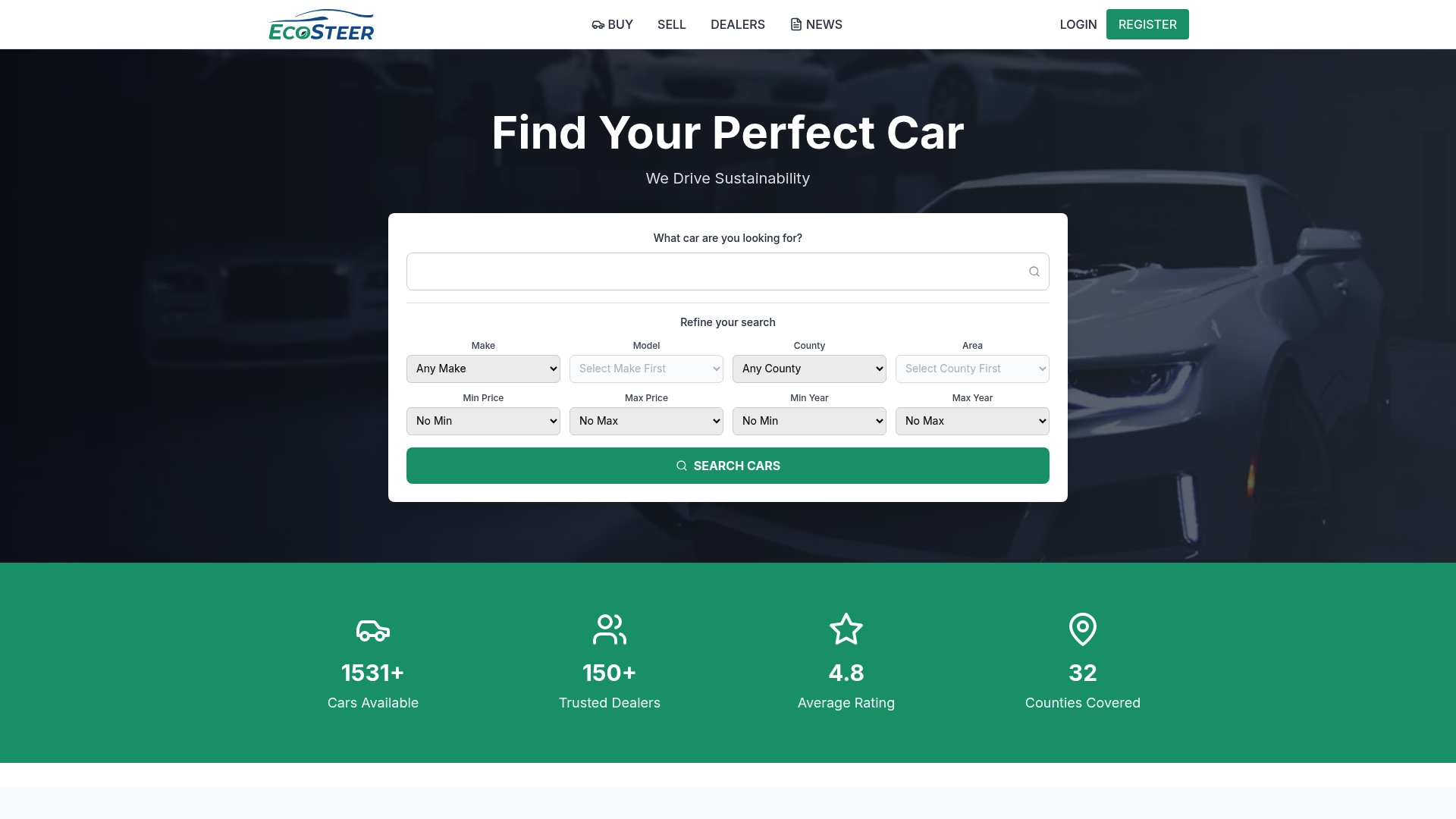
- We offer free listings for vehicles under a certain price, which keeps low-value private sales cost-free, as explained in our note on free car ads under €3,000.
- Dealers get search and filter tools by county, price, year, mileage and fuel type, alongside dealer discovery features described in our overview of free listings and EV tools.
- Billing and lead reporting sit in one dealer dashboard, built so spend against leads is easy to check.
Browse current stock and plan options on our cars for sale in Ireland page, or start listing directly to see how the fee structure works for your own vehicles.
A marketplace operator’s honest take on pricing
Having worked inside a marketplace that charges dealers for listings and promotions, my own bias is towards testing small before testing big. Insist on a VAT invoice from day one, not as an afterthought once your accountant asks for one. Read the suspension and renewal clauses before the pricing page, because the pricing page is usually the easy part.
Running the same stock across more than one platform for a few weeks, even at modest spend, tends to reveal a clearer cost-per-sale than staying loyal to whichever marketplace you joined first. The numbers rarely lie, even when the sales pitch does.
FAQ
What is the typical fee model for car listings in Ireland?
Most Irish marketplaces charge either a flat per-listing fee or a monthly dealer subscription, with promoted placements sold as separate optional add-ons. Private sellers listing lower-value cars can often list for free under certain thresholds, as some platforms offer free listings for vehicles under a set price, including EcoSteer.
Does VAT apply to promoted car listings in Ireland?
Yes, advertising and promotional services are generally liable to VAT at the standard rate of 23% in Ireland, according to Revenue’s guidance on advertising services. Dealers who are VAT-registered should request a valid VAT invoice from the platform to recover that input VAT.
How much notice must a platform give before changing its fees?
Under the Platform-to-Business Regulation, marketplaces must give business users at least 15 days’ notice of a material change to terms and conditions, including fee changes, as set out in CCPC’s P2B guidance. Always check your contract’s notice clause matches this before you sign.
How do I work out if a platform’s fees are worth paying?
Divide your total platform spend, including VAT, by the number of genuine enquiries you received to get cost-per-enquiry, then divide the same spend by sales you can trace back to that platform for cost-per-sale. Running a short two to four week trial before committing to a longer contract gives a realistic read on these figures.
Who enforces platform rules for car marketplaces in Ireland?
CCPC enforces several obligations under the Digital Services Act for Irish-based providers, including trader traceability requirements, while Coimisiún na Meán coordinates DSA implementation nationally, according to CCPC’s DSA guidance. Both bodies offer routes for dealers to raise a dispute if a platform fails to meet its obligations.
Sources
Recommended
Ecosteer Editorial
Author