20,000km Threshold: Which Car Fuel Type Fits Your Driving in Ireland
Compare petrol, diesel, hybrid, EV, hydrogen and LPG/CNG. Choose by annual mileage, trip type and local charging or refuelling access to pick the right fuel.
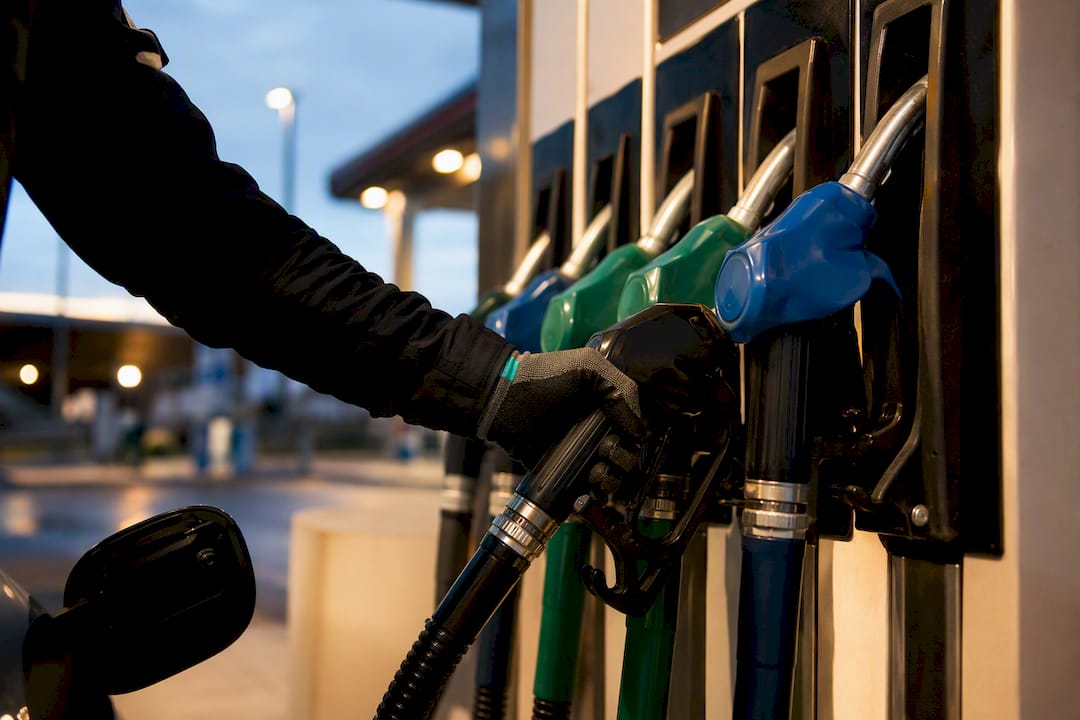
The main car fuel types are petrol, diesel, hybrids (MHEV, HEV and PHEV), battery electric, hydrogen, LPG or CNG, and biofuel blends. The right choice comes down to three things: how many miles you drive each year, whether your trips are mostly urban or motorway, and whether you have reliable access to charging or refuelling near your usual routes. Get those three right and the rest of the decision falls into place.
TL;DR:
- High-mileage drivers benefit most from diesel or hybrid cars, while urban drivers with limited refuelling access often prefer petrol or electric vehicles.
- Electric cars typically offer lower operating costs but are heavily dependent on reliable home or workplace charging infrastructure.
- The ethanol content in standard petrol already reduces greenhouse gas emissions, affecting CO2 figures even before considering other fuel choices.
- Refuelling times, range, and infrastructure availability vary significantly; for example, hydrogen vehicles refuel quickly but lack widespread stations.
- Always verify your vehicle’s specific fuel compatibility using the filler cap sticker or owner’s manual, as assumptions based on age or badge can be incorrect.
Table of Contents
- What are the main car fuel types?
- How do range, cost and emissions compare across fuel types?
- What should you know about each fuel before you buy?
- How do you choose the right fuel type for your car?
- What labels and checks confirm fuel compatibility?
- Why fuel choice comes down to your driving pattern, not the badge
- Search Irish listings by fuel type on Ecosteer
- Sources
- FAQ
What are the main car fuel types?
Every car on the road today runs on one of a handful of energy sources, and knowing the shorthand helps you read a spec sheet properly.
- Petrol (E5/E10): the standard fuel grade, now blended with up to 10% ethanol in the E10 variant sold at most forecourts.
- Diesel (B7/B10): a compression-ignition fuel, usually paired with AdBlue in modern engines to control nitrogen oxide emissions.
- Hybrids (MHEV/HEV/PHEV): three different levels of electric assistance, ranging from a small efficiency boost to genuine electric-only driving.
- Battery electric (BEV): runs purely on electricity, so it lives or dies by your access to charging.
- Hydrogen (FCEV): converts hydrogen gas into electricity on board, but refuelling stations remain scarce.
- LPG/CNG: gaseous fuels that suit specific use cases more than the mainstream market now.
- Biofuels: blended into standard petrol and diesel, with sustainability credentials that vary by feedstock.
The European Alternative Fuels Observatory groups these into transitional fossil alternatives (LPG, CNG), zero-emission options (electricity, hydrogen), and renewable biofuels. It’s a useful mental map when you’re comparing spec sheets across brands, because manufacturers don’t always use consistent terminology.
How do range, cost and emissions compare across fuel types?
Numbers tell the story better than adjectives here. A full tank of diesel or petrol still buys more range per refuel than most BEVs manage per charge, but the gap closes fast once you factor in home charging and daily driving patterns rather than long-haul trips.
| Fuel type | Range / refuel time | Running costs | Infrastructure | CO2 intensity |
|---|---|---|---|---|
| Petrol | Long range; 5 minutes to refuel | Moderate; lowest purchase price typically | Extensive, nationwide | Moderate; E10 cuts petrol’s greenhouse gas intensity by roughly 2% versus older E5-only blends |
| Diesel | Long range; 5 minutes to refuel | Lower fuel use per km, but AdBlue and higher servicing costs | Extensive, though AdBlue pumps are less common | Lower CO2 per litre burned than petrol, higher NOx without effective SCR |
| HEV/PHEV | Petrol range plus electric-only range for PHEVs typically between 30 and 60 km; charging times vary from several hours | Low if charged regularly; reverts to petrol economy if not | Public network needed only for PHEVs | Substantially lower when driven electrically most of the time |
| BEV | 250-500km depending on model; 30 minutes to several hours to charge | Lowest running cost per km; higher purchase price | Growing but uneven, especially rurally | Lowest tailpipe figure; overall footprint depends on grid electricity mix |
| Hydrogen FCEV | 500-600km; under 5 minutes to refuel | High fuel cost currently; low running wear | Very limited, concentrated in a handful of regions | Zero tailpipe; production method determines true footprint |
| LPG/CNG | 400-500km; 5–10 minutes | Cheaper fuel cost per litre, lower resale demand | Shrinking network, particularly for right-hand drive conversions | Lower CO2 than petrol, but marginal versus modern hybrids |
The Vehicle Certification Agency publishes example carbon-intensity figures for forecourt blends, and the detail that surprises most drivers is how much the ethanol content in ordinary petrol already moves the needle on emissions before you even consider switching fuel type. That variability matters because two cars with identical engines can post different real-world CO2 figures depending on which blend they’re filled with and how they’re driven.
What should you know about each fuel before you buy?
The table above gives you the shape of the decision. The detail below is what actually changes your day-to-day experience of owning the car.
Petrol comes in two common grades: 95 RON standard and 98 to 100 RON premium. Higher octane reduces the risk of engine knock in engines designed to use it, but MIT’s engineering faculty explains that premium fuel rarely improves fuel economy in engines built for regular petrol. Most cars built since 2011 can use E10 petrol, though some later models still specify E5 or premium for particular engines, so age alone isn’t a reliable guide.
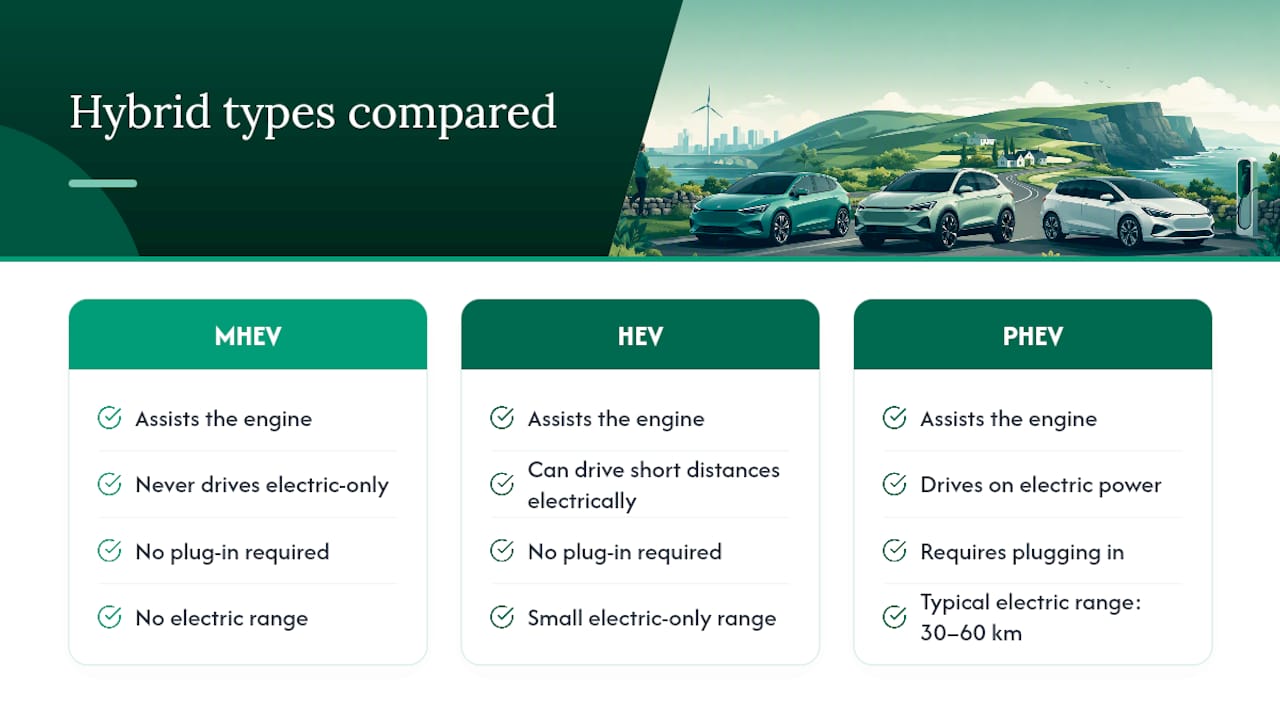
Diesel still makes sense for high-mileage drivers and anyone who tows regularly, thanks to its efficiency advantage on longer runs. Modern diesels with SCR systems need AdBlue, typically consumed at 1–3 litres per 1,000km. Running dry isn’t a minor inconvenience. Most cars won’t restart until it’s topped up.
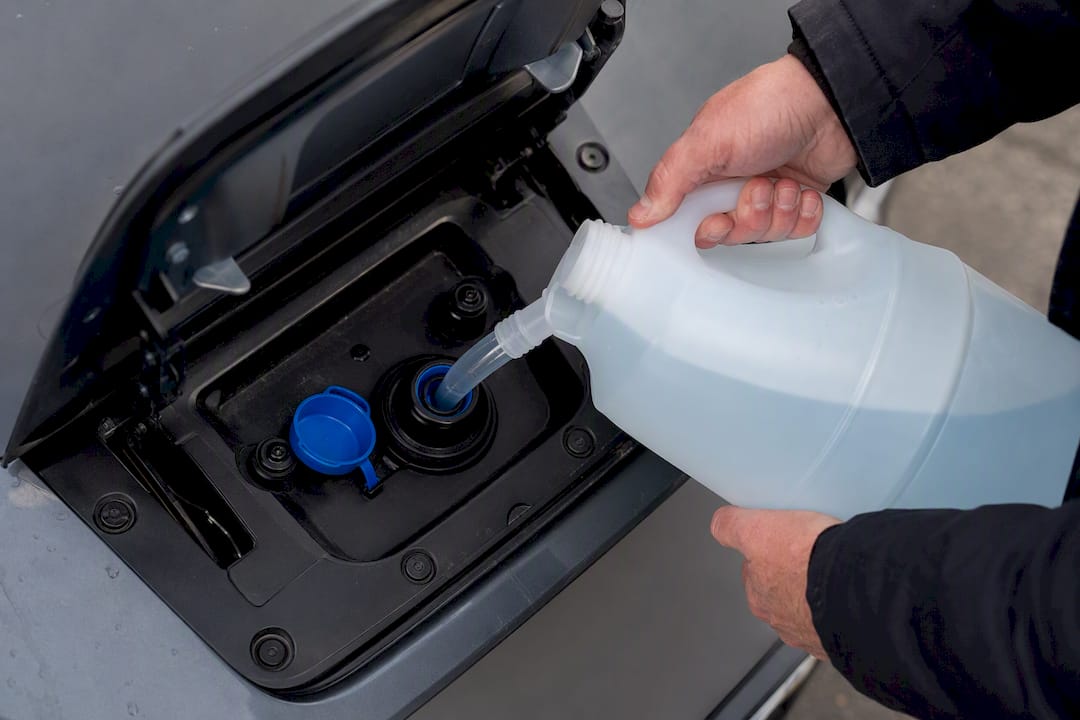
MHEV, HEV and PHEV are not interchangeable terms, even though sellers sometimes use them loosely. A mild hybrid assists the engine without ever driving on electricity alone. A full hybrid can cover short distances on electric power without plugging in. A plug-in hybrid carries a bigger battery and genuine electric-only range, typically 30 to 60km, but only delivers real savings if you actually plug it in most nights.
BEVs suit drivers with home or workplace charging far better than those relying solely on public networks. Cold weather can knock a noticeable chunk off the advertised range, so treat manufacturer figures as a best-case scenario rather than a promise.
Hydrogen FCEVs refuel almost as fast as petrol cars, but the sparse station network makes them a poor fit outside specific regional pockets right now.
LPG and CNG conversions have become harder to source for right-hand drive vehicles, which narrows their appeal considerably compared to a decade ago.
Biofuels are already blended into most pump fuel, though their sustainability depends heavily on the feedstock used to produce them.
Pro Tip: Never assume compatibility from a car’s age or badge alone. Check the filler cap sticker or owner’s manual, because a handful of performance and older diesel models still specify a particular blend that standard forecourt fuel doesn’t match.
How do you choose the right fuel type for your car?
Work through this in order, because each step narrows the field further.
- Total your annual mileage. High-mileage drivers (20,000km or more) tend to benefit most from diesel or a full hybrid; low-mileage urban drivers often do better on petrol or a BEV.
- Look at your typical trip length. Frequent short urban hops favour BEVs and hybrids; regular long motorway runs favour diesel or petrol.
- Check charging or refuelling access near your daily routes, not just at home. A BEV with no reliable workplace or street charging is a harder sell than the range figures suggest.
- Run the purchase price against running costs over your expected ownership period. A cheaper diesel can cost more over five years than a pricier hybrid, depending on fuel and servicing patterns.
- Ask the seller direct questions: AdBlue tank size on a diesel, PHEV battery capacity and warranty terms, and confirmed charging specification on a BEV.
Older cars deserve extra scrutiny. Some classic and performance vehicles react badly to E10’s higher ethanol content, so checking compatibility before you fill up avoids a genuinely expensive mistake, and it’s worth comparing used car running costs across fuel types before committing.
Pro Tip: If you’re torn between a hybrid and a full EV, be honest about how often you’d actually plug a PHEV in. A PHEV vs EV comparison is only worth its fuel savings if the battery gets charged nightly, not left to run on petrol.
What labels and checks confirm fuel compatibility?
The EU standardised pump labelling in 2018, and the shapes are worth memorising because they appear identically across the continent regardless of brand or language.
- Circle: petrol and ethanol blends, marked E5 or E10.
- Square: diesel blends, marked B7 or B10.
- Diamond: hydrogen, marked H2.
Beyond the pump itself, TyreMap’s breakdown of fuel types confirms these shapes are consistent across EU forecourts, which matters if you’re filling up somewhere unfamiliar. Your own vehicle’s filler cap sticker and owner’s manual remain the fastest way to confirm what your specific engine needs, and manufacturer guidance always takes precedence over general assumptions about a model range. For anything beyond that, the Vehicle Certification Agency and the European Alternative Fuels Observatory are the two bodies worth trusting over forum threads or dealer small talk.
Why fuel choice comes down to your driving pattern, not the badge
Buyers spend an enormous amount of energy debating diesel versus petrol versus electric as though one answer suits everyone. It doesn’t. The mileage, trip pattern, and charging access questions above do more work than any brand reputation or engine size ever will.
Many car marketplaces see this pattern repeatedly in how people search: filtering by fuel type is one of the most-used tools on these platforms, precisely because many buyers arrive unsure which category actually fits their driving life. Search filters that let you compare petrol, diesel, hybrid and electric listings side by side, alongside model-specific guides like the Kia Niro buyer’s guide, turn an abstract fuel-type debate into a concrete shortlist. That’s a more useful starting point than any general theory about which fuel wins overall, because none of them do, universally.
— ibrahim
Search Irish listings by fuel type on Ecosteer
Some car marketplaces let you filter live listings by fuel type, location, price and mileage in one search, so you can compare petrol, diesel, hybrid, and electric cars against your actual budget rather than guessing from spec sheets. Once you’ve narrowed the field, checking real running costs for your shortlist is worth ten minutes against a detailed breakdown of Irish ownership costs by fuel type.
If you’re weighing a hybrid against a full EV for daily commuting, the model-specific guides on the Ecosteer blog cover battery capacity, warranty terms, and charging habits in more depth than a generic spec sheet ever will. Start your search on Ecosteer’s marketplace or head straight to find a dealer near you to ask fuel-specific questions before you view.
Sources
- Cars and Fuel Options | Vehicle Certification Agency
- Alternative fuels | European Alternative Fuels Observatory
- What is a mild hybrid car | CUPRA
- Fuel types explained — TyreMap
- What’s the difference between premium grade and regular gasoline? | MIT Engineering
FAQ
What are the different types of car fuel?
The main types are petrol, diesel, hybrid variants (MHEV, HEV, PHEV), battery electric, hydrogen, LPG/CNG, and biofuel blends, each suited to different mileage and driving patterns.
What are the four types of fuel?
If you’re narrowing to four broad families, most guides split them into petrol, diesel, electric (including hybrids), and gaseous or alternative fuels like LPG and hydrogen.
What type of fuel is best for my car?
There’s no single best fuel; it depends on your annual mileage, whether trips are mostly urban or motorway, and whether you have dependable charging or refuelling access near your routes.
What type of fuel should I use in my car?
Check your filler cap sticker or owner’s manual first, since manufacturer guidance overrides general assumptions, and use Ecosteer’s fuel-type search filters to compare compatible listings once you know your specification.
Does premium fuel improve fuel economy?
Generally no. Higher-octane fuel reduces knock risk in engines designed for it, but MIT’s engineering explainer confirms it rarely improves economy in engines built for regular petrol.
Recommended
Ecosteer Editorial
Author